


By Myean Torgbean
Frustrated by years of hardship, women in Zarzone and Zon communities are speaking out against what they describe as total neglect, highlighting the daily struggles of raising families without roads, schools, or healthcare.
Operating under the Concern Women of Zarzone & Zon Community Initiative, the group says more than 1,000 residents are affected by the lack of basic infrastructure and essential services. They are urging their district representative, Roland Opee Cooper, along with Margibi County Senators Emmanuel Nuquay and Nathaniel F. McGill, to take swift action.
During a recent visit by our reporter, community members—led by Founder Ma. Theresa Gborlan, Spokesperson Ma. Oriena D. S. Roberts, and Chairlady Tarena P. Wilson—outlined the severe challenges they face daily. These include impassable roads, lack of schools and healthcare facilities, poor telecommunications access, unsafe drinking water, and rising security concerns.
“We Can No Longer Wait”
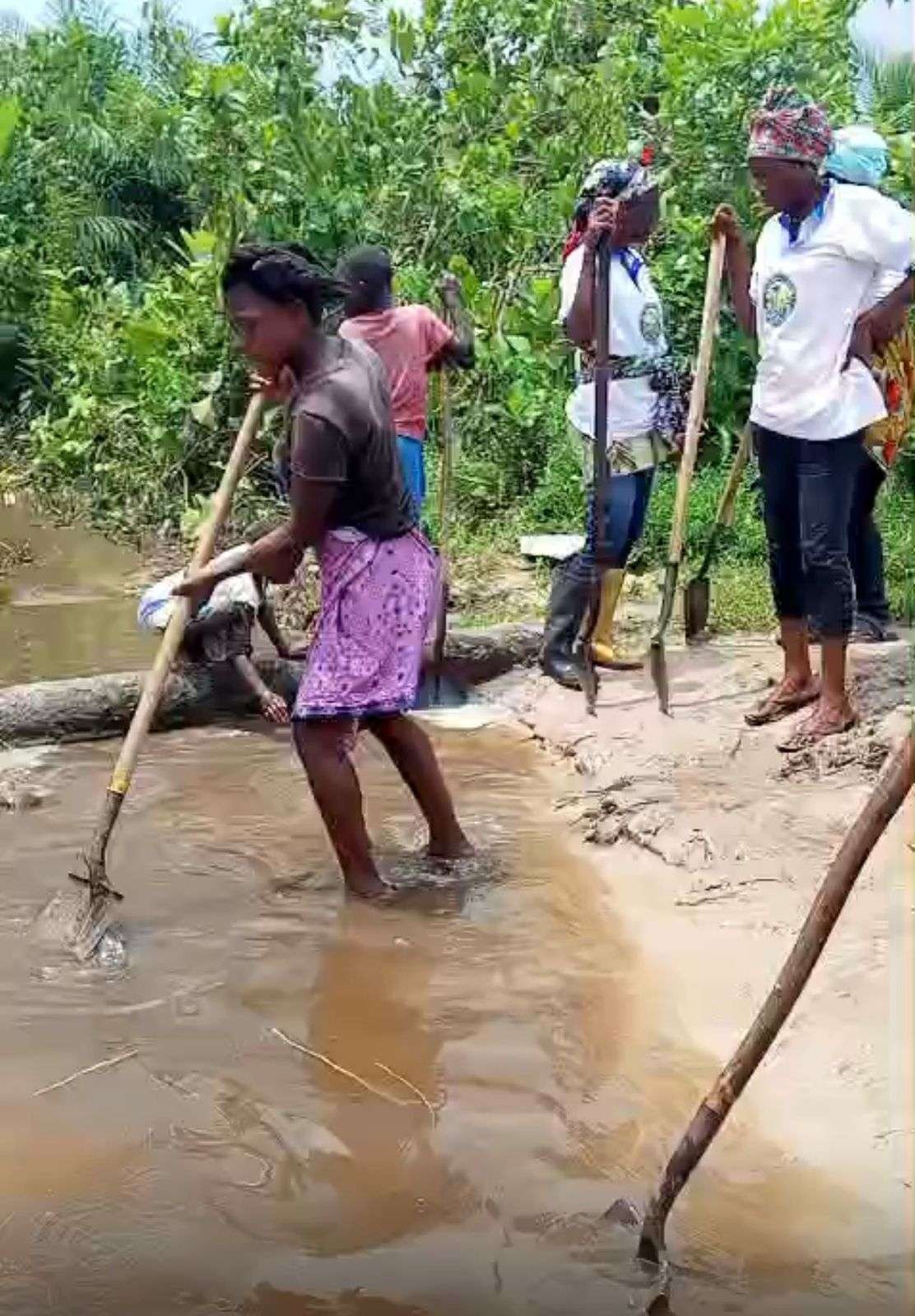
Founder Ma. Theresa Gborlan, 67, described the dire state of the community’s road network, noting that residents, including elderly women, are forced to manually clear paths to make them usable.
“I am 67 years old, yet you see me out here clearing the road with my own hands,” she said. “Our roads are so bad that motorcycles cannot pass without people falling. We can no longer sit and wait for help that is not coming.”
She recounted a recent incident involving a pregnant woman who was unable to access transportation due to the poor road conditions, forcing her to endure unnecessary hardship.
Education and Communication Barriers
Spokesperson Ma. Oriena D. S. Roberts highlighted the lack of educational opportunities as a major concern, especially for children in the community.
“We have no government school here. The nearest one is in Iron Gate, nearly 30 miles away,” she said. “Most parents cannot afford private schooling, so many children are not in school at all.”
She also pointed to limited access to mobile and internet services, which she said isolates residents from the rest of the country.
Security and Healthcare Concerns
Chairlady Tarena P. Wilson warned that the absence of both security presence and healthcare facilities has left residents vulnerable.
“There is no police station here. If something happens, by the time help is sought, it is already too late,” she said.
She added that the lack of clinics or hospitals has led to preventable deaths, describing the situation as a growing humanitarian concern.
Mrs. Wilson further emphasized the strategic importance of the community’s road, noting that it serves as an access route to the Roberts International Airport and other key national installations.
The women expressed frustration with their elected leaders, alleging that none have visited the community since taking office.
“Since our lawmaker was elected, not a single day has he come here,” one resident lamented.
The group is calling on the Government of Liberia to urgently address their plight by rehabilitating roads, constructing schools and healthcare facilities, providing safe drinking water, strengthening security presence, and expanding telecommunications access.
“We are not asking for luxury,” the women stressed. “We are asking for the basic things every Liberian deserves.”