
Criminal Court ‘A’ Judge Roosevelt Z. Willie on Tuesday formally discharged the prosecution’s first witness, Chief Investigator Rafael Wilson, following weeks of direct and cross-examination in a high-profile arson case currently before the court.
Wilson was released from the witness stand after final questioning from jurors, including Juror J30-9863, whose inquiries played a pivotal role in the concluding phase of the testimony.
A key moment in the proceedings unfolded on Monday when Juror J30-9863 informed the court that he was unable to clearly identify the defendants from a video previously referenced by the prosecution witness.
The juror requested that the video be prescreened to enable him to make a more informed assessment of the evidence. Although still photographs extracted from an LNP status report had already been admitted into evidence, Judge Willie granted permission for the video footage to be replayed in open court.
Citing time constraints, the court ordered that the screening take place on Tuesday morning. Defense counsel raised no objection.
When court reconvened on Tuesday, December 23, Juror J30-9863 again requested that the video be replayed.
After the footage was shown, the juror asked Wilson to identify the individual appearing in the video from among the defendants.
Wilson identified the person as defendant Thomas Etheridge.
However, the juror immediately expressed doubt, stating that the individual in the footage “looks like a Chinese man and doesn’t look like the defendant that was identified.”
The observation introduced a moment of visible tension in the courtroom as the juror’s concern went to the heart of identification evidence presented by the prosecution.
Further questioning also revealed some uncertainty from Wilson regarding the precise arrest date of defendant Jerry Pokah.
The witness maintained, however, that Pokah was arrested in 2025, following statements made by another defendant in the case.
Despite these uncertainties, Wilson reaffirmed the prosecution’s broader theory of the case.
He testified that investigators concluded a meeting held on December 17, 2024, involving several defendants, was intended to plan the alleged arson.
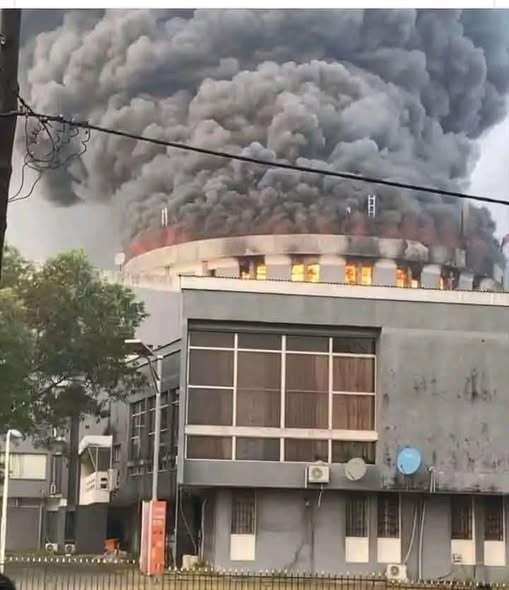
According to Wilson, this conclusion was based on confessions, corroborating call logs, and coordinated phone activity leading into the early morning hours of December 18, when the Capitol Building was allegedly set ablaze.
With Wilson’s discharge, the prosecution is expected to introduce its second witness when the trial resumes on Friday.
The case continues to draw close public and legal scrutiny as jurors weigh the credibility and consistency of the evidence presented.