


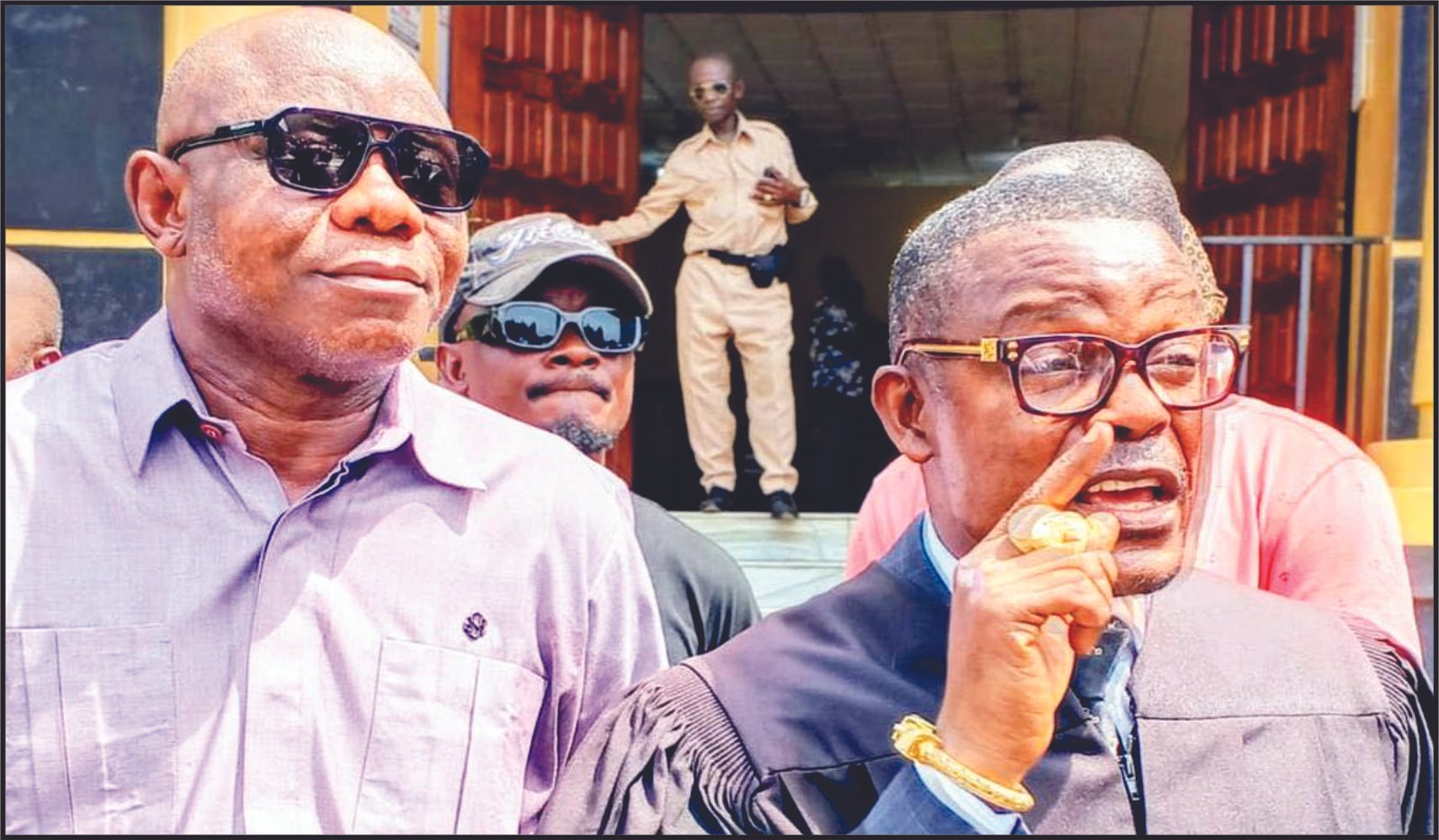
By G. Watson Richards
A senior official of the Central Bank of Liberia (CBL) has provided testimony that prosecutors say directly links key defendants to disputed financial transactions at the center of an economic sabotage case.
The case, filed by the Liberia Anti-Corruption Commission-targets several former top officials, including ex-Finance Minister Samuel D. Tweh, former Acting Justice Minister Nyanti Tuan, former Financial Intelligence Agency (FIA) Director-General Stanley S. Ford, former FIA Comptroller D. Moses P. Cooper, and former National Security Advisor Jefferson S. Karmoh.
The defendants are facing multiple charges, including economic sabotage, theft of property, money laundering, and criminal conspiracy. Proceedings are being presided over by Judge Ousman F. Feika at Criminal Court “C”.
CBL Witness Provides Critical Link
Taking the stand as a subpoena witness, William Grant Jopleh, Director of Banking at the CBL, confirmed that his institution produced financial records in compliance with a court-issued writ.
“The CBL received the subpoena and the documents requested are in my possession,” Jopleh testified.
The documents included bank ledgers and general ledger (GL) tickets detailing transactions linked to the FIA during September and October 2023.
Jopleh told the court that the records clearly identify who collected the disputed cheques:
“The cheques were received by D. Moses P. Cooper… on October 20, 2023.”
He further explained that the documents presented:
“Contain the recipient of the cheques and the date on which they were received… as well as the general ledger tickets… used to process the transactions.”
Prosecutors argue that this testimony establishes a direct evidentiary chain between the financial records held by the CBL and one of the principal defendants responsible for handling FIA funds.
Missing Originals and Court Ruling
The case took a procedural turn as the court addressed the absence of original financial documents from the FIA. According to prior subpoena testimony referenced in court:
“Following a diligent search… the document could not be found.”
Defense lawyers objected to the admission of photocopies, invoking the “best evidence rule” and arguing that the prosecution failed to establish the whereabouts of the originals.
However, Judge Feika rejected the objection, citing Liberia’s evidentiary rules:
“A copy of writing is not admissible… unless the original is proved to be lost or destroyed…”
He ruled that the prosecution met this threshold and emphasized that the defense failed to demonstrate prejudice:
“The defense counsel has not demonstrated… how such marking would affect the substantial right of his client.”
The court subsequently admitted multiple exhibits, including CBL records and photocopied cheque documents.
Evidence Suggests Breakdown in Financial Controls
Under cross-examination, Jopleh described the CBL’s limited role in scrutinizing government transactions:
“The CBL is in no way particular about the purpose of payment to any government institution… Beyond that the CBL will not go [into] knowing the purpose.”
While this statement underscored institutional procedures, it also highlighted a potential gap in oversight-one that prosecutors suggest may have enabled the alleged misuse of public funds.
Jopleh also confirmed that the ledger submitted to the court included all cheques processed for the FIA during the relevant period:
“The record provided… contains all cheques that were received by the institution for the month… we do not keep records of separate cheques.”
Prosecution Builds Case Around Financial Trail
Following the CBL testimony, the prosecution resumed its primary witness, who linked the financial records to broader allegations of unauthorized fund disbursement.
According to testimony presented in court:
“There is no evidence to establish that the Minister of Finance… received any instruction from the National Security Council to disburse funding.”
The witness further alleged that the transactions lacked proper authorization and documentation:
“Said monies were suspiciously transferred to the accounts of the FIA… and could not be accounted for by all of the defendants.”
Trial Continues
The court adjourned proceedings late Monday, with the trial set to resume on March 31, 2026.
As the prosecution continues to build its case, the testimony of the CBL witness is expected to play a central role in establishing how financial records, and their apparent gaps, tie the accused officials to the alleged mismanagement of public funds.
The defense is expected to challenge both the interpretation of the financial documents and the admissibility of key evidence as the trial progresses.