


By Gareyson Neufville
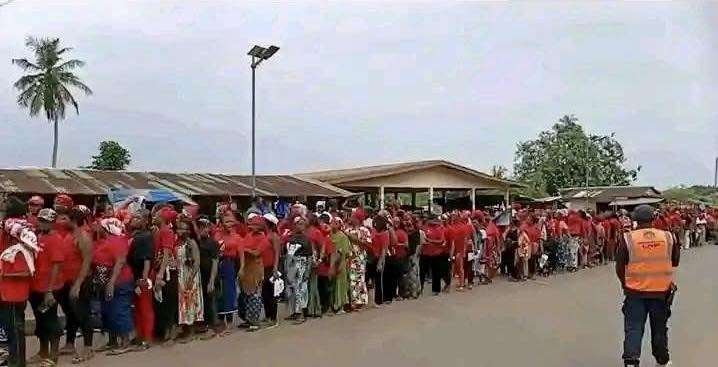
Harper, Maryland County — Business activities across major markets in Maryland County came to a standstill on Monday as market women and traders staged a bold protest against what they describe as sharp and unjustified fee increases imposed by the Liberia Marketing Association (LMA).
The demonstrators, many of whom form the backbone of the county’s informal economy, marched through the streets of Harper and headed toward the Harper Administration Building, demanding immediate intervention from local authorities.
Protesters accused local LMA officials — particularly an individual identified only as “Wilson”— of implementing the increases without consultation while failing to improve market conditions.
“We used to pay 20 Liberian dollars for a ticket fee. Now they have increased it to 50,” said one vendor who requested anonymity for fear of reprisal. “We used to pay 500 LRD for table registration; they have raised it to 2,000 LRD. No improvements, no development at our markets. They’re intending to make life hard for us. We don’t want Wilson.”
The increases — more than doubling the daily ticket fee and quadrupling table registration costs — have sparked outrage among small-scale traders who sell fresh produce, fish, and household goods. Many say the added burden is unsustainable in Liberia’s challenging economic climate, particularly in the southeastern region.
Market women, many of whom are single mothers and primary breadwinners, say they are already grappling with rising transportation costs and reduced consumer spending power. “We pay every day, but what do we get?” another trader asked during the demonstration. “The markets are still the same dirty, crowded places they’ve always been.”
Protesters allege that the LMA’s decisions were made unilaterally and without transparency. They point to a lack of visible improvements in sanitation, roofing, and security at local markets despite years of fee collection.
The unrest echoes similar complaints raised earlier this year in Harper’s general market, where vendors formally petitioned against fee hikes and what they described as poor management practices by LMA representatives. In both instances, marketers called for accountability and an end to arbitrary increases that fail to benefit the trading community.
For many traders, the markets represent more than a place of business—they are a means of survival. One veteran seller, who has traded in Harper for more than 15 years, described the toll of the new fees.
“I wake up at dawn to come here. I pay my fees, I feed my children,” she said. “Now with these new prices, I can’t even cover my transport some days. If things don’t change, how will we eat?”
The protest highlights broader tensions between grassroots traders and administrative bodies in Liberia’s marketing sector, where associations tasked with overseeing market operations are frequently criticized for lacking accountability.
As the sun set over Harper, demonstrators vowed to maintain pressure until their demands —including a reversal of the fee hikes, transparent management, and tangible market improvements — are addressed.
For now, Maryland County’s once-bustling markets remain silent, a powerful symbol of the resolve of the women and traders determined to defend their livelihoods.