


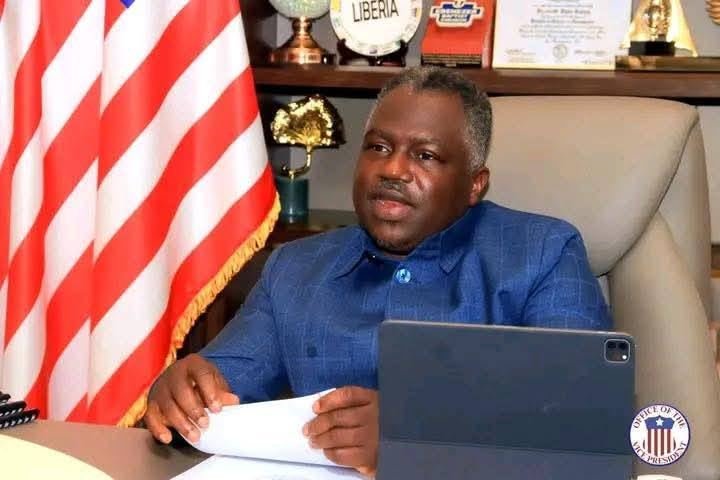
Monrovia, Liberia — Liberia’s Vice President, Jeremiah Kpan Koung, has reaffirmed the government’s commitment to peace and diplomacy amid ongoing concerns surrounding the Liberia–Guinea border situation, emphasizing that armed conflict is not an option for the West African neighbors.
Speaking Monday during a live broadcast on the state-owned ELBC radio, Vice President Koung underscored Liberia’s preference for what he described as “soft diplomacy” in addressing the issue. His remarks come at a time of heightened public attention to the situation along the border, where tensions have occasionally raised fears of escalation.
“Soft diplomacy is what we’re engaging in. War isn’t good,” Koung stated during the interview. “Liberia will not go to war with Guinea. We are one people, bound by shared history and regional ties.”
The Vice President’s comments signal a clear stance by the Liberian government to de-escalate tensions and prioritize dialogue over confrontation.
Liberia and Guinea share not only a long border but also deep cultural, ethnic, and economic connections that date back decades. Many communities straddle both sides of the boundary, making stability in the region crucial for livelihoods and cross-border cooperation.
Koung emphasized that Liberia’s leadership remains actively engaged with Guinean authorities to find a peaceful and mutually acceptable resolution. He noted that discussions are ongoing and framed within broader regional and international cooperation mechanisms.
“As leaders, we remain committed to peaceful dialogue and constructive engagement with our Guinean counterparts,” he said. “We will continue to work closely with ECOWAS, the Mano River Union, and the broader international community to ensure that the matter is resolved through diplomacy and mutual respect.”
The involvement of regional bodies such as ECOWAS and the Mano River Union reflects the importance of multilateral frameworks in maintaining peace and stability in West Africa. These organizations have historically played key roles in conflict prevention, mediation, and regional integration.
Political analysts say Koung’s remarks are likely aimed at reassuring both Liberians and international partners that the government is committed to preserving peace while safeguarding national interests. His statement also aligns with Liberia’s longstanding foreign policy approach, which prioritizes cooperation and peaceful coexistence.
While details of the border dispute remain limited, the Vice President’s public address signals that diplomatic channels remain open and active.
Citizens and observers alike will be watching closely as discussions progress, hopeful that the situation will be resolved without incident.
For now, the message from Liberia’s leadership is clear: dialogue, not war, will guide the path forward.