


By Myean Torgbean
Monrovia, Liberia – Several pro-government voices have publicly challenged former President Ellen Johnson Sirleaf, accusing her of inconsistency in her recent remarks on free speech and legislative authority.
The reactions follow Sirleaf’s comments addressing recent actions by the Supreme Court of Liberia and members of the House of Representatives of Liberia. While the former president reportedly supported the Court’s decision in a matter involving Prophet Key, she also criticized lawmakers for actions she described as overreach in holding colleagues accountable.
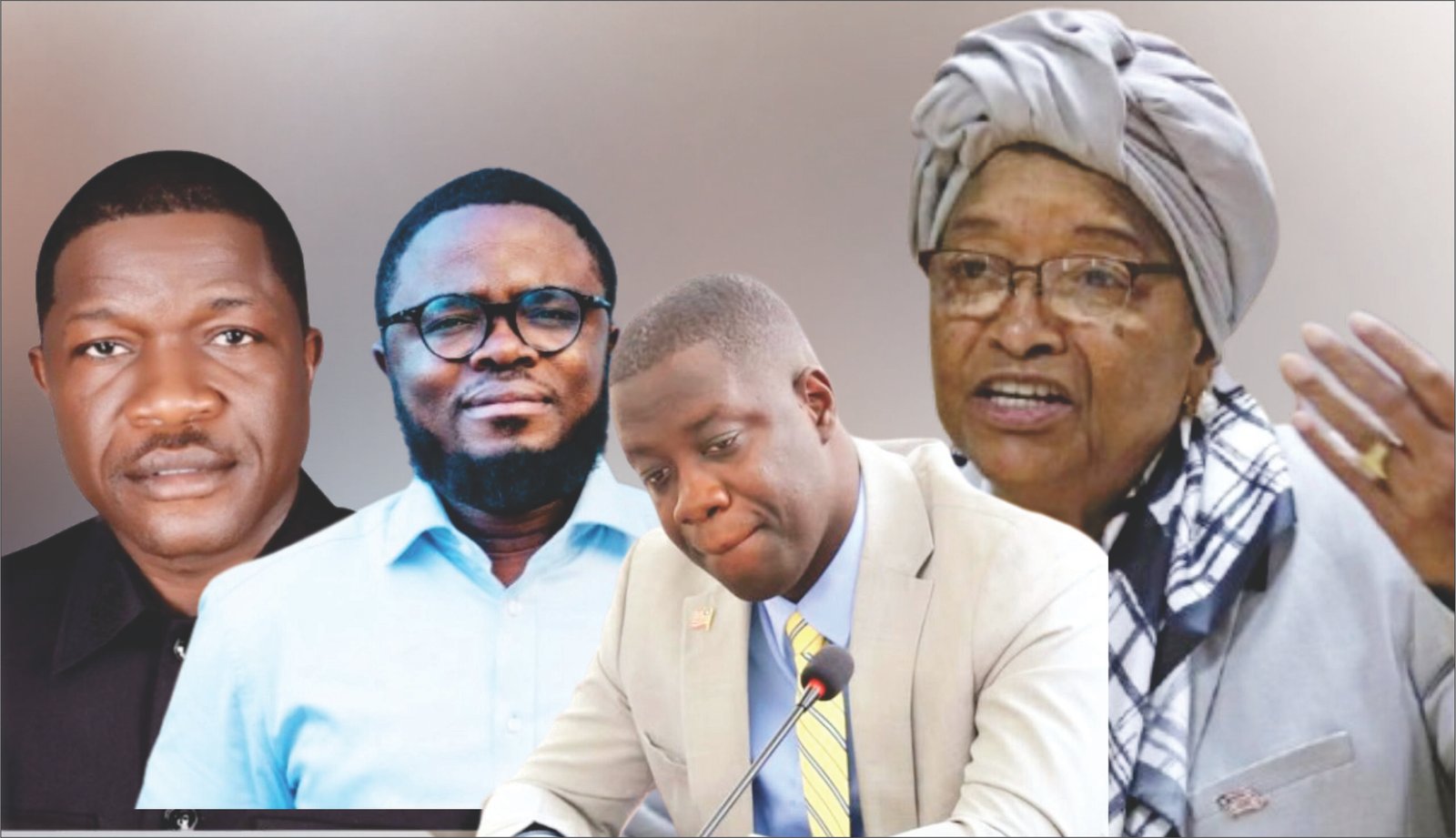
Emmanuel Azango of the National Oil Company of Liberia (NOCAL) said Sirleaf’s position reflects a troubling lack of consistency. “On one hand, you support the Supreme Court for punishing Prophet Key over what can be considered free speech, even if it involved insulting national leaders.
On the other hand, you criticize the legislature for carrying out its constitutional responsibility,” Azango stated. He added that leadership requires a “balanced and consistent stance” in upholding accountability across all branches of government.
Similarly, National Port Authority official Emmanuel Gonquoi referenced his own past experience under Sirleaf’s administration. Gonquoi alleged that he was jailed in 2011 over remarks regarding Sirleaf’s inauguration, questioning whether his case was also considered free speech. He further claimed that current political figures, including Abraham Darius Dillon, played roles in advocating for his release at the time.
Another critic, James Samuel Goodday Flomo, aligned with the ruling Unity Party, pointed to what he described as a pattern during Sirleaf’s presidency. Flomo cited the arrests or detentions of several government critics, including Jefferson Tamba Koijee and Acarous Moses Gray, arguing that such actions contradict her current advocacy for free speech protections.
Varney Sackey, also identified as a ruling party strategist, raised concerns about Sirleaf’s historical involvement in legislative matters. He referenced past political developments involving former Speakers Edwin Snowe and Alex Tyler, suggesting that her administration played a role in their removals. Sackey urged the former president to focus on her post-presidential initiatives, including the Ellen Johnson Sirleaf Presidential Center for Women and Development, rather than commenting on current governance issues.
Sirleaf, Africa’s first elected female head of state and a Nobel Peace Prize laureate, has not yet publicly responded to the criticisms.
The debate highlights ongoing tensions in Liberia’s political discourse, particularly around the interpretation of free speech, the limits of legislative authority, and the legacy of past administrations.