
By G. Watson Richards
Nearly a month ago, the Auditor General released the General Auditing Commission’s “Compliance Audit Report on the Government of Liberia Revenue Collection and Reconciliation Processes for the Period July 1, 2018 to December 31, 2024.”
This audit marks an important milestone in the Government’s ongoing efforts to strengthen transparency, accountability, and public financial integrity.
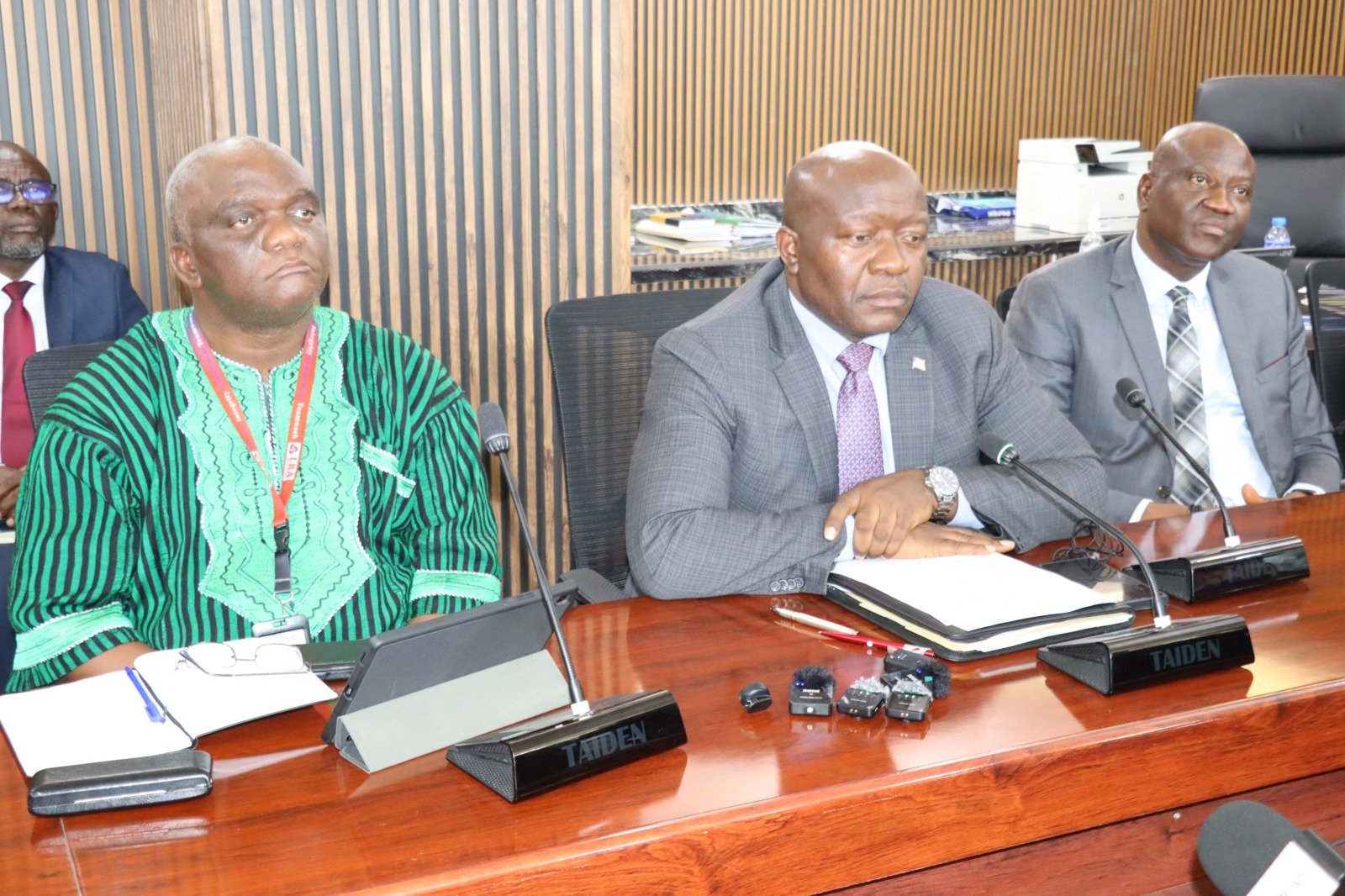
On Tuesday, May 19, 2026, three key economic institutions of government jointly responded to the General Auditing Commission (GAC)’s recent “Compliance Audit Report on the Government of Liberia Revenue Collection and Reconciliation Processes for the Period July 1, 2018 to December 31, 2024,” acknowledging systemic weaknesses while outlining corrective actions and calling for further investigation where necessary.
“Today, we have convened this joint press conference to provide context and background to the audit, highlight its key findings, and outline the concrete actions already taken and those currently underway by the Government to address the issues identified and further strengthen our public financial management systems,” the statement read.
At the joint press conference in Monrovia, the Ministry of Finance and Development Planning (MFDP), the Liberia Revenue Authority (LRA), and the Central Bank of Liberia (CBL) said they had requested the audit extension and were already implementing reforms before the report’s publication.
The institutions described the audit as “an important milestone in the Government’s ongoing efforts to strengthen transparency, accountability, and public financial integrity.”
“In late 2024, the Ministry of Finance and Development Planning, the Liberia Revenue Authority, and the Central Bank of Liberia detected emerging discrepancies between revenue reported in the Tax Administration System (TAS) and deposits reflected in the Government’s Consolidated Revenue Account at the Central Bank. As custodians of public trust, we could not and would not ignore these concerns. We took immediate and decisive action.”
According to the joint statement, discrepancies were first detected in late 2024 between revenue recorded in the Tax Administration System (TAS) and deposits reflected in the Government’s Consolidated Revenue Account at the CBL.
“As custodians of public trust, we could not, and would not, ignore these concerns. We took immediate and decisive action,” the statement said.
On January 6, 2025, the Minister of Finance formally wrote the Auditor General requesting an independent investigation into the variances between TAS-reported revenue and actual deposits as of December 31, 2024.
“In that letter, I stressed the need for a full, impartial review to determine the source of the discrepancy and strengthen the integrity of our national revenue chain,” the statement quoted.
The Auditor General reportedly informed the Minister that the GAC was already conducting an audit covering 2018–2023 and welcomed the request to extend the review through 2024 to ensure a comprehensive assessment.
The GAC report identified multiple discrepancies and control weaknesses across the revenue chain, including:
Discrepancies between Transitory Bank Accounts (TBA) and the General Revenue Account (GRA)
Variances between TAS records and GRA deposits
Differences between bills and payments in ASYCUDA and LITAS
Unauthorized withdrawals and irregular reversal transactions in TBAs
Untimely remittances from TBAs to the GRA
“These findings confirm the existence of systemic weaknesses, reconciliation gaps, and operational deficiencies across the revenue collection and settlement chain,” the institutions acknowledged.
Report Forwarded for Possible Criminal Review
The joint statement confirmed that President Joseph Nyuma Boakai has been briefed and agreed that the report be forwarded to the Ministry of Justice and the Liberia Anti-Corruption Commission (LACC).
“They have the requisite expertise to determine whether the findings in the GAC report point to fraud; and if they do so determine, to take appropriate actions to bring anyone found culpable of defrauding the government to justice,” the statement said.
Corrective Measures Already Underway
Even before the audit’s final release, the MFDP, LRA, and CBL said they had begun tightening controls to strengthen accountability.
Among the measures highlighted:
Revised banking agreements with commercial banks governing transitory accounts and revenue sweep timelines
Mandatory daily sweep reports from commercial banks to improve monitoring
Expanded deployment and upgrade of ASYCUDA to Version 4.4 for electronic integration with banks and the CBL
Expansion of LITAS across regional tax offices
Quarterly reconciliation exercises among revenue institutions
Ongoing integration of LITAS, SIGTAS, ASYCUDA, IFMIS, transitory accounts, and the General Revenue Account for real-time transaction-level reconciliation
The institutions also disclosed that they are in advanced discussions with private sector firms specializing in revenue systems and reconciliation technologies.
One of the entities under consideration is John S. Morlu LLC, founded by former Auditor General John S. Morlu II.
“We deliberately deferred finalising these engagements until the audit findings were available to inform the design of the solution. With the report now published, those processes will now proceed,” the statement said.
Commendation to Audit Team
Despite the serious findings, the institutions commended the GAC audit team for its professionalism.
“We commend the professionalism, diligence, and courage demonstrated by the GAC audit team throughout the process,” the joint statement said, reaffirming “our unwavering commitment to full cooperation as the reconciliation, reform, and accountability processes continue.”
The audit now moves into a potentially consequential phase, as justice authorities review whether administrative weaknesses uncovered by the GAC rise to the level of criminal conduct.
For now, the government maintains that reforms are underway, and that accountability will follow where warranted.