

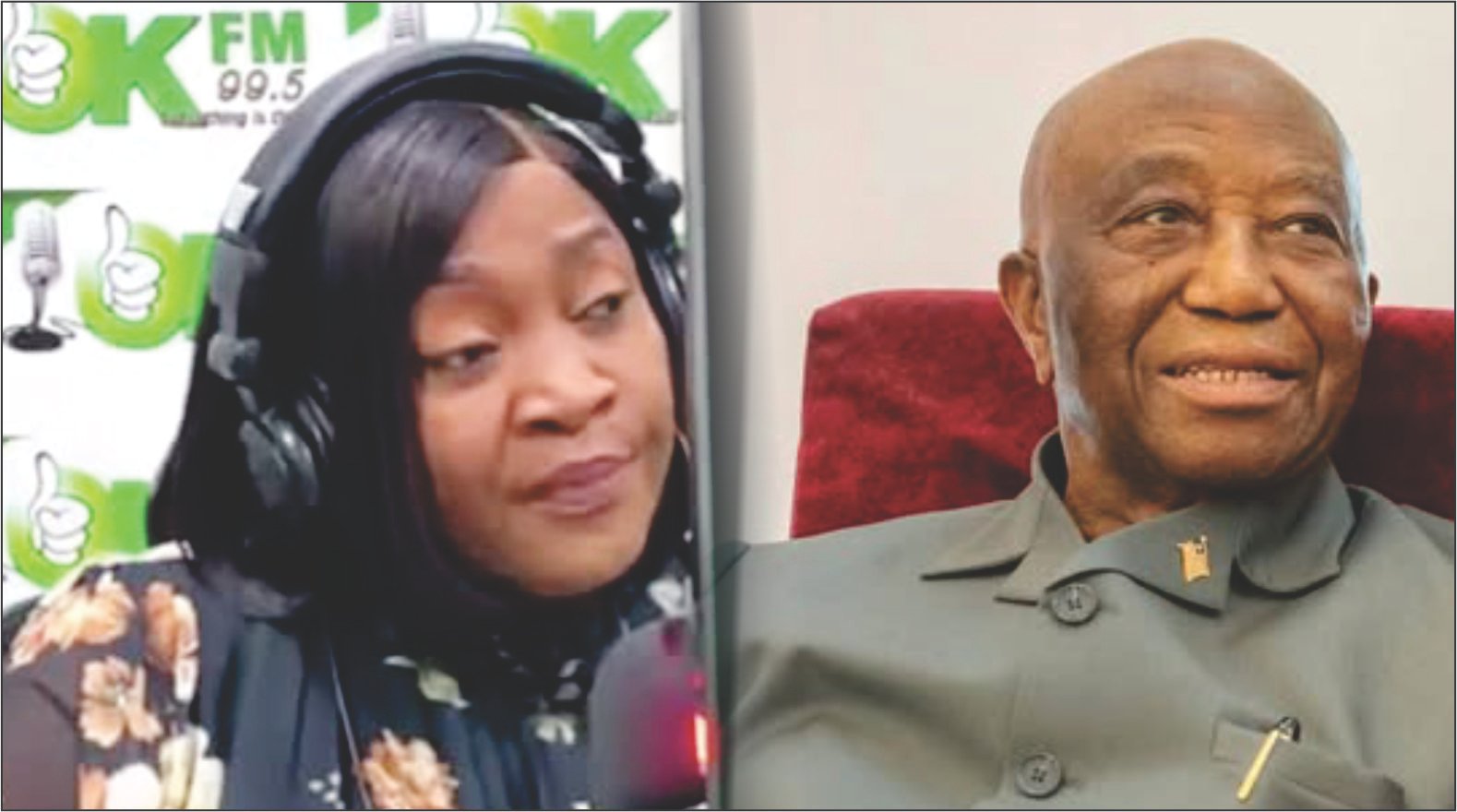
Monrovia, Liberia — Former Liberian Vice President Jewel Howard-Taylor has disclosed that her relationship with President Joseph Nyuma Boakai is no longer as close as it was when both served as vice presidents, attributing the distance to limited access to the presidency.
Speaking during a recent appearance on OK Morning Rush with Clarence Jackson on OK FM, Howard-Taylor said she enjoyed a cordial working relationship with Boakai while serving in government, particularly during his tenure as vice president. She recalled consulting with him on several occasions after she assumed the vice presidency but said that has changed since he became president.
According to Howard-Taylor, she has requested appointments with President Boakai on several occasions without success, noting that the only recent personal interaction between them occurred when the president visited to console her following the death of her son.
“There is a family relationship, but I don’t think there is a personal relationship,” she said.
When asked about reports of strained relations between President Boakai and former President George Weah, Howard-Taylor declined to speculate, saying she could only speak from her own experience. However, she noted that during the Weah administration, both she and the former president made several visits to Boakai, who was then an opposition figure.
The former vice president also expressed concern over what she described as Liberia’s lack of national reconciliation, arguing that the country remains deeply divided along political lines. She urged both the current administration and future governments to make reconciliation a national priority, emphasizing that leadership should serve all Liberians regardless of political affiliation.
Howard-Taylor praised the Weah administration’s policy of retaining civil servants after taking office in 2018. She said President Weah instructed officials not to dismiss career government employees, adding that her own office inherited staff from former Vice President Boakai without terminating them. She contrasted that experience with the current administration, claiming that many employees who served under her have since been dismissed despite being civil servants.
She maintained that while every new government has the right to appoint its own political officials, career civil servants should be protected from politically motivated dismissals.
Assessing the Boakai administration, Howard-Taylor pointed to the country’s growing drug crisis as one of Liberia’s most pressing challenges. She said the government’s handling of major drug trafficking cases has left many Liberians disappointed and called for greater transparency in investigations involving large narcotics seizures.
Drawing from personal experience, Howard-Taylor revealed that one of her sons struggled with drug addiction for years before successfully undergoing rehabilitation in Ghana. She used the experience to underscore the devastating impact of substance abuse on Liberian families and stressed the need for stronger prevention and rehabilitation efforts.
She also recalled that during the Weah administration, efforts were made to establish rehabilitation centers for people battling drug addiction, including a facility at Kakata Hospital, and urged the current government to intensify the fight against narcotics trafficking and addiction.