


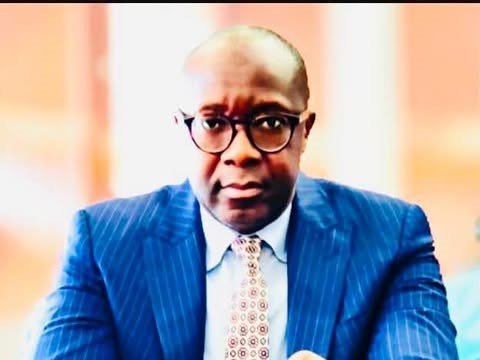
Gbarpolu County Senator Amara Konneh has challenged President Joseph Nyuma Boakai to take stronger action in the government’s ongoing fight against illegal drugs, saying the President is facing battles both outside and within his own security structure.
Konneh said Boakai is dealing not only with drug trafficking networks but also with questions surrounding some of the officials responsible for fighting the drug trade.
“Our President and Commander-In-Chief is actively fighting the war on drugs on two fronts: fighting the cartel and dealing with his own top security officials, whom he depends on to fight the cartel,” Konneh wrote.
The senator’s comments come amid growing public attention to recent cocaine investigations and allegations of corruption involving security officials.
Konneh questioned the decision by the country’s leading anti-drug official to recuse himself amid allegations of receiving a bribe from a drug cartel.
“When the leading anti-drug chief recuses himself instead of facing immediate dismissal and criminal charges over a cartel bribery scandal, it clearly reflects a lack of accountability and represents a strategic retreat,” he said.
He argued that the development places the President in a difficult position and urged Boakai to act decisively against anyone found to have links to drug trafficking.
“We fully support our President in this two-front war and urge him not to let his advisors hold him hostage. He should move beyond superficial optics and be the CIC to flush out all enemies in this battle against illicit drugs, a serious national security threat,” Konneh said.
Konneh reminded the President that fighting illegal drugs was among the commitments made during his presidential campaign.
“We will wait and see what he does on Monday when the 48 hours are up,” he added.
Concerns Over Public Confidence
The senator also raised concerns about growing public distrust surrounding the government’s handling of major cocaine investigations.
“Public distrust remains high following the massive multi-million-dollar cocaine busts due to the ongoing internal turmoil within the investigation,” Konneh said.
He pointed to reports published by Spoon, FrontPageAfrica and Verity News, as well as information released by activist Martin N. Kollie, saying several people mentioned in connection with the investigations have either been arrested, dismissed or recused themselves.
Konneh also questioned why some senior security officials reportedly removed from the National Security Agency and Liberia National Police in connection with the investigations remain at liberty.
He credited journalists and activists for keeping public attention on the cases.
“We thank them immensely for their investigative journalism and advocacy; otherwise, this would have been a cold case by now, like other high-profile cases,” he said.
Focus Turns to Monday
Konneh said President Boakai has given investigators until Monday to report on an alleged bribery matter involving a security official.
He also referenced a separate claim by activist Martin Kollie, who has said his investigation uncovered what he described as a major development in the US$317 million drug case.
According to Konneh, Kollie has promised to release evidence before Monday and indicated that the findings could lead to another arrest.
“So, Monday is a big day for Cocaingate!” Konneh wrote.
The senator urged Liberians to continue demanding accountability while supporting efforts to combat drug trafficking.
“We must make Liberia unattractive to drug traffickers and their Liberian protectors. This is everybody’s business, and I will keep speaking up for the silent majority, many of whom are victims of the drug epidemic our President is fighting,” he said.
Konneh concluded by urging citizens to pray for President Boakai and calling on him to demonstrate the courage needed to confront drug trafficking and any state officials found to be facilitating it.
The allegations cited in the senator’s statement have not been established in court. Those accused remain entitled to due process and the presumption of innocence unless proven guilty.