


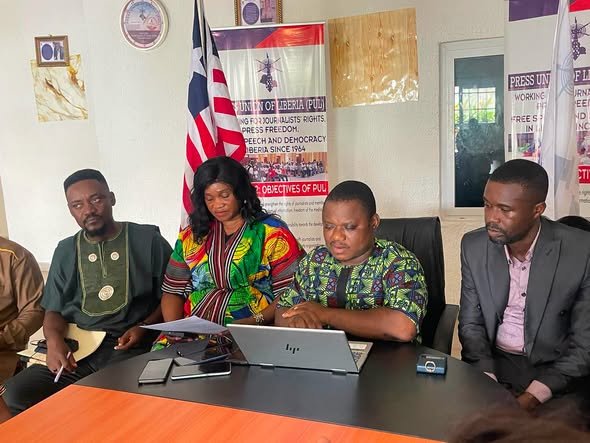
MONROVIA, Liberia — A coalition of leading civil society organizations has raised concerns over delays in the establishment of Liberia’s War and Economic Crimes Court and Specialized National Anti Corruption Court, urging the Joseph Boakai Administration and the Legislature to take decisive action ahead of Liberia’s assumption of the Presidency of the United Nations Security Council in December 2026.
The National Civil Society Consortium for Transitional Justice, in a press statement issued Tuesday, September 8, said Liberia’s growing role on the international stage must be matched by progress in strengthening justice, accountability and the rule of law at home.
The Consortium acknowledged steps already taken by the government, including the passage of a Joint Resolution by the 55th Legislature in April 2024 supporting the establishment of the War and Economic Crimes Court, the creation of the Office for the Establishment of the War and Economic Crimes Court for Liberia, and the submission of draft legislation for the proposed courts.
However, the group said the process remains incomplete and called for the timely passage of the necessary enabling laws to establish, fund and operationalize both institutions.
Liberia was elected to the United Nations Security Council for the 2026 to 2027 term and is expected to assume the Council’s rotating presidency in December 2026.
The civil society organizations argued that the country’s international commitments to peacebuilding, human rights, justice and accountability should be reflected in its domestic policies.
“Liberia cannot credibly advocate for the protection of civilians, women’s participation in peace and security, credible sanctions against corruption, accountability for serious human rights violations and respect for international law abroad, while leaving critical justice and accountability reforms unfinished at home,” the Consortium said.
The group emphasized that victims and survivors of Liberia’s civil wars, including women and girls who experienced conflict related sexual and gender based violence and other serious abuses, have waited more than two decades for justice.
According to the Consortium, the establishment of a credible and victim centered War and Economic Crimes Court would contribute to accountability, reconciliation and the country’s commitments under the Women, Peace and Security agenda.
The group also stressed the importance of establishing a Specialized National Anti Corruption Court, arguing that corruption and the misuse of public resources continue to affect public confidence in government and undermine access to essential services.
Among its recommendations, the Consortium called on President Boakai to engage the leadership and members of both houses of the Legislature to facilitate the timely passage of the bills.
It further urged the government to include funding for both courts in the 2027 National Budget and seek support from international partners to ensure their long term sustainability.
The Legislature was also urged to deliberate on and pass the proposed laws without unnecessary delay.
The Consortium, while recognizing the importance of public and constituency engagement, cautioned against allowing such consultations to become a reason for prolonging the process.
It further called for both courts, once established, to operate independently and in accordance with constitutional and international human rights standards, including fair trial guarantees, judicial independence, transparency and the protection of victims and witnesses.
The coalition also called on the United Nations, European Union, United States Government and other international partners to continue supporting Liberia’s efforts to establish and operationalize the proposed courts.
The statement was signed by the Press Union of Liberia, Center for Transparency and Accountability, Women’s NGO Secretariat of Liberia, Association of Female Lawyers of Liberia, National Muslim Council of Liberia and the Liberia Council of Churches.
The National Civil Society Consortium for Transitional Justice said it remains prepared to work with national institutions and international partners to advance the establishment of the courts.
As Liberia prepares to take on a more prominent role at the United Nations Security Council, the group said completing the country’s long standing justice and accountability reforms would strengthen public confidence and reinforce Liberia’s commitment to the principles it seeks to advance internationally.
“Justice delayed is justice denied,” the Consortium said, urging the Boakai Administration to act.