


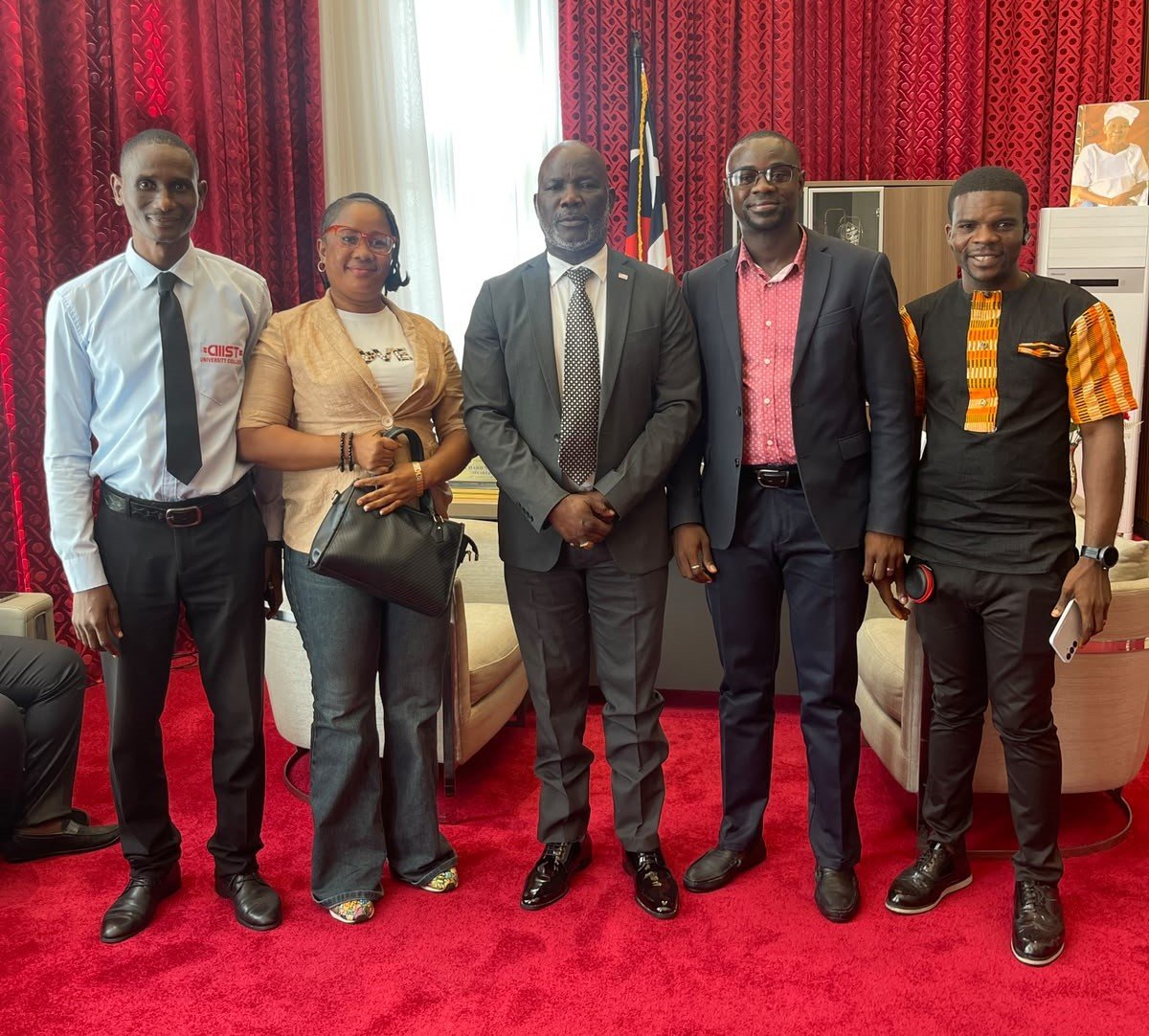
The Africa International Institute of science and technology (AIIST) University College has appealed to the National Legislature for consideration in Liberia’s national budget, arguing that its record of investing in education, skills development and public-sector capacity makes a strong case for government support.
The institution’s President, K. Ishmael V. Conneh, made the appeal in a formal request addressed to Speaker Richard N. Koon, stressing that AIIST was not simply seeking financial assistance from government.
“We have not come here simply to ask government for money. We have come to make a case for investment in Liberia’s people,” Conneh said.
According to AIIST, the institution has already contributed significantly to national human-capital development through free training, scholarships and support for young people.
The university college said it has provided tuition-free training to at least 280 members of Liberia’s security and public-service sector, including personnel of the Liberia National Police, Armed Forces of Liberia, Liberia Immigration Service, Liberia Drug Enforcement Agency, Executive Protection Service, Liberia National Fire and Rescue Service and Liberia Land Authority.
Personnel from the Ministry of Foreign Affairs were also included in the training initiative, which AIIST estimates cost approximately US$90,000.
Conneh argued that the beneficiaries were not merely students but public servants whose enhanced capacity directly contributes to the functioning of Liberia’s institutions.
AIIST also cited its involvement in the Government of Liberia’s Digital Transformation Project as evidence of its contribution to national development.
The institution said it helped implement digital-literacy training beyond Monrovia, including in Lofa, Grand Cape Mount and Bomi Counties, as part of the national initiative targeting young Liberians.
AIIST said more than 10,000 young people were reached through the broader digital-skills initiative.
The university college said its participation demonstrates that private educational institutions can complement government efforts in addressing Liberia’s skills and human-resource challenges.
“AIIST is not waiting for government to do everything. AIIST is already helping government do more,” Conneh said.
The institution further highlighted its scholarship program, saying it currently supports more than 75 academically outstanding students from at least 50 high schools across Monrovia and its environs.
AIIST estimates the annual cost of the scholarship initiative at approximately US$76,000.
The university college also said it provides financial assistance to about 65 student-athletes, including footballers and basketball players, at a cost of approximately US$21,500.
Conneh said the initiatives reflect AIIST’s belief that financial hardship should not prevent talented Liberians from pursuing higher education.
He said the institution’s philosophy is captured in its motto, “Learn by Doing It,” emphasizing practical skills, competence and innovation alongside academic qualifications.
AIIST currently offers degree programs in areas including Information Technology, Environmental Science, Electrical Engineering Technology, Maritime Logistics and Technology, Social Work, Business Administration and Islamic Education.
The institution wants the Legislature to consider providing appropriate budgetary support to enable it to expand its training programs, scholarships, digital-skills initiatives, laboratories and technology infrastructure.
However, Conneh acknowledged that any public support must be accompanied by strong accountability measures.
He said AIIST is prepared to submit to appropriate mechanisms for transparency, reporting, monitoring, auditing and accountability if government funding is approved.
“Our request is not simply for institutional survival. Our request is for institutional capacity to do more,” Conneh said.
The appeal places AIIST’s request within the wider national debate over how government can leverage private and faith-based educational institutions to address Liberia’s shortage of skilled professionals.
For AIIST, the institution says its existing investments in students, public servants and digital-skills development demonstrate that it is already contributing to national priorities and that additional public support could enable it to do more.
“When Liberia invests in education, Liberia invests in its people,” Conneh said. “When Liberia invests in its people, Liberia invests in its institutions and when Liberia invests in its institutions and young people, Liberia invests in its future.”