

It’s a super busy evening here in Western Europe. I am a bit tired, but I have to do this quickly. I just read Mr. Amin Modad’s analysis. The divergence contained below is just a synopsis.
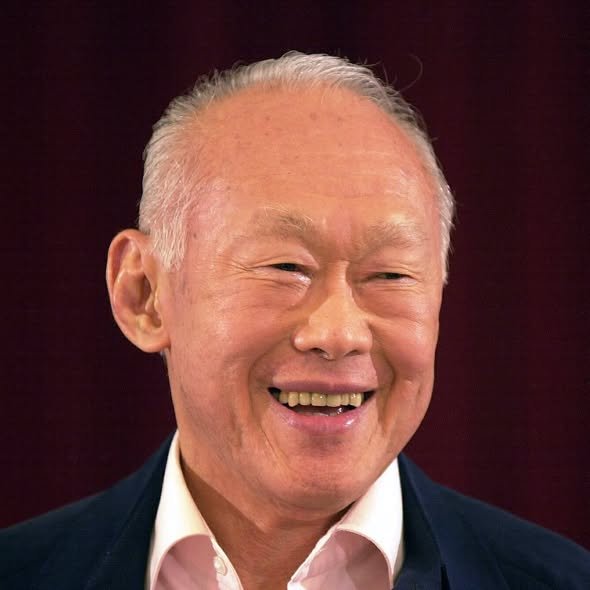
For starters, it obliges us to pay homage to Lee Kuan Yew since the name Singapore  did pop up in Mr. Modad’s write-up.
1) The nominal GDP of Singapore in 1976 was US$6 billion. The nominal GDP of Liberia right now, in 2026, is US$5.72 billion. So, Liberia, in 2026, is still what and where Singapore was 50 years ago, in 1976. Note: Right now, in 2026, Singapore’s nominal GDP is at US$667.89 billion, which is 11,576.40% bigger than Liberia’s US$5.72 billion. Let’s move to a more appropriate economic measurement or gauge (e.g., per capita, LBR vs. SGP).
2) The GDP per capita of Singapore in 1971 was US$1,075. The GDP per capita of Liberia right now, in 2026, is US$976. So, Liberia, in 2026, is still what and where Singapore was 55 years ago, in 1971. Note: Right now, in 2026, Singapore’s per capita is at US$109,117, which is 11,080.02% bigger than Liberia’s US$976. Economically, this is the best way to compare living standards (Liberia vs. Singapore). The simple way to explain this is that the quality of life in Singapore is 112 times higher than in Liberia  .
Let’s break this down even further so that our people across Liberia can understand it: If we were to price everything that we produce right now in Liberia (goods and services), sell it, and decide to share all the money from the sales among all the people in Liberia, each person would get US$976. In Singapore, each person would get US$109,117. What we have now (US$976) per person or per capita in 2026 is what each Singaporean had in 1971. That’s 55 years ago. So, why should Liberia even be compared to Singapore, Mr. Modad? I beg to differ. A simple truth that can be reasonably considered is that Singapore is way ahead of Liberia by about 50 to 55 years.
3) The next point I want to deal with is the fact that Mr. Amin Modad’s analysis mentioned only what a Singaporean Minister earns in 2026, but turned a blind eye to what civil servants in Singapore earn, including the lowest-paid.
Mr. Modad writes: “Today, a Singaporean Minister earns more than US$1 million annually.”
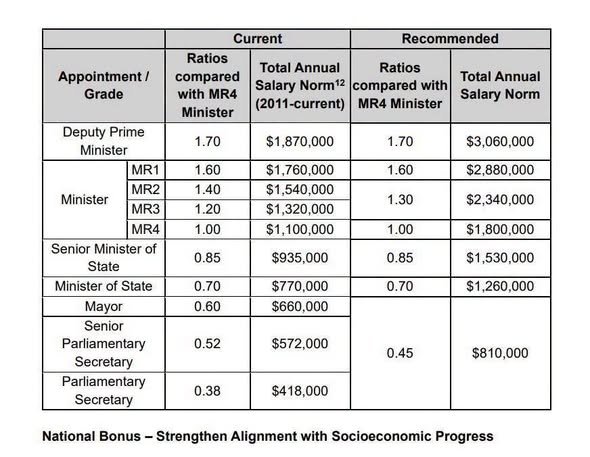
Yes, Mr. Modad is correct that a Minister (MR4) earns US$1.1 million annually, as reflected in the attachment, but he failed to also tell you that even a secretary in Singapore earns US$418,000. How much does a secretary in Liberia earn? His analysis detoured from that.
Singapore has about 154,000 public sector workers as of August 2026. The lowest-paid earn around US$2,000 net as of August 2026, which is US$24,000 per year. Here, we are mostly talking about people who do menial jobs in the public sector workforce of Singapore, and not professional teachers, health workers, security personnel, office staffers, etc.
Liberia tells a completely different story. The lowest-paid public sector worker in Liberia earns around US$150 gross or even less, which is US$1,800 a whole year. It would take a public-school teacher, a nurse, or a security personnel earning US$1,800 a year (US$150 a month) up to 232 years to earn what a secretary in Singapore earns in one year. We hope everyone sees the disparity or gap. Mr. Modad dodged this harsh reality.
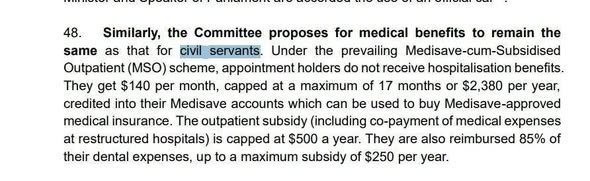
Excluding salary, we have also attached what lowest-paid civil servants in Singapore receive in medical benefits. Please read it. Are civil servants in Liberia receiving medical benefits, Mr. Modad? Weren’t MCSS teachers just protesting last week?
4) My last point is this. Mr. Modad somehow argues or insinuates that keeping salaries and benefits of senior public officials that high in a very poor and aid-dependent economy like Liberia would deter corruption and lead to getting the job done in Liberia (e.g., high performance/output in public service).
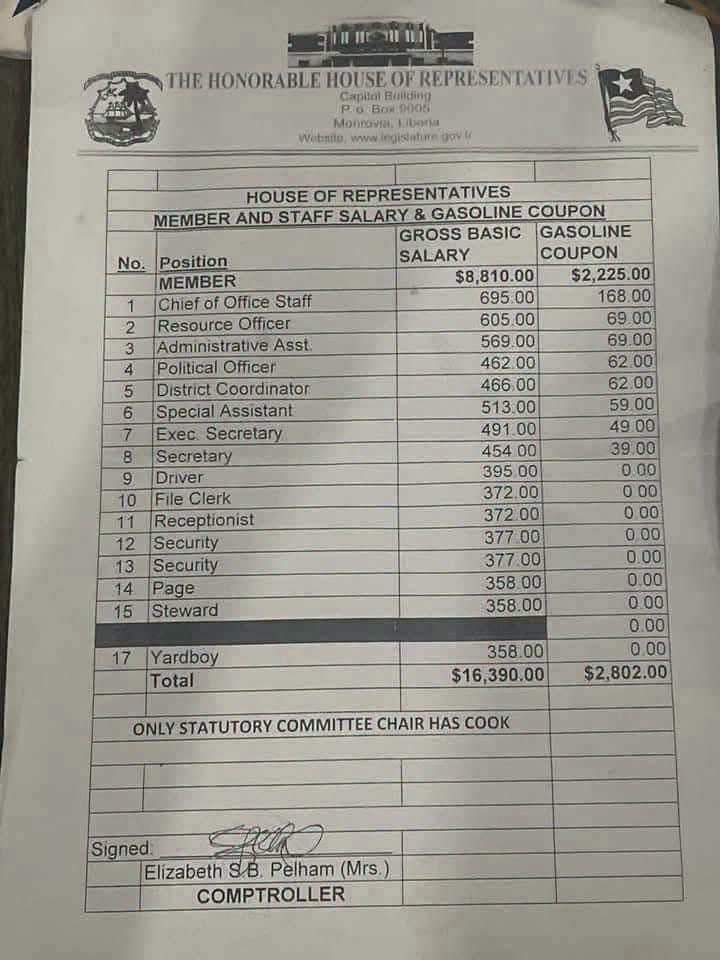
Liberian Lawmakers defeat this argument and/or insinuation. On average, Lawmakers in Liberia earn US$8,810 monthly in salary, excluding huge benefits, as attached. This is far more than what lawmakers in Rwanda (US$1,204)  , Tanzania (US$4,545)
 , Botswana (US$3,518)
 , and Sierra Leone (US$810)
 are earning. Meanwhile, the cost of living comparatively in these countries is higher than in Liberia. So, why are we paying more?
Let’s provide another simple example. Deputy Speaker Thomas P. Fallah of Liberia earns US$12,259.62 only in monthly salary while Deputy Speaker Beline Uwineza of Rwanda earns US$1,653. This means that every month, Fallah of Liberia is earning 641.66% more than Uwineza of Rwanda in just salary alone. Is Fallah productive or performing more than Uwineza, for which he gets all that money? I just checked and Kigali retained its position as Africa’s cleanest city in the latest 2025/2026 ranking, whereas Monrovia could not even come close to the 30th place.
So, have the exorbitant salaries and benefits of Liberian lawmakers deterred corruption or led to any real transformation in Liberia (“high output or performance”)? We ask this same question of ministries and agencies in Liberia. How many audit reports of massive corruption are there at the GAC, indicting “big shots” who once earned and are earning almost all the biggest salaries and benefits in Liberia? Liberia is still the 8th poorest country in the world after 179 years (Global Finance, 2026). What can you say about this, Mr. Modad, even though a few elites have been receiving all the biggest salaries and benefits?
So, Mr. Modad, comparing Liberia to Singapore misses the point altogether. To conclude, the salary of a Singaporean Minister in 2026 as you referenced was never the salary of a Singaporean Minister in 1970 when Singapore once looked like Liberia now. The Prime Minister of Singapore in 1970 earned US$3,500 a month while a Cabinet Minister earned US$4,500. So, Mr. Amin Modad, Singaporean Ministers did not just jump straight US$1.1 million as your analysis may have surmised.
Recommendation: That’s why our argument remains unchanged since January 22, 2024 when President Boakai was inaugurated: Bring all “big shots” across govenment, including lawmakers, down to at most US$5,000 and push civil servants up to at least US$500. There’s an urgent need for structural adjustments if income inequality and poverty must be mitigated or addressed, and if equity means anything to Liberian leaders.
Mr. Amin Modad, I think your analysis may have missed out or shrugged off some of the economic fundamentals and structural realities across the both countries (H2H: Liberia vs. Singapore). Country-to-Country comparison must always take into account other important socioeconomic variables. But yours didn’t. That’s why I beg to differ. And that’s why I think your analysis has missed the real point altogether
Data Source: IMF, World Bank, Singapore Public Service Division, 2026.
About The Author: Martin K. N. Kollie is a Liberian activist in exile and a former student leader in Liberia.