

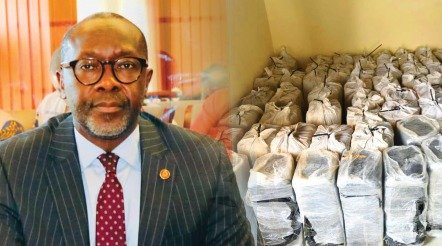
Gbarpolu County Senator Amara Konneh has praised President Joseph Boakai’s recent anti-drug crackdown while cautioning that Liberia’s fight against narcotics trafficking will ultimately fail unless authorities dismantle what he calls the “big hands” and the “moral hazard” that continue to sustain the country’s illicit drug economy.
Commenting on the government’s recent anti-drug operations, Konneh said the seizure of large quantities of cocaine, the arrests of suspects, and the public destruction of confiscated narcotics send a strong message. However, he argued that the real test lies in whether the government is prepared to pursue those who finance, protect, or facilitate the illicit business.
“Big hands must be dismantled,” Konneh declared.
The senator said drug trafficking is sustained not only by international cartels but also by weaknesses within state institutions that allow criminal networks to operate.
Drawing on basic economic principles, Konneh likened the drug trade to a market driven by opportunity. He said traffickers naturally gravitate toward countries where border controls are weak, oversight is limited, and the risk of being caught is low.
He also pointed to what economists describe as “moral hazard”—a situation in which people take illegal or reckless risks because they believe they will not face the consequences.
According to Konneh, that mentality can develop when public officials abuse their positions to shield criminal activities, believing their rank or influence will protect them from prosecution. He warned that while a few individuals may profit, the long-term cost is paid by Liberia’s youth, communities, and national image.
“The government has taken an important step by intercepting drugs and arresting suspects. But this fight cannot end with burning cocaine. It must include dismantling the networks that make the trade possible,” he said.
The Gbarpolu lawmaker warned that unless corruption becomes more costly than the profits generated by drug trafficking, criminal organizations will continue to exploit Liberia as a transit route.
He also noted that international studies have shown that enforcement alone rarely eliminates drug trafficking. Instead, crackdowns often force traffickers to change routes or methods while the trade continues.
For that reason, he said Liberia’s strategy must combine strong law enforcement with institutional reforms that remove corruption from the agencies responsible for protecting the country’s borders.
“You cannot protect the country if those entrusted with enforcing the law are compromised. The people who make this trade possible from within the system must also be held accountable,” he noted.
While commending President Boakai for taking decisive action, Konneh urged the administration to sustain the momentum and ensure that investigations reach everyone involved, regardless of their office or political connections.
He ended with a call for national unity, saying the fight against narcotics should never become a political contest.
“Politics will always have its differences. But the fight against drugs is about protecting Liberia’s future. It is a national responsibility, and it is far from over,” he added.