


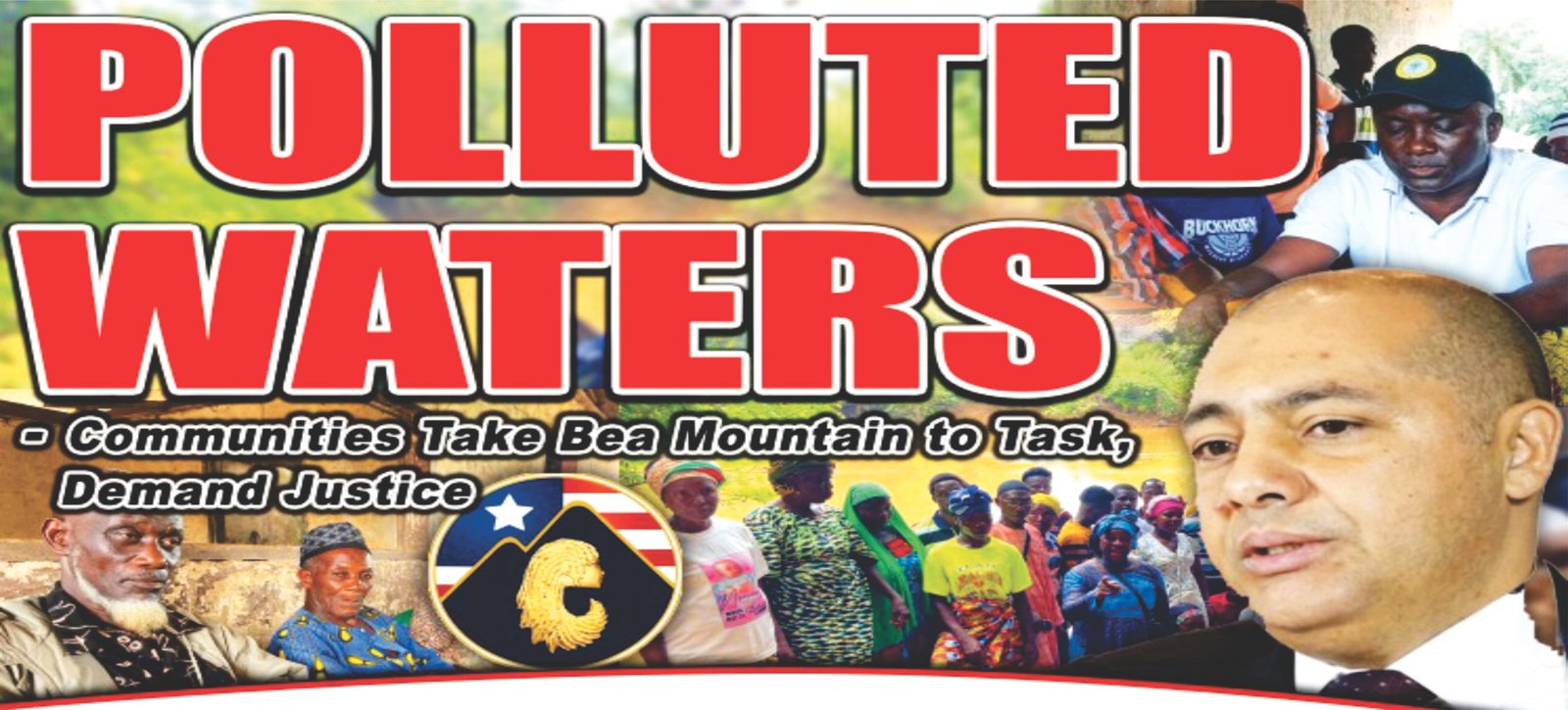
Fish that once fed over 30 communities along the Mafa River are now feared, farmland is struggling, and safe drinking water is scarce, residents of Wangekor and 34 other communities told Verity News, blaming a June 2022 chemical discharge from Bea Mountain Mining Company (BMMC). The communities claimed their US$100 million lawsuit is now stalled at the Supreme Court amid Bea Mountain’s Appeal.
The communities allege that a chemical discharge in June 2022 contaminated the Mafa River, killing fish and other aquatic life and disrupting a water source that previously sustained more than 30 communities through fishing, farming, and domestic activities.
During a community engagement in Wangekor, residents told Verity News that the river, once a major source of food and income, has become a source of fear. They claimed that people who consumed fish from the river subsequently became seriously ill, with some reportedly dying after experiencing unexplained sicknesses.
Residents also reported livestock deaths after animals consumed river water, while farmers alleged that agricultural activities have suffered due to the suspected contamination.
The communities further claimed that they have struggled to obtain safe drinking water and adequate assistance since the incident, despite repeated engagements with the company and relevant stakeholders.
BEA MOUNTAIN DENIES RESPONSIBILITY
Bea Mountain Mining Company has denied allegations that its operations caused the reported pollution. However, residents maintain that information allegedly communicated to them by Environmental Protection Agency (EPA) officials identified chemical waste as responsible for the contamination.
The communities have also questioned the company’s denial, arguing that Bea Mountain is the only concession operating in their immediate area using chemicals in its mining activities. However, that assertion requires independent environmental verification.
US$100 MILLION LAWSUIT REACHES SUPREME COURT
In September 2025, the Mafa River Community Society instituted a US$100 million lawsuit against Bea Mountain, seeking compensation for alleged environmental destruction, lost livelihoods, and other damages associated with the 2022 incident.
According to a November 7, 2026 statement issued by the community, Bea Mountain subsequently appealed a Civil Law Court ruling in Montserrado County that recognized the community’s legal standing to pursue the case.
The matter is now before the Supreme Court, where the legal question of whether the community can maintain the lawsuit remains pending.
The residents have expressed frustration over the judicial delay, arguing that affected families continue to bear the consequences while the legal process remains unresolved.
COMMUNITIES DEMAND GOVERNMENT INTERVENTION
Beyond financial compensation, the Mafa River Community Society is demanding environmental restoration, safe drinking water, medical attention for affected residents, and measures to prevent further environmental damage.
The community is also calling on the Government of Liberia, human rights organizations, and international partners to intervene, including demanding that further expansion of Bea Mountain’s operations be halted until the dispute is addressed.
The residents warned that they may seek a writ of prohibition to stop the company’s operations if their concerns remain unresolved.
They also commended their legal counsel, Cllr. Arthur Tamba Johnson, for representing them in the ongoing legal battle.
“We will not be silent until justice is served, our river is restored, and our people are compensated,” the community declared.
UNANSWERED ENVIRONMENTAL QUESTIONS
At the center of the dispute are questions that require independent answers: What chemicals, if any, entered the Mafa River in June 2022? Were water, fish, soil, and aquatic organisms independently tested? What did the EPA’s investigation establish, and what measures were recommended?
The answers could help determine the extent of the alleged environmental damage, identify responsibility, and establish what remediation affected communities require.
For residents of Wangekor and surrounding settlements, the demand is no longer limited to compensation. They want their river, livelihoods, and access to safe water restored.
Four years after the alleged incident, the communities are still waiting for answers.