

By G. Watson Richards
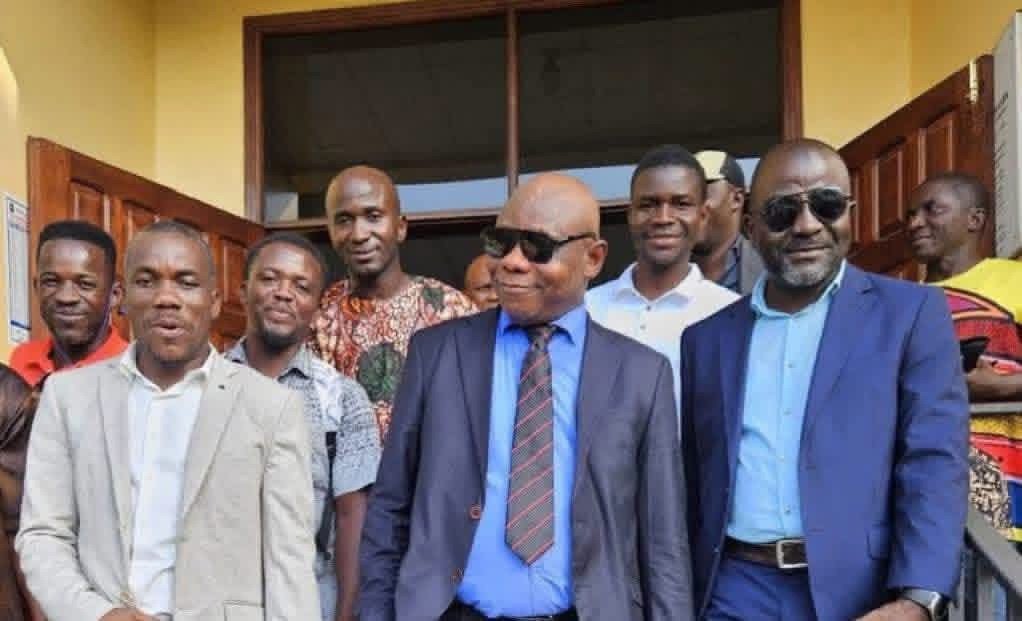
Former Finance Minister Samuel D. Tweah Jr. has denied all allegations of corruption, levied against him and four other former senior government officials in the ongoing 6.2 million economic sabotage case held in criminal Court ‘C’ at the Temple of Justice.
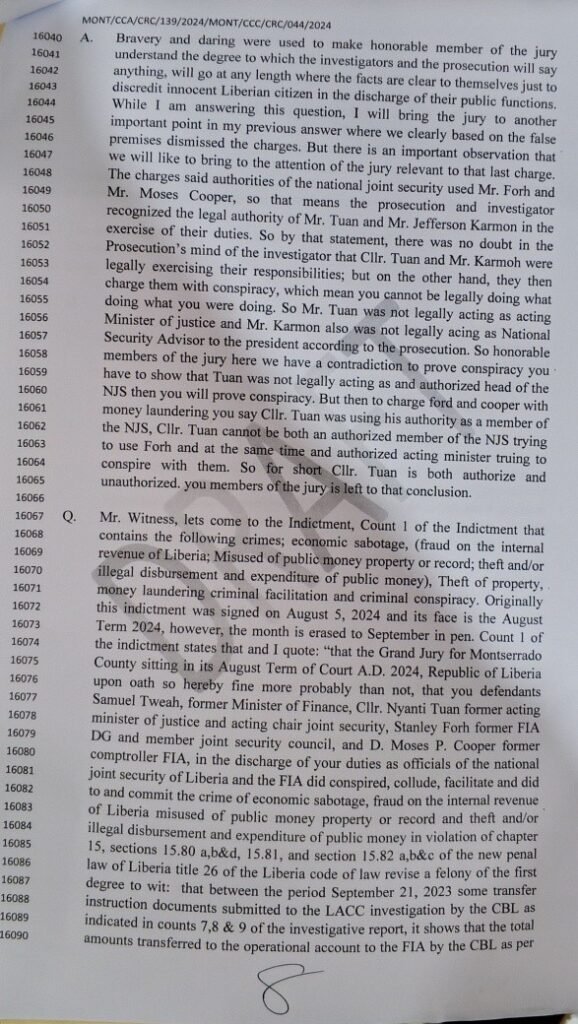
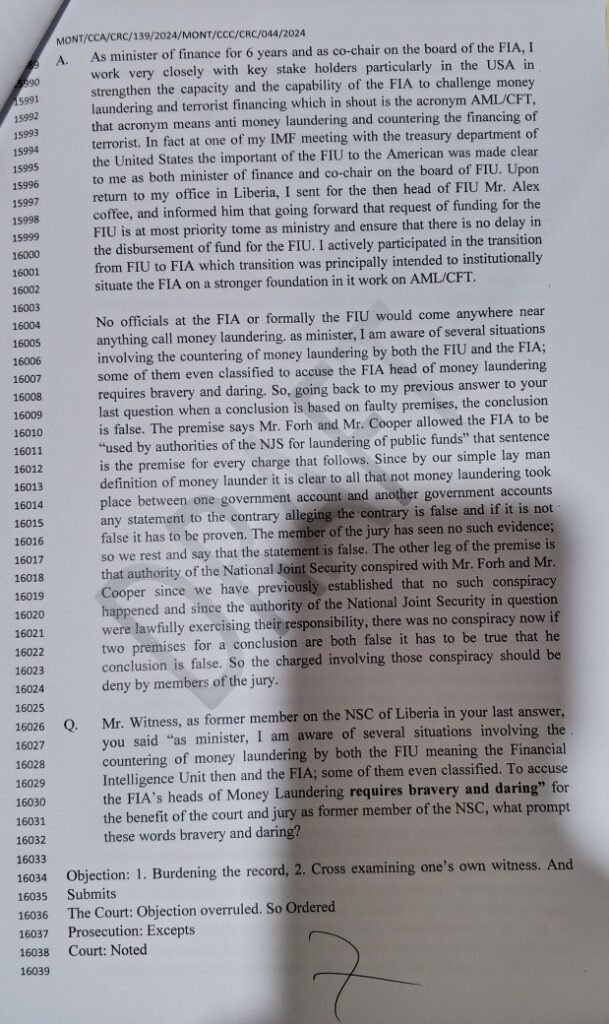
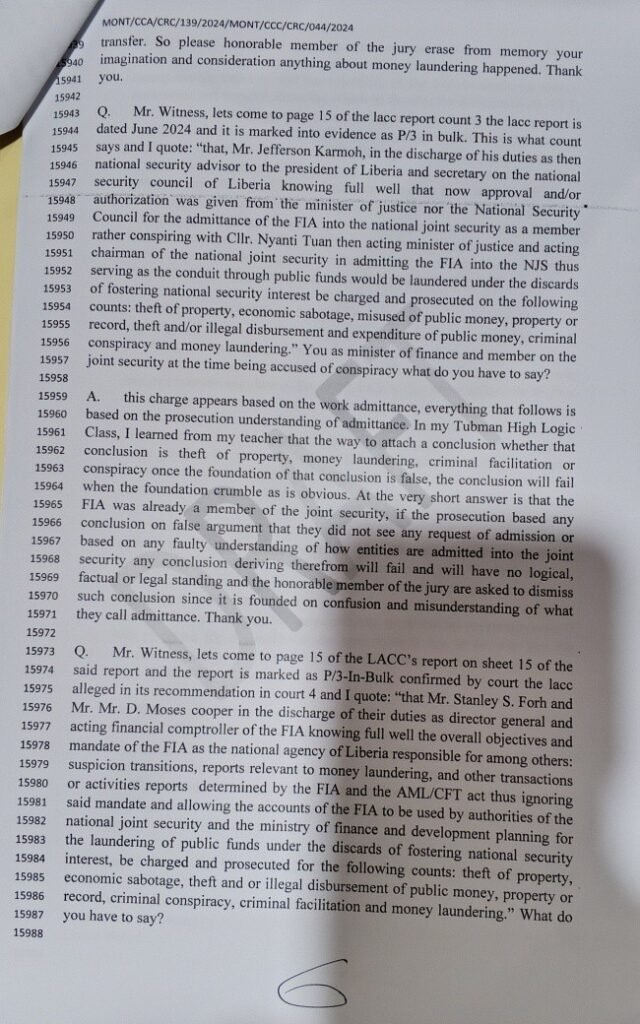
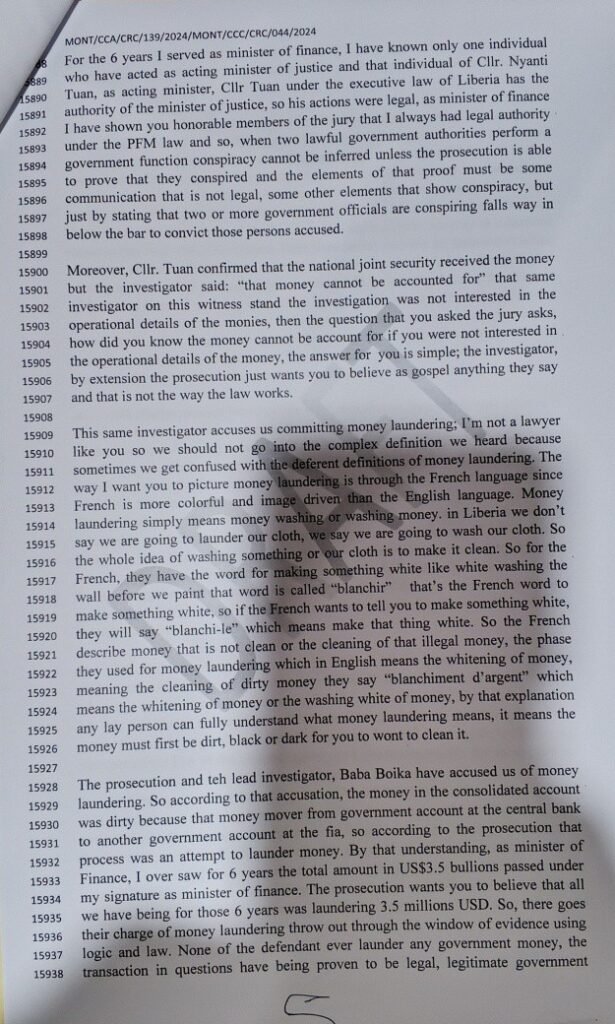
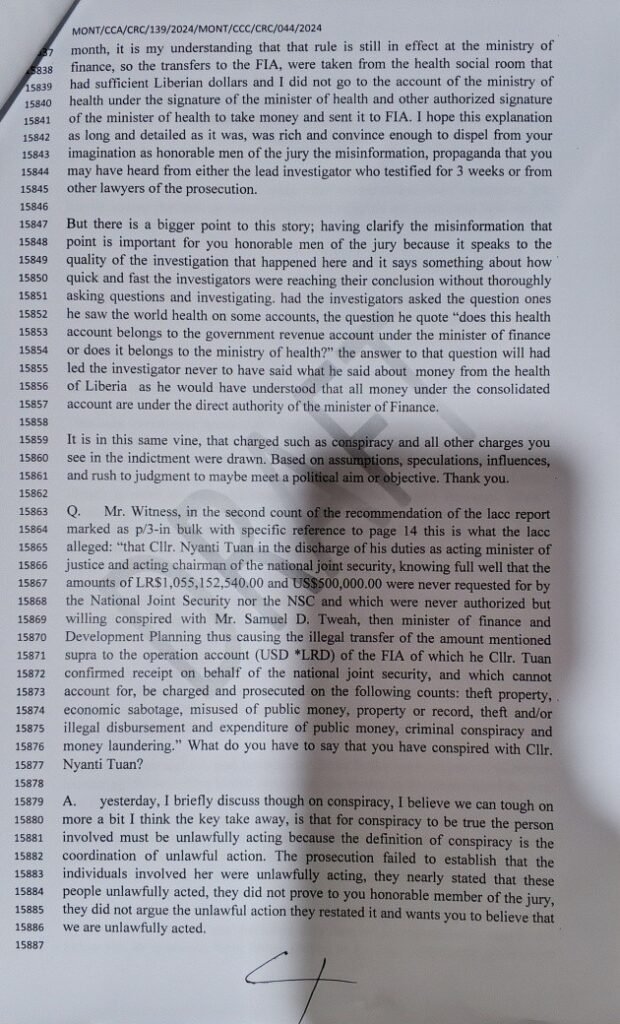
Tweah, while testifying on the witness stand on Wednesday, April 22, 2026, dismissed all charges of criminal conspiracy, money laundering, misused of public funds and amongst other charges.
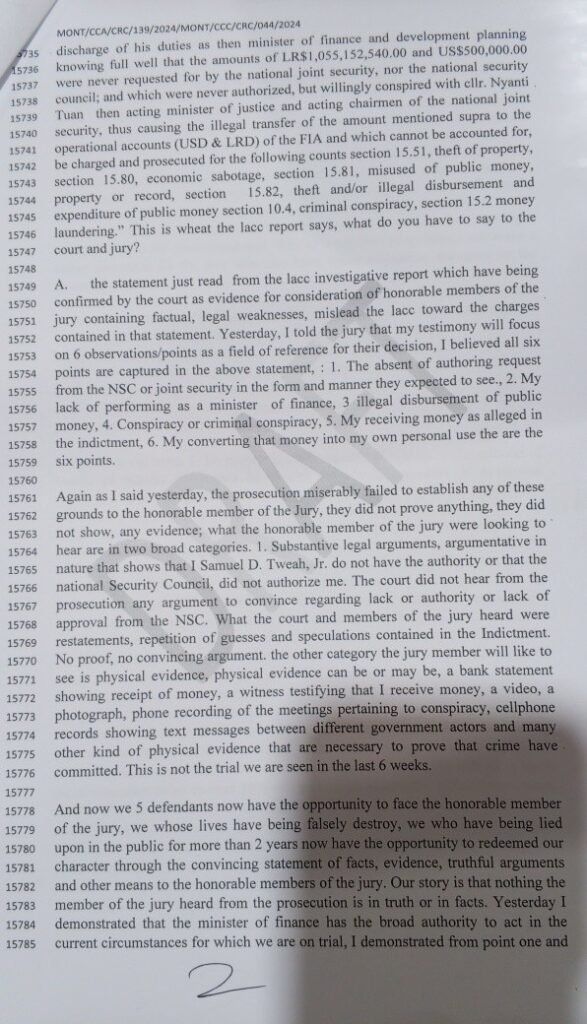
He told the court and panel jury that the state prosecutors have failed to present credible evidence linking him and four other co-defendants to any wrongdoing.
The case, brought by the Liberia Anti-Corruption Commission, centers on the transfer of more than LR$1 billion and US$500,000 to accounts associated with the Financial Intelligence Agency (FIA).
The Liberia Anti-Corruption Commission (LACC) lead Investigator Baba Mohammed Boika while testifying as prosecution prime witness told the court that the funds were not properly authorized and cannot be fully accounted for.
Defense: “No proof”
Testifying in his own defense, Tweah argued that the prosecution relied on assertions rather than evidence.
“The prosecution miserably failed to establish any of these grounds… No proof, no convincing argument.”
He said the state failed to demonstrate: lack of approval from the National Security Council (NSC), any personal benefit to him, or any communication indicating conspiracy.
He further argued that key forms of evidence were absent from the prosecution documentary evidence.
“A bank statement… a witness… a video… This is not the trial we have seen.”
Authority at the center of the case
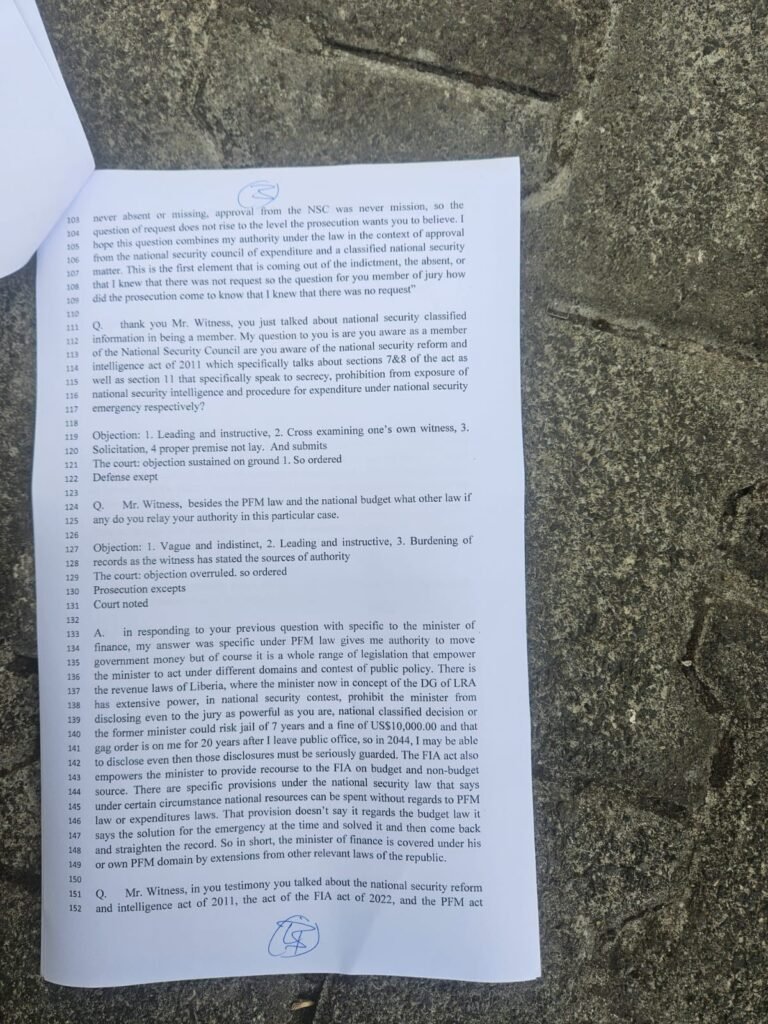
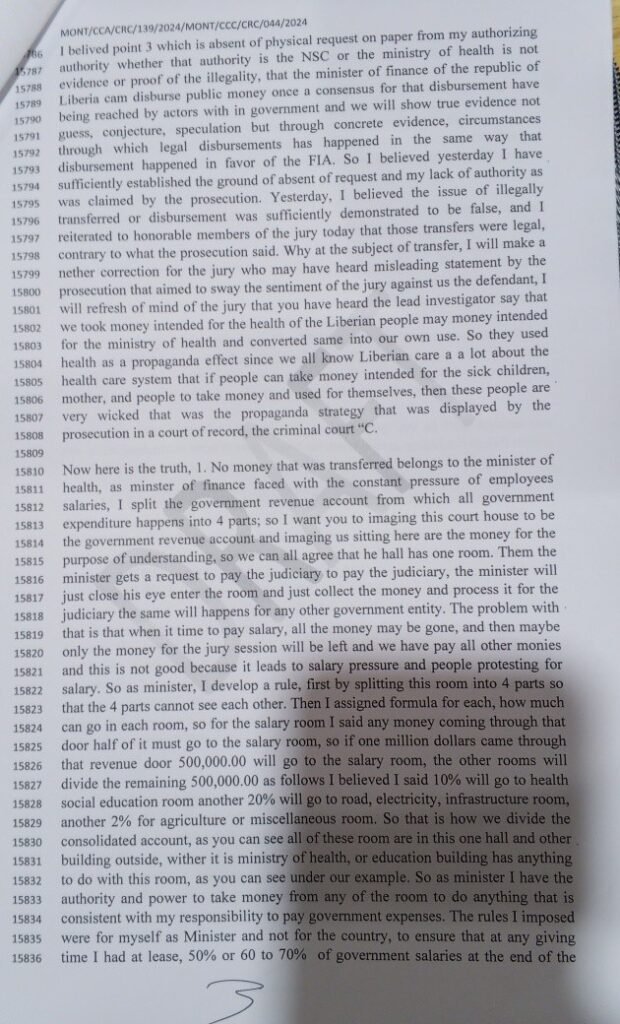
Tweah’s defense rests largely on his claim that, as finance minister, he held broad authority over government spending, including in urgent or security-related situations.
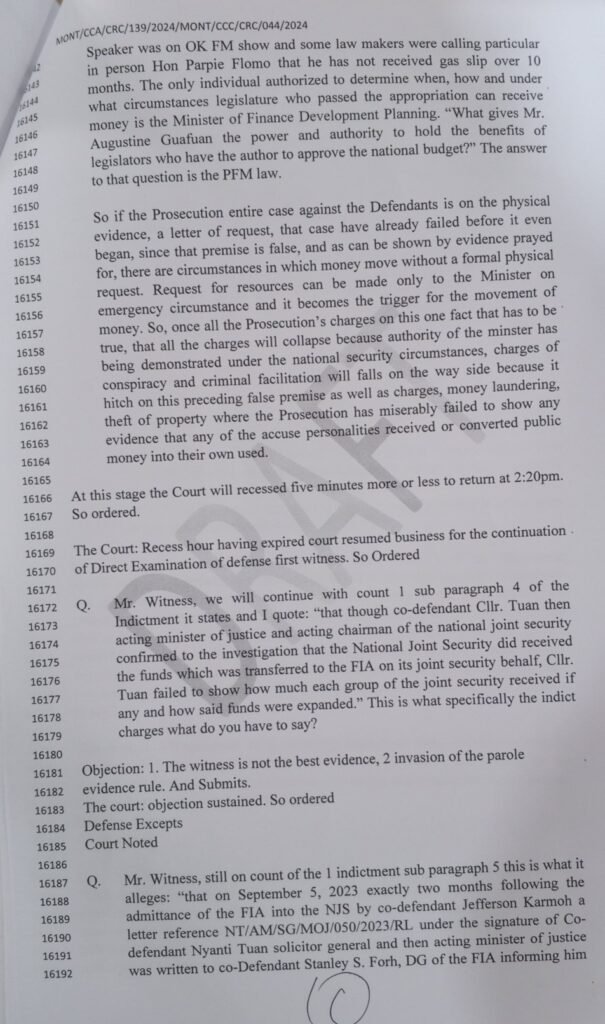
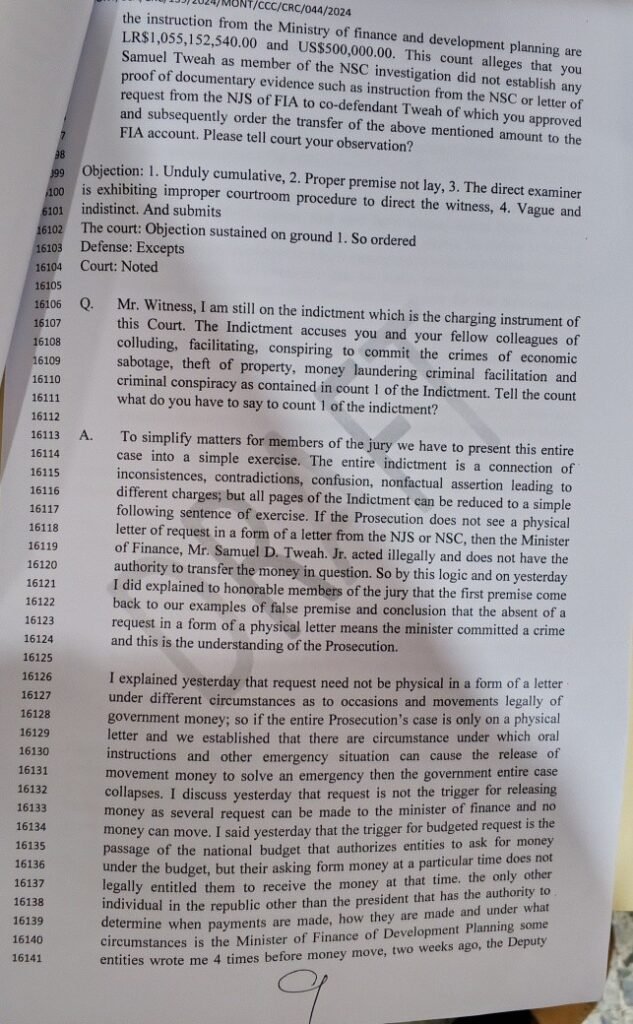
He maintained that requests for funds are not always formalized: “Request need not be physical… there are circumstances in which money moves without a formal physical request.”
Using an analogy, he described government revenue as a unified pool: “All of these rooms are in this one hall… I have the authority and power to take money from any of the rooms.”
Response to conspiracy and laundering allegations
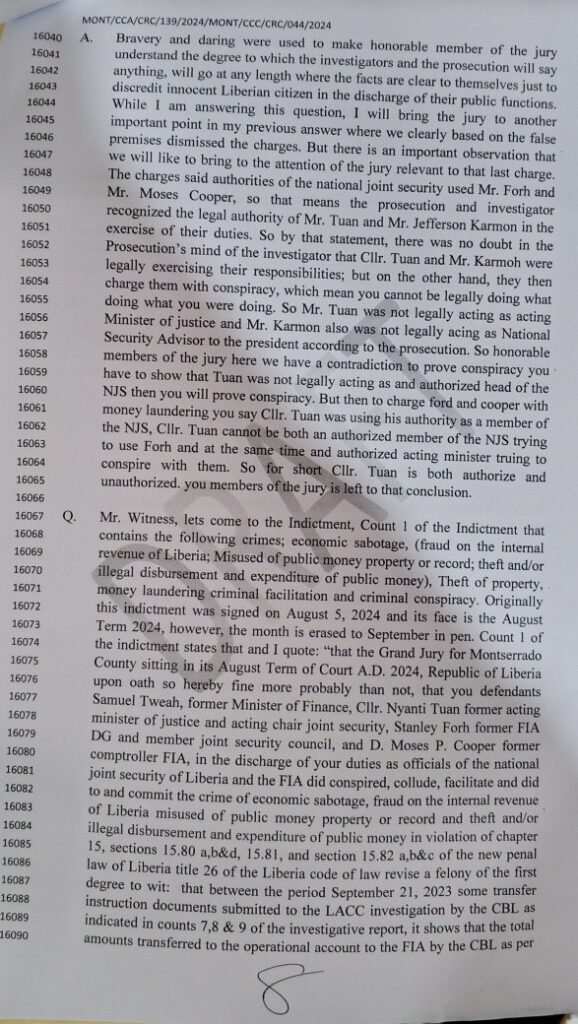
Addressing allegations involving former Acting Justice Minister Nyanti Tuan, Tweah argued that lawful officials performing official duties cannot be accused of conspiracy without proof of illegal intent.
“When two lawful government authorities perform a government function, conspiracy cannot be inferred.”
He also rejected the money laundering charge, stating that the transactions occurred between government accounts.
“Money laundering… means the money must first be dirty… The money moved from one government account to another government account.”
Tensions in the defense account
Despite maintaining that no crime occurred, aspects of Tweah’s testimony raised issues that may prove central to the jury’s deliberations.
He argued that written authorization is not required for fund transfers, yet his defense suggested that NSC approvals existed, though none were presented in court.
At the same time, he cited national security restrictions: “The minister could risk jail… for disclosing national classified decisions.”
This leaves the court to weigh claims of approval that are not supported by documentary evidence.
Tweah also criticized investigators for failing to trace how the funds were used:
“How did you know the money cannot be accounted for if you were not interested in the operational details?”
However, he did not provide a detailed accounting of how the funds were ultimately spent.
Another issue raised was his reliance on both standard financial procedures and emergency powers. While insisting the transfers were lawful, he also stated:
“Resources can be spent without regards to PFM law… then come back and straighten the record.”
This raises questions about whether the actions followed established procedures or were carried out under exceptional circumstances.
Prosecution’s position
According to the indictment, prosecutors argue that: no documented authorization from the NSC or Joint Security has been produced, the transfers were irregular, and the use of the funds has not been clearly accounted for.
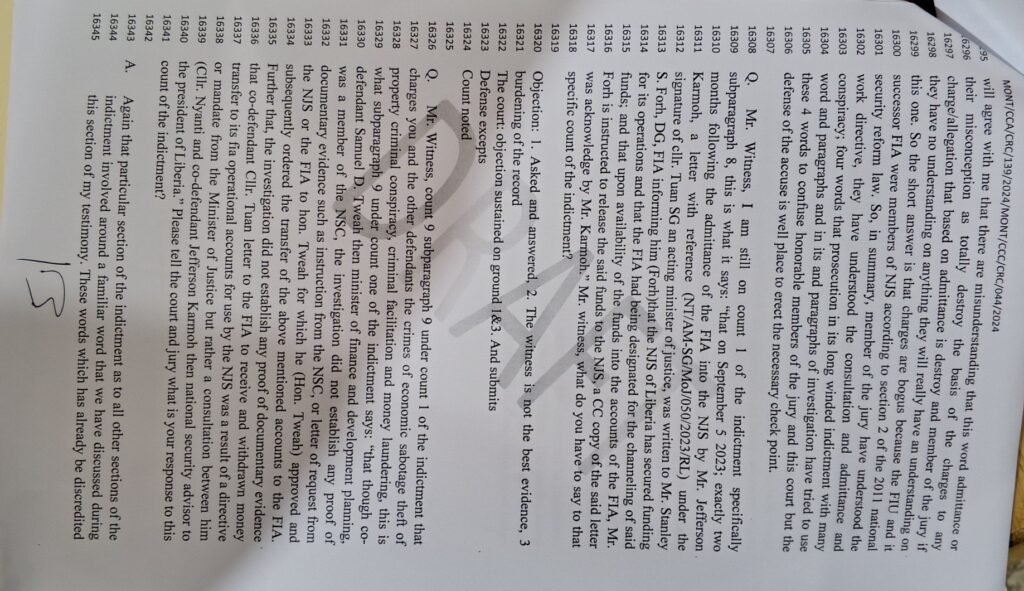
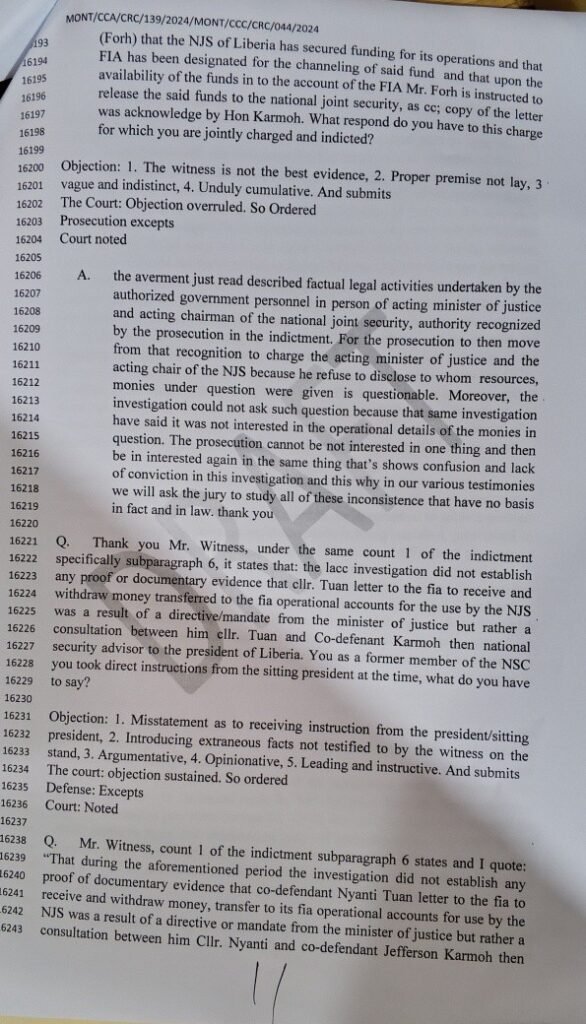
The indictment states: “The investigation did not establish any proof of documentary evidence such as instruction from the NSC or letter of request…”
Proceedings continue
The hearing featured repeated objections from the prosecution, several of which were upheld by the court.
At one point, the judge ruled: “Objection sustained… unduly cumulative.”
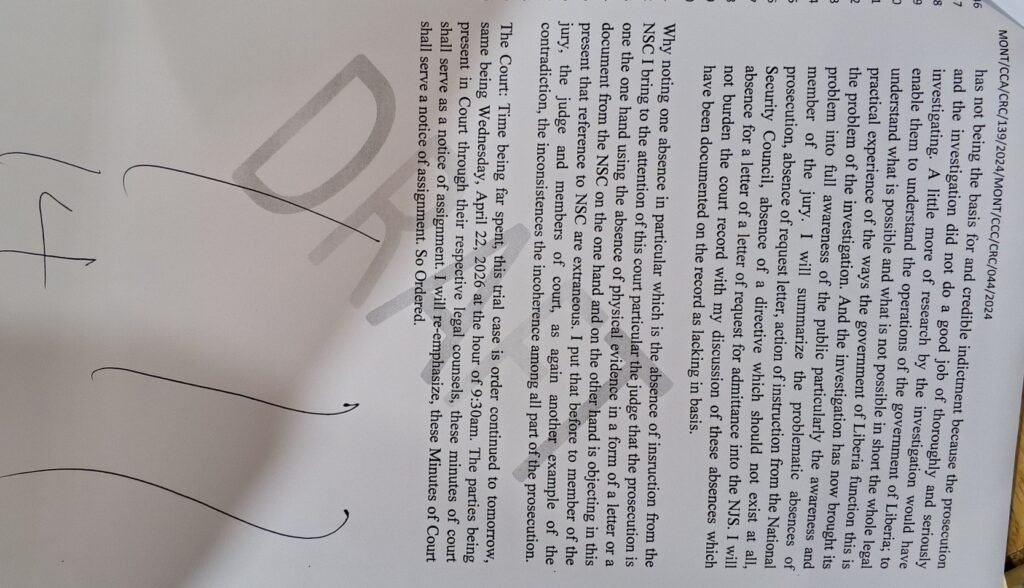
The case was adjourned and is scheduled to continue.
The trial has drawn significant public attention due to its focus on senior officials and the handling of funds tied to national security.
At its core, the case raises a critical question: whether a finance minister’s discretion, particularly under claims of urgency or security, can justify large transfers without formal documentation, or whether the absence of records points to wrongdoing.