
Residents of Kiteabo Nyenawiliken in electoral district 3, River Gee County, are urgently appealing to Government to intervene amid worsening humanitarian crisis marked by the lack of safe drinking water, road access, and health facility.
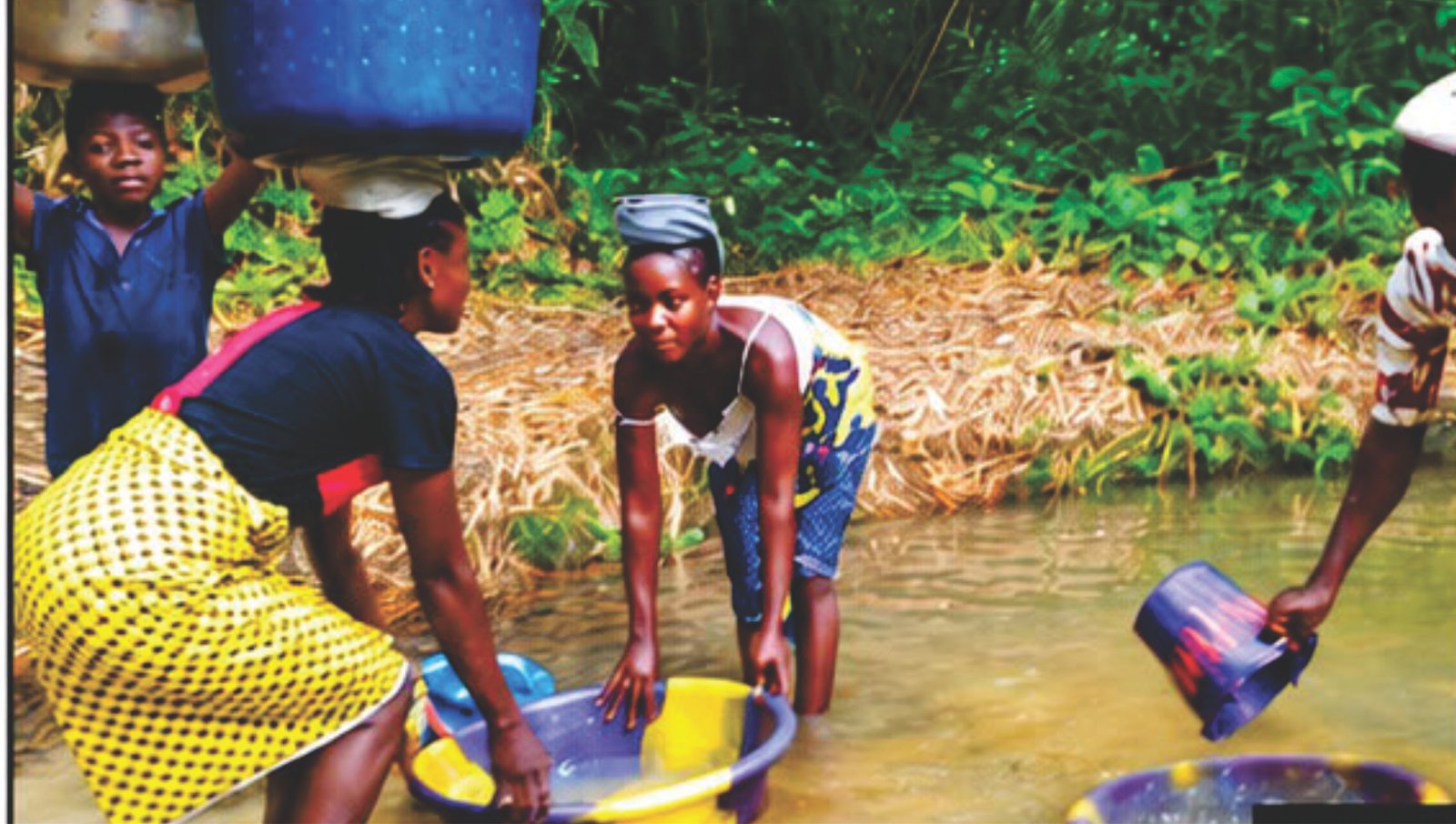
For years, residents have relied on nearby creeks and the River Gbeh for drinking, cooking, bathing, and other household activities after all five hand pumps in the community became damaged and non-functional.
During a recent visit by our reporter, residents expressed deep concern over the prolonged water crisis, explaining that the hand pumps were constructed several years ago by the Danish Refugee Council – DRC, but have remained out of service due to the lack of replacement parts.
According to community members, a local technician was trained to maintain the pumps, but repeated repair efforts have failed because the required spare parts are no longer available.
“We have five hand pumps that were built years ago by the Danish Refugee Council. One of our own people was trained to repair them, but now the spare parts are worn out and unavailable. We have no choice but to drink from the creek and River Gbeh every day,” said Barley K. Manneh, a Community Health Assistant and respected elder of Kiteabo Nyenawiliken.
Manneh warned that the community’s dependence on untreated water has exposed residents, particularly children, pregnant women, and the elderly to serious waterborne diseases, including diarrhea, typhoid, cholera, and other infections.
Another resident, Betty Brown, described the lack of safe drinking water as one of the community’s greatest challenges.
She explained that conditions worsen significantly during the rainy season, when nearby creeks become muddy and contaminated, forcing families to walk long distances to the River Gbeh or rely on rainwater collected from rooftops.
“Whenever heavy rains fall, the creeks become polluted and unsafe for drinking. We are forced to walk long distances to the river or collect rainwater because we know the creek water is not safe,” Brown lamented.
She called on the Government of Liberia, humanitarian agencies, and development partners to urgently rehabilitate the damaged hand pumps and construct additional water facilities to meet the needs of the growing population.
“Even if the existing pumps are repaired, they will still not be enough to serve everyone in the community,” she added.
The water crisis is also disrupting education.
Grace Nyenpan, a teacher at Nyenawiliken Public School, said students are forced to leave classrooms to fetch drinking water because the school’s hand pump has also broken down.
“Thank you for coming to hear our story. We desperately need safe drinking water because our people continue to drink from the creeks. Even our school’s hand pump is damaged,” she said.
According to Madam Nyenpan, the school’s close proximity to River Gbeh has created additional safety risks for children.
“Our children cannot fully concentrate on their lessons. During recess and sometimes even while classes are in session, they leave the school to fetch water from the river. The school has no fence, and it is located very close to the river. Earlier this school year, four children went to the river to drink water when a huge tree suddenly fell near them. By the grace of God, none of them was injured. We are suffering and pleading with the government and humanitarian organizations to come to our rescue,” she recounted.
Beyond the lack of clean water, residents say the community has no health facility.
Women, children, the elderly, and other residents must walk for approximately one hour and thirty minutes to reach the nearest health center in River Gbeh Town, a situation they say places lives at risk, particularly during medical emergencies and childbirth.
“We are deprived of basic development. We have no good road, no safe drinking water, and no health facility. We walk long distances before accessing healthcare. We are surviving only by the grace of Almighty God,” Madam Nyenpan concluded.
According to the 2022 National Population and Housing Census, Kiteabo Nyenawiliken has a population of more than 400 people, including women, men, and children.
The town is located in Kiteabo Chiefdom, which comprises more than five towns and several surrounding villages in the southeastern region of River Gee County’s Electoral District 3, represented by Representative Johnson S. N. Williams.
Residents further noted that their challenges are compounded by severely deteriorated roads linking Kiteabo Chiefdom and neighboring communities in Glarro Administrative district.
They say the deplorable road conditions isolate the area and make it difficult for government institutions, humanitarian organizations, and development partners to deliver essential services.
Community leaders are now calling for immediate action to rehabilitate the damaged hand pumps, construct additional safe drinking water facilities, improve road connectivity, and establish a health facility within the community.
They warn that without urgent intervention, the continued lack of safe drinking water, healthcare, and road infrastructure could increase the risk of disease outbreaks, worsen educational outcomes, and deepen the hardship faced by hundreds of residents already struggling to meet their basic needs.