

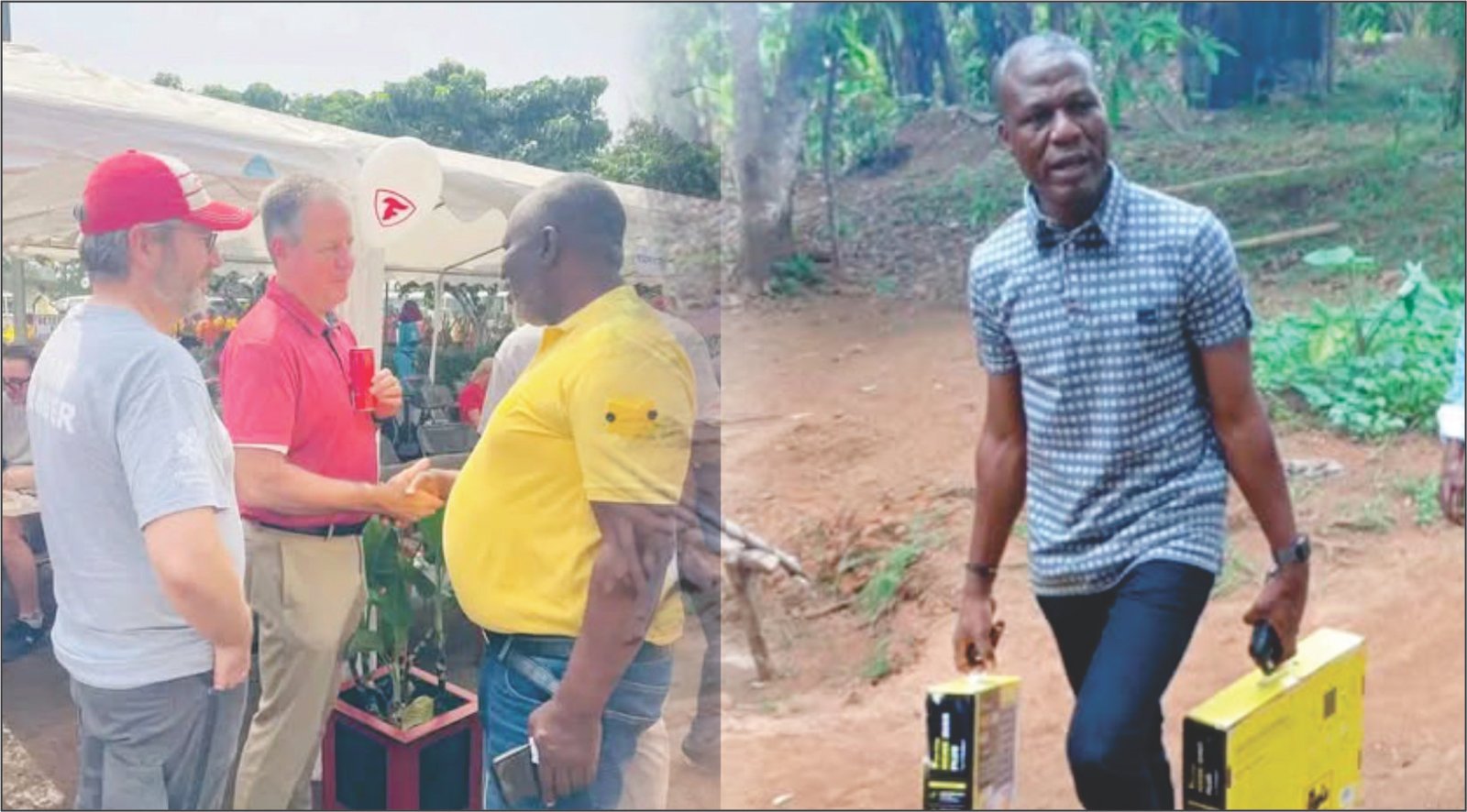
Margibi — A new debate over effective representation has emerged in Margibi County following Senator Nathaniel F. McGill’s engagement with the Liberian Electricity Corporation (LEC) and Firestone Liberia to explore the provision of electricity to workers on the Firestone plantation.
Senator McGill, on Sunday, August 16, 2026, announced that his office had begun discussions with the managements of LEC and Firestone regarding efforts to extend electricity to various divisions of the plantation.
“I had the privilege over the last few days of speaking with the Managing Director of LEC and the management of Firestone about providing electricity to various divisions of Firestone,” Senator McGill said in a post on his official Facebook page.
He thanked both management teams for their willingness to collaborate and pledged that his office would work closely with them to achieve what he described as an important goal for the people.
The senator’s announcement has triggered renewed discussions among some Margibians about the approaches being taken by elected officials to address the long-standing electricity challenges facing Firestone communities.
The discussion comes against the backdrop of a solar-light distribution initiative by Margibi County District #2 Representative Ivar K. Jones. The lawmaker has provided DC solar lighting systems to residents in several Firestone divisions following concerns surrounding electricity access.
Speaking earlier about the initiative, Representative Jones referenced provisions of the concession agreement between Firestone and the Liberian government, which he said affect the provision of electricity to workers and the ability of LEC to directly supply power to the plantation communities.
The lawmaker subsequently opted to distribute solar panels as an immediate intervention for residents.
However, the initiative has drawn mixed reactions.
Mark T. Nuah, a resident of District #2, criticized the solar project during a local radio discussion, describing it as a short-term intervention that does not address the broader electricity problem.
Nuah argued that the solar systems have limited capacity, saying they are mainly useful for charging phones, powering light bulbs and operating small fans, but cannot adequately support appliances such as televisions.
He urged elected officials to focus on securing a long-term electricity solution for Firestone communities rather than temporary interventions.
Other residents, however, have welcomed Representative Jones’ initiative, arguing that the solar systems provide immediate relief to households that have struggled with inadequate electricity access.
The contrasting approaches have now fueled a broader public question: Who is demonstrating more effective leadership —Senator McGill through negotiations for conventional electricity, or Representative Jones through the direct distribution of solar systems?
While Senator McGill’s engagement with LEC and Firestone has been welcomed by some citizens, attention is now turning to whether the discussions will result in a concrete and sustainable electricity supply for the affected communities.
For many residents, the debate may ultimately be settled not by political statements or temporary interventions, but by which effort delivers reliable and lasting electricity to the people of Firestone.
All eyes are therefore on Senator McGill and the parties involved to determine whether the latest engagement will translate into a tangible solution for residents.