


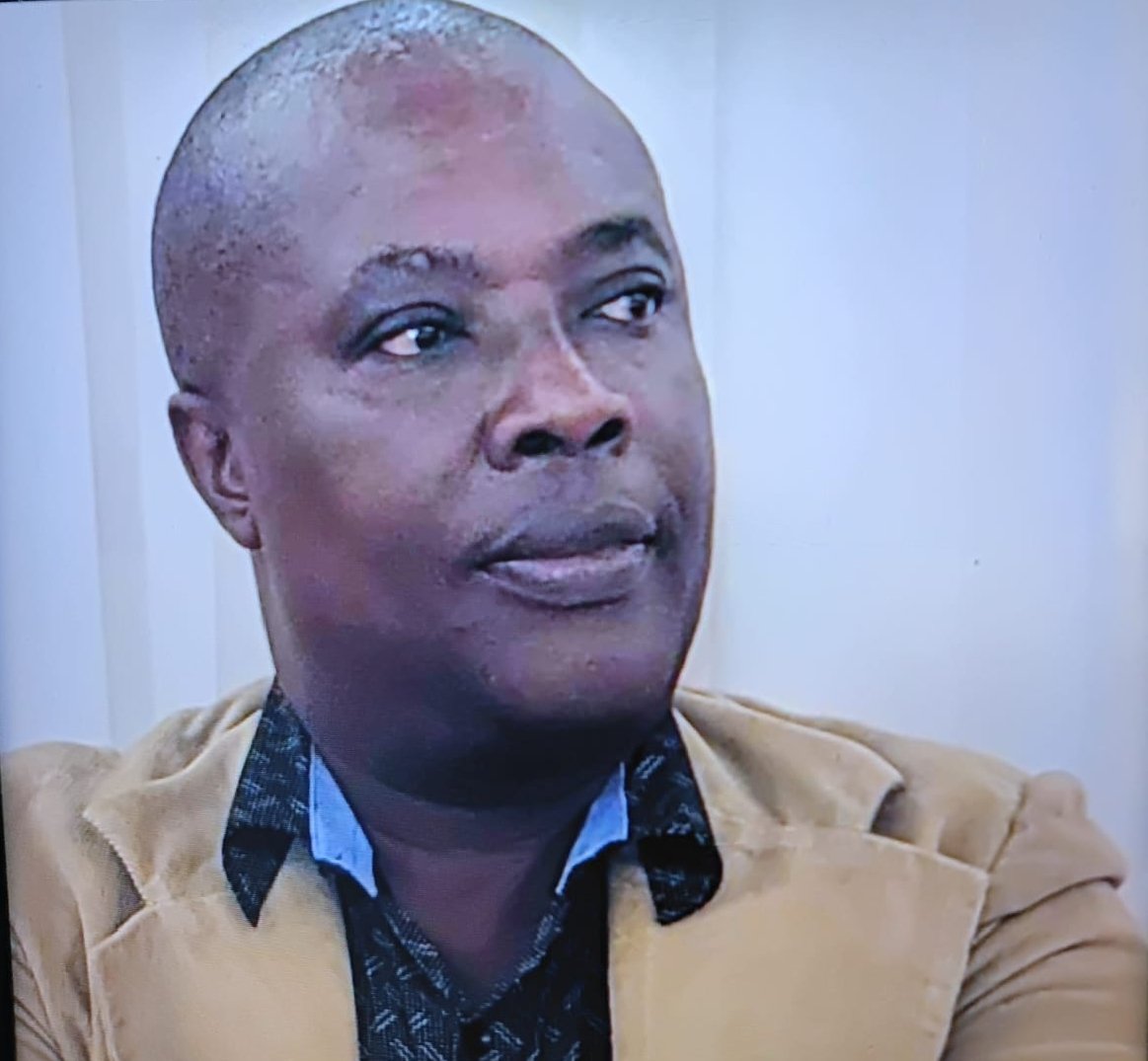
By Amb. Emmanuel N. Johnson
The administration of justice remains one of the fundamental pillars of every democratic society. In Liberia, the judiciary functions as the guardian of the rule of law, the protector of constitutional rights, and the final arbiter of disputes involving citizens, institutions, and the State. At the center of this judicial framework is the jury system, established to ensure public participation in the administration of justice.
Titles 17 and 18 of the 1972 Judiciary Law of Liberia, particularly Section 18.2, regulate the qualifications and service requirements of jurors.
Over the years, these provisions have undergone several amendments, including significant reforms introduced in 2006 during the administration of the National Transitional Government of Liberia (NTGL) under the chairmanship of Charles Gyude Bryant.
Additionally, Chapter 22, Section 22.3 of the Civil Procedure Law addresses the selection of jurors, while Chapter 20 of the Criminal Procedure Law outlines procedures governing criminal trials.
Collectively, these statutory provisions regulate trial proceedings involving judges, lawyers, jurors, litigants, defendants, and court officers in both civil and criminal matters.
In January 2006, the National Transitional Legislative Assembly (NTLA) amended the law relating to juries.
One of the most notable provisions introduced was Section 18.2 concerning juror qualifications. The law provides:
“Any citizen of the Republic, male or female, who has attained the age of twenty-one years, is competent to serve as a grand or petit juror in the county in which he or she resides unless:
(a) He or she has been convicted of an infamous crime and his or her civil rights have not been restored;
(b) He or she is unable to speak and understand the English language;
(c) He or she is incapable, by reason of mental or physical infirmity, of rendering efficient jury service; or
(d) He or she has served on a jury within the preceding year.”
The framers of this legislation undoubtedly intended to promote inclusiveness, civic participation, and equal representation in the justice system by permitting ordinary Liberians to participate directly in judicial proceedings. This approach aligns with democratic governance and reflects the constitutional principle that justice must not only be done, but must also be seen to be done through the active participation of the people.
Notwithstanding the noble intent of the law, prevailing realities within Liberia raise serious concerns regarding the effectiveness, integrity, and credibility of the jury system as presently constituted.
Public perception increasingly suggests that the system has become vulnerable to manipulation, external influence, financial inducement, and other forms of abuse, largely driven by widespread poverty, economic hardship, and institutional weakness.
In many instances, jurors are perceived to participate in trials not entirely out of civic responsibility or commitment to justice, but because of the financial benefits associated with jury service. Such perceptions undermine public confidence in the judicial process, weaken the credibility of verdicts, and generate doubts about the impartiality of decisions rendered in sensitive civil and criminal matters.
The legal consequences of such distrust are profound. A justice system that lacks credibility inevitably weakens the rule of law, diminishes public confidence in judicial institutions, and creates opportunities for corruption, impunity, and social instability.
Where verdicts are consistently viewed as compromised, the legitimacy of the courts themselves may be called into question. In every democratic society, confidence in the judiciary is indispensable to the preservation of constitutional order and national stability.
It is therefore my considered opinion that the law relating to juries should be comprehensively reviewed and amended to incorporate additional standards and safeguards governing juror qualifications.
While citizenship, residency, and age requirements remain important constitutional considerations, they should not constitute the sole determinants of competency for jury service, particularly in complex matters involving serious criminal offenses, commercial disputes, constitutional questions, and high-profile litigation.
A modern, credible, and effective jury system should also consider factors such as:
• Educational background;
• The ability to read, comprehend, and evaluate evidence;
• A basic understanding of civic and constitutional responsibilities;
• Moral character and integrity;
• Emotional stability and independence of judgment; and
• Respectable standing within the community.
The purpose of such reforms would not be to discriminate against economically disadvantaged citizens or deny equal participation in national affairs. Rather, the objective would be to ensure that individuals entrusted with determining the liberty, reputation, property, and future of others possess the minimum competence, independence, impartiality, and sound judgment necessary to discharge those responsibilities fairly and without improper influence.
A juror occupies a position of immense constitutional significance and public trust. Jury decisions often determine whether an accused person regains freedom or remains incarcerated; whether justice is achieved or denied; and whether victims, litigants, and society maintain confidence in the legal system.
Such responsibilities require not only honesty, but also discernment, maturity, sound reasoning, and the capacity to appreciate legal arguments and assess evidence presented during trial proceedings.
Moreover, the continued failure to reform the present jury system may produce far-reaching institutional and legal consequences for Liberia’s justice sector.
Prosecutors, defense attorneys, litigants, and the State may continue to lose sensitive and high-profile cases, resulting in unnecessary retrials, prolonged delays, financial losses, and a gradual erosion of public confidence in the judiciary. Considerable state resources are often expended prosecuting matters that ultimately collapse because verdicts are perceived as unreliable, compromised, or improperly influenced.
The implications of these failures extend beyond individual cases. They affect national security, public order, investor confidence, and Liberia’s broader democratic and constitutional development.
A weak or compromised jury system may inadvertently encourage criminality by creating the perception that justice can be manipulated through money, political influence, social pressure, or personal connections.
This argument should not be interpreted as an assertion that the framers of the 2006 amendment acted in bad faith.
On the contrary, they legislated within the context of a post-conflict Liberia seeking to restore democratic participation, inclusiveness, and equal access to national institutions after years of civil instability. Their intentions were patriotic, progressive, and historically necessary.
Nevertheless, laws must evolve in response to changing social realities and institutional challenges.
What may have appeared suitable and effective in 2006 may no longer adequately address the present economic, social, and judicial realities confronting Liberia today.
The time has therefore come for lawmakers, members of the judiciary, the Liberia National Bar Association, civil society organizations, legal scholars, and other stakeholders to initiate a serious national dialogue on meaningful jury reform.
Such reform should preserve the democratic essence of jury participation while simultaneously strengthening the competence, independence, impartiality, and credibility of jurors within the administration of justice.
Liberia deserves a judicial system that commands public confidence, safeguards the rights of the innocent, punishes the guilty based upon credible evidence and due process of law, and promotes fairness above poverty, influence, sentiment, or manipulation. Strengthening the jury system through thoughtful legal reform would constitute a significant step toward achieving that national objective and reinforcing the integrity of Liberia’s constitutional democracy.