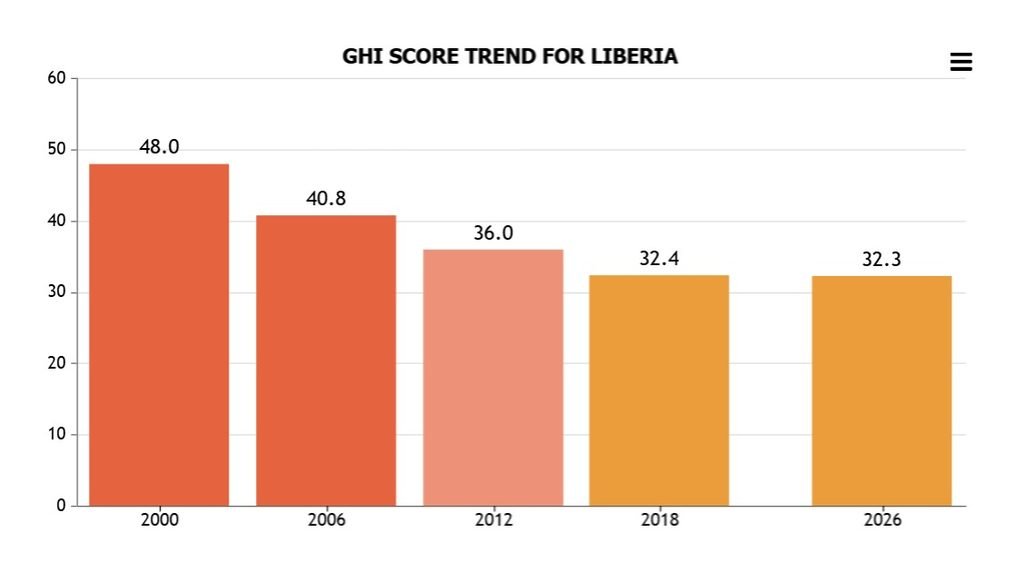


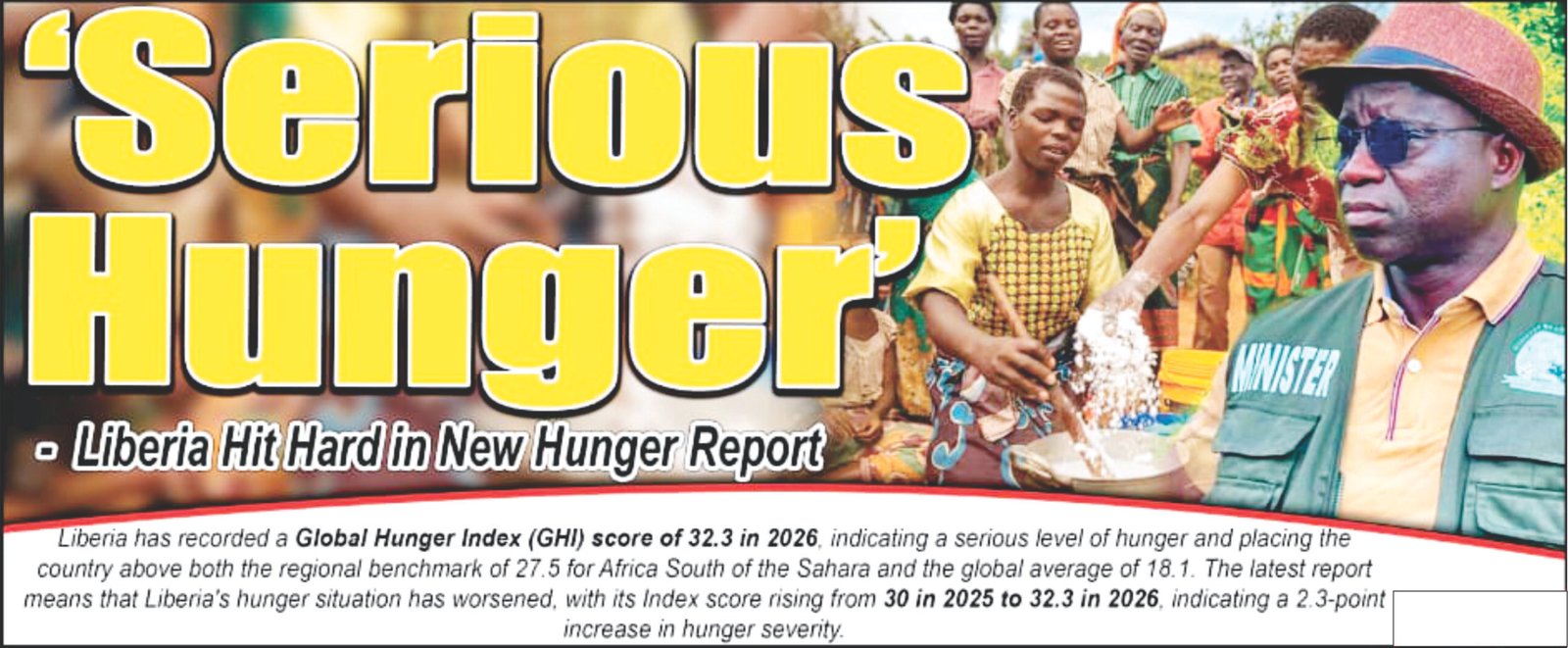
Liberia has recorded a Global Hunger Index (GHI) score of 32.3 in 2026, indicating a serious level of hunger and placing the country above both the regional benchmark of 27.5 for Africa South of the Sahara and the global average of 18.1. The latest report means that Liberia’s hunger situation has worsened, with its Index score rising from 30 in 2025 to 32.3 in 2026, indicating a 2.3-point increase in hunger severity.
The findings highlight persistent food insecurity and child malnutrition, raising concerns about the country’s progress in addressing hunger and improving nutrition.
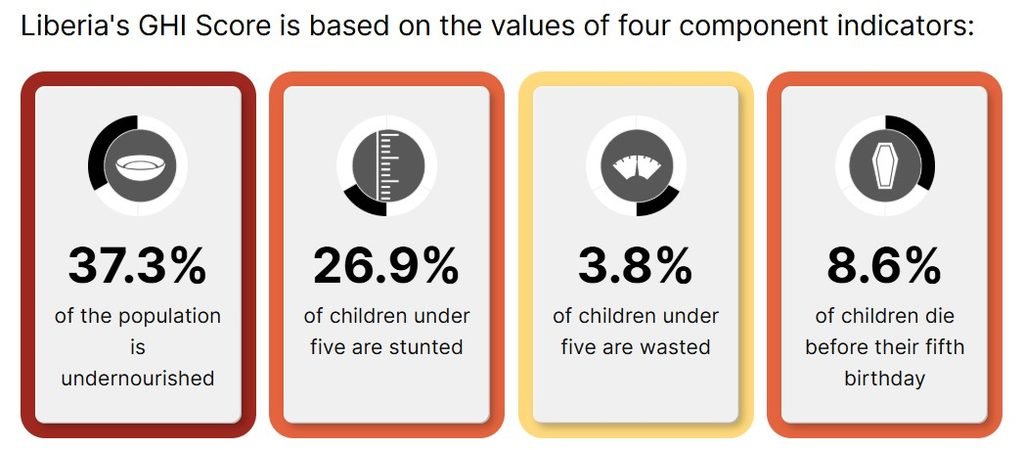
According to the report, approximately 37.3 percent of Liberia’s population is undernourished, meaning more than one in three people do not receive adequate food.
Despite this gradual improvement, Liberia remains among countries experiencing serious hunger, with its 2026 score slightly below the 2018 level.
The Global Hunger Index measures hunger using four major indicators: undernourishment, child stunting, child wasting, and under-five mortality.
The findings present a challenge for policymakers and development institutions, particularly regarding food security, agricultural productivity, maternal and child nutrition, and access to essential healthcare.
For a country where a significant portion of the population struggles to access adequate food, the latest figures raise questions about the effectiveness of existing interventions and the urgency of stronger policies to address hunger.
IMPORTANT DATA CLARIFICATION
The 2026 report states that its scores should not be directly compared with scores from previous annual reports because of methodological updates. Therefore, the claim that Liberia’s score increased from 30.0 in 2025 to 32.3 in 2026 should not be published as evidence of worsening hunger. The valid comparison is 32.4 in 2018 against 32.3 in 2026.