


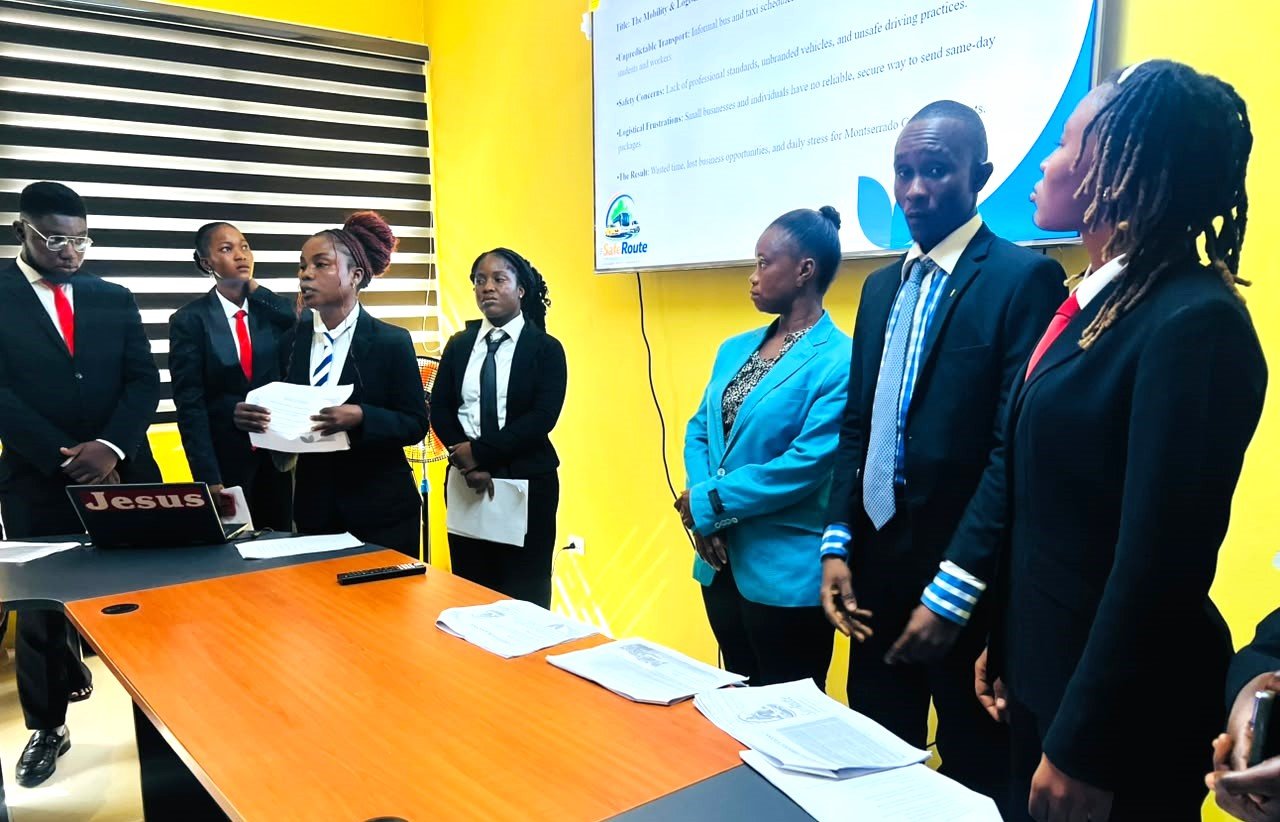
By Jarius Andrew Greaves
Sometimes, the change we desperately desire is delayed not because we lack capable people, but because we fail to give the right people the opportunity to serve.
Today, I want to share a personal testimony, not to celebrate myself, but to demonstrate what becomes possible when we move beyond conventional thinking, recognize competence, and give committed people the opportunity to transform lives.
While pursuing my MSc in Entrepreneurship and Innovation at the University of Sussex Business School in the United Kingdom as a Chevening Awards (FCDO) Scholar, I applied to lecture Introduction to Entrepreneurship (ENTR 201) within the Department of Management at the A. Romeo Horton College of Business and Public Administration, University of Liberia.
My application was accepted, and several decision-makers in the department who knew my work and contributions to youth development, entrepreneurship, and innovation across Liberia were excited about the prospect of my joining the university.
However, after returning to Liberia and following up, I was told that they had forgotten to assign me a course. It was a disappointing experience, especially considering my years of practical experience in entrepreneurship education, youth empowerment, and institutional development.
Nevertheless, I refused to allow disappointment to extinguish my desire to contribute to the education and development of our young people.
I approached the Coordinator of the Entrepreneurship course, who had not been part of the earlier decision-making process, and made a simple proposal:
‘Give me the opportunity to teach Introduction to Entrepreneurship voluntarily. All I ask is transportation support or fuel for my vehicle, since I live approximately an hour away from the university.’
He accepted my proposal. And so began a journey that has reaffirmed my conviction that the right people, when given an opportunity to serve, can transform institutions from within.
THE CLASSROOM BECAME A LABORATORY FOR REAL-WORLD CHANGE.
After my first ten lectures, I asked my 62 students to evaluate my teaching approach. The feedback was astonishing: more than 90% reported that they had never experienced this style of teaching during their time at the university.
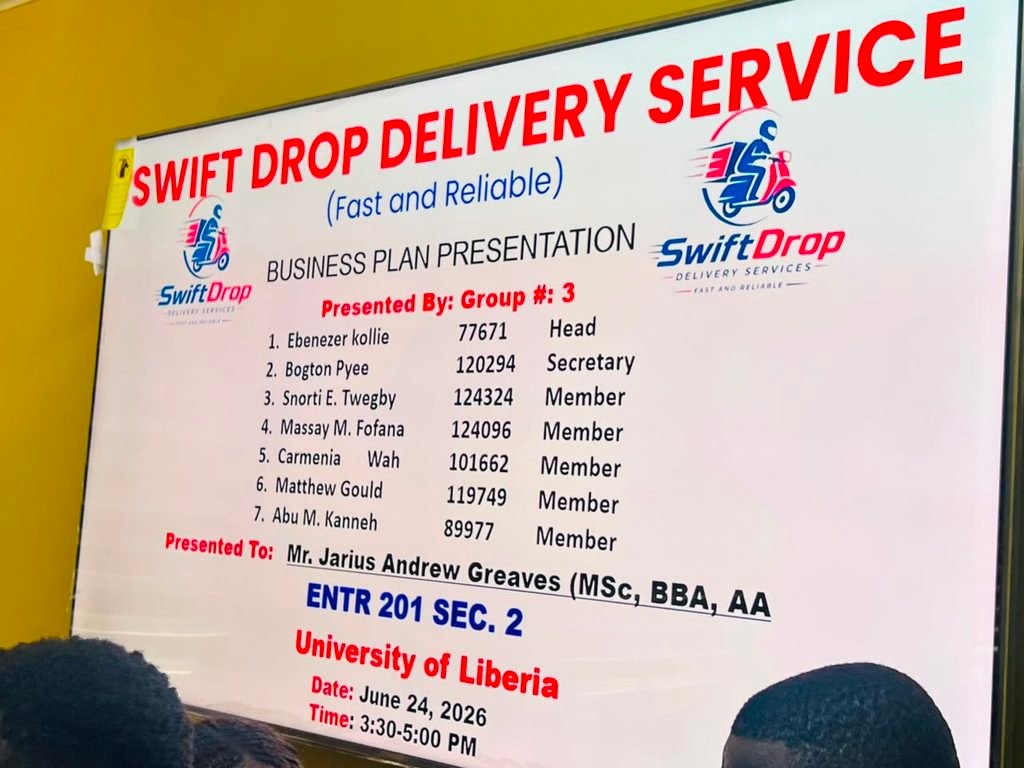
Why?
Because I believe entrepreneurship cannot be mastered through lecture notes, memorization, and examinations alone. It must be experienced, practiced, tested, and demonstrated.
My approach was simple but deliberate: 75% practical learning and 25% theory.
Rather than overwhelm students with pages of notes, I provided concise learning materials and references, then challenged them to think critically, collaborate, identify problems, and develop practical solutions.
Every class became an opportunity to learn by doing. Students worked in teams, engaged with real-world challenges, explored ideas, and began to understand that entrepreneurship is not merely about starting a business. It is about identifying problems, creating value, mobilizing resources, and developing sustainable solutions.
For their midterm assessment, students completed individual assessments using a more conventional format. However, for their final assessment, I challenged them to go beyond the traditional examination system.
They worked in teams to identify pressing real-world problems, map those problems, generate ideas, explore solutions, and develop social business models using the Business Model Canvas.
I referred to them as #CEOs—not merely as a title, but to encourage them to begin thinking, behaving, and taking responsibility like entrepreneurs and leaders.
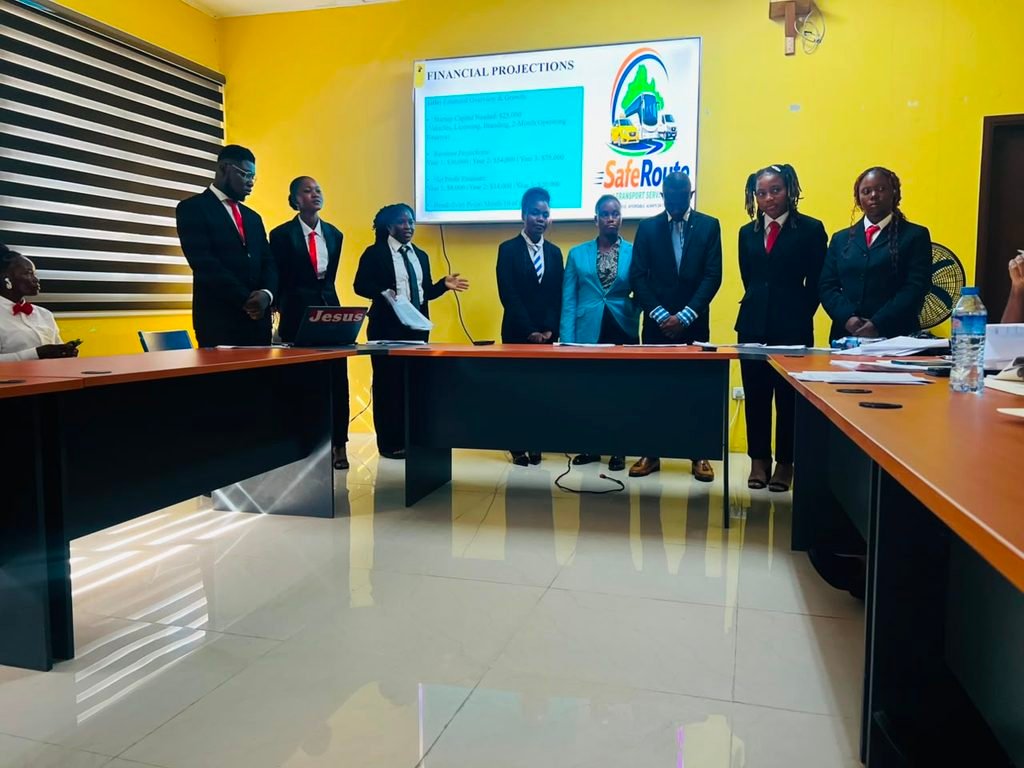
They prepared professionally for their moment in the boardroom. On our #DEMODAY — #LIVEPITCHCOMPETITION, they presented their business models before a panel of judges that included the Chairman of the Department, the Coordinator of the Entrepreneurship Programme, and a professional social entrepreneur.
It was more than a classroom presentation. It was an opportunity for students to demonstrate creativity, confidence, teamwork, critical thinking, problem-solving, and an understanding of social business development and management.
At the conclusion of the competition, the Chairman of the Department publicly expressed how impressed he was. He stated that, throughout his years at the university, he had never witnessed such an experience and commended the students for learning to develop social business models and confidently pitch their ideas within a single semester.
He also made commitments regarding my continued engagement with the department, including opportunities for adjunct teaching and, subsequently, full-time lecturing.
I remain hopeful that these commitments will translate into an opportunity to continue this work in the coming semester.
THE MOST ENCOURAGING PART? THE STUDENTS WANT MORE.
As students prepare for the next semester and plan their course registrations, some continue to call and text me, asking which courses I will be teaching so they can register for them.
For me, this is one of the most meaningful aspects of the experience. It suggests that students value the learning environment we created and are eager to continue developing their practical skills.
Yet, I find myself in an uncertain position. Despite the students’ feedback, the outcomes of the semester, and the public recognition received, I still do not know my official status or whether I will be assigned courses for the next semester.
There is another institutional challenge: the university’s course registration system does not indicate the names of the lecturers assigned to individual courses. Consequently, students cannot know in advance who will teach a particular course when making their registration decisions.
This raises an important question: shouldn’t students have access to information that enables them to make informed academic decisions? And shouldn’t universities establish transparent, fair, and merit-based processes for assigning lecturers and communicating those decisions?
I share this not to attack individuals or discredit an institution. Rather, I share it because institutions improve when we have the courage to reflect on what works, acknowledge areas for improvement, and create systems that sustain excellence.
I am grateful to the Course Coordinator who gave me the opportunity, the students who embraced the process, the judges who evaluated their work, and the departmental leadership that recognized what the students accomplished.
My greatest testimony is not the praise I received. It is the transformation we witnessed in the students, and their desire to continue learning.
THIS IS BIGGER THAN MY PERSONAL EXPERIENCE.
Liberia and much of Africa cannot afford to continue educating young people primarily to become job seekers in economies that are already struggling to create enough jobs.
Our universities must become more than places where students memorize theories, pass examinations, collect degrees, and graduate into an overcrowded job market.
They must become incubators of ideas, innovation, problem-solvers, entrepreneurs, and future employers.
We must prepare young people not only to seek jobs but also to create them. We must equip them to identify problems in their communities, develop sustainable solutions, create enterprises, and generate economic and social value.
This requires a fundamental shift in how we teach, assess, recruit, and reward talent.
It means moving from teaching entrepreneurship as a subject to practicing entrepreneurship as a discipline. It means giving students opportunities to test their ideas, learn from failure, engage with industry, pitch to potential investors, and solve problems that matter to their communities.
It also means recognizing that a lecturer’s value should not be measured solely by academic credentials, years of service, or the number of pages of notes distributed. Practical experience, teaching effectiveness, student learning, innovation, integrity, and measurable outcomes must also matter.
Academic qualifications are important. So are experience, professional development, and research. But these must work together to prepare students for the realities of the world beyond the classroom.
A MESSAGE TO OUR LEADERS: GIVE THE RIGHT PEOPLE THE OPPORTUNITY TO SERVE.
This experience has strengthened my conviction that our institutional challenges are not always caused by a lack of capable people. Sometimes, the problem lies in the systems, attitudes, and decisions that determine who gets an opportunity.
We must stop allowing personal interests, fear, insecurity, favoritism, and institutional politics to stand in the way of competence and innovation.
We must stop treating people with international exposure, new ideas, or education acquired outside Liberia and Africa as threats rather than potential assets.
International education does not automatically make anyone superior, and local experience should never be undervalued. What matters is how knowledge, experience, and ability are applied to solve our problems, strengthen our institutions, and improve people’s lives.
Our leaders must be confident enough to work with people who think differently, welcome constructive criticism, and empower individuals whose ideas challenge outdated systems.
Leadership is not about surrounding yourself with people who protect your position. It is about empowering people who can improve the institution you lead.
If we want different outcomes, we must be willing to change the way we make decisions. If we want better universities, we must create environments where competent educators can teach, students can thrive, and innovation can flourish.
If we want a productive economy, we must equip young people with practical skills and the confidence to create opportunities rather than wait indefinitely for them.
And if we genuinely desire national transformation, we must be willing to empower people who can deliver it, even when they are not part of our circle, do not share our background, or challenge the way things have always been done
THE CHANGE WE DESIRE MUST BEGIN WITH US.
I am not sharing this testimony because I believe I have all the answers. I share it because I have seen what can happen when practical knowledge, commitment, student participation, and an opportunity to serve come together.
I look forward to the next semester with hope. I remain committed to practical entrepreneurship education, youth mentorship, and helping young people transform ideas into viable businesses and solutions to real-world challenges.
Whether in the classroom, through YONER Liberia, or in other spaces where I can contribute, my mission remains the same: to help build a generation of young people who can think critically, innovate boldly, create opportunities, and take responsibility for transforming their communities.
My hope is that this experience will not remain an isolated success story. I hope it contributes to a broader transformation in how entrepreneurship is taught and practiced at the University of Liberia and across our educational institutions.
To our university administrators, policymakers, political leaders, and institutional heads: give the right people the opportunity to serve. Give innovators room to innovate. Give educators the tools to inspire. Give young people the opportunity to build. And give competence, integrity, and results a fair chance to triumph over favoritism and politics.
To my fellow educators: let us challenge ourselves to do more than complete syllabuses. Let us prepare students for life, work, enterprise, leadership, and citizenship.
To our students: do not wait until graduation to begin solving problems. Start now. Observe your communities. Identify challenges. Build teams. Test ideas. Learn from failure. Create value. Your degree should not only qualify you to seek employment; it should also equip you to create opportunities for yourself and others.
And to everyone who genuinely desires change: let us stop merely talking about transformation and start building institutions that produce it.
Because the change we claim to desire will only become real when we are prepared to empower the people who can make it happen.
🇱🇷 Liberia needs a new generation of educators, entrepreneurs, institutional reformers, and social change disruptors, not simply to occupy positions, but to transform systems, challenge the status quo constructively, and create opportunities for others.
The journey continues. The work is only beginning. And the future we desire is worth building.
#UniversityOfLiberia #EntrepreneurshipEducation #PracticalLearning #EducationReform #YouthEmpowerment #SocialEntrepreneurship #Leadership #JobCreation #Innovation #Liberia #YONERLiberia