

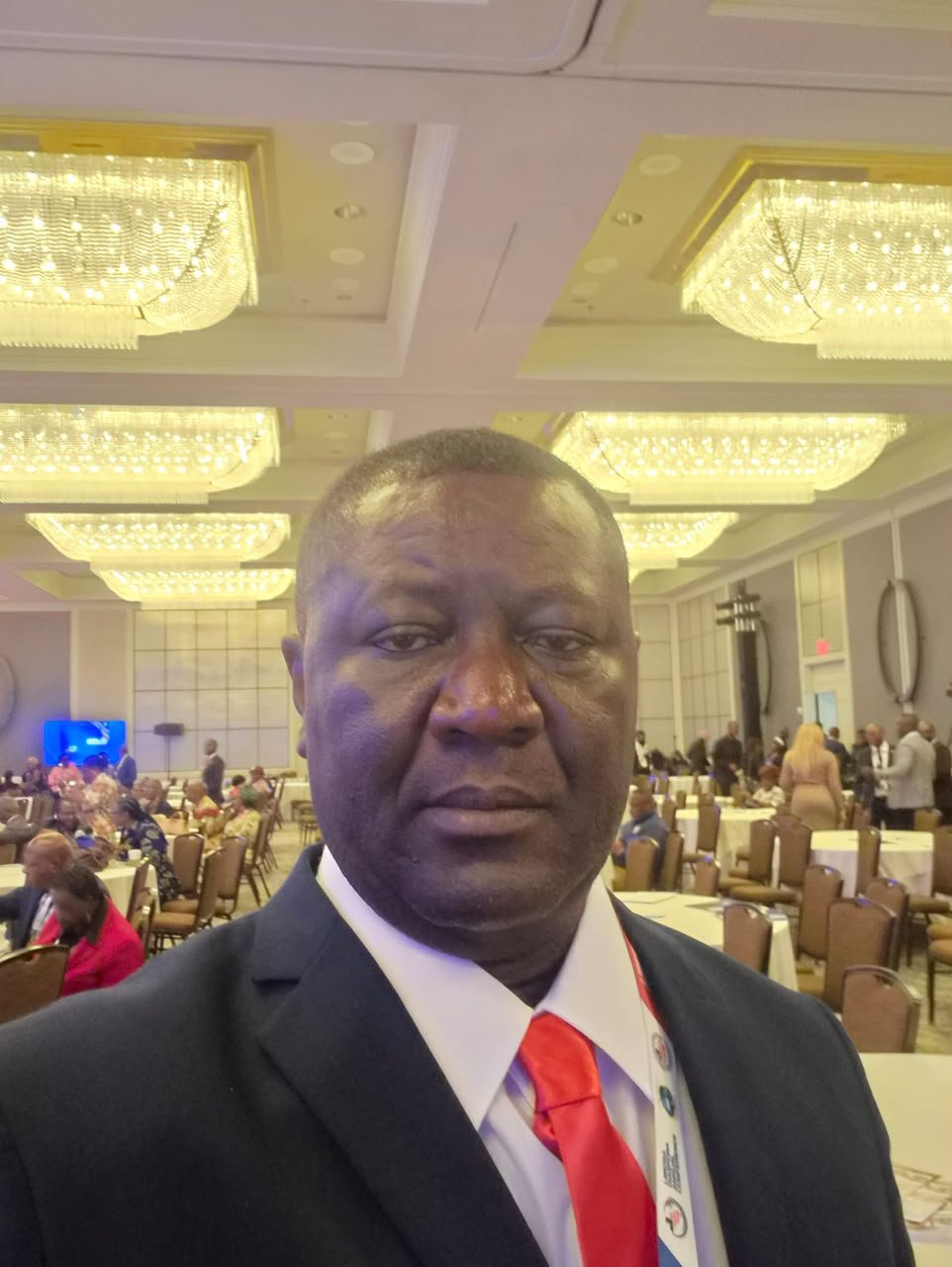
MONROVIA, Liberia — Liberian-American activist Norris Johnson has expressed support for the decision by the Chief of Staff of the Armed Forces of Liberia (AFL) to discharge two soldiers on October 21, 2026, arguing that military commanders must have the authority to enforce discipline and uphold professional standards.
Johnson, however, stressed that his support for the decision is conditional on whether it was made in accordance with Liberian law, applicable military regulations, and established due-process requirements.
In a statement addressed to his fellow Liberians, Johnson said the AFL operates under a distinct legal and disciplinary framework that empowers military authorities to address conduct inconsistent with the standards and responsibilities of military service.
According to him, military personnel are required to obey lawful orders, respect the chain of command, protect sensitive information, maintain operational readiness, and uphold the reputation of the institution.
He argued that failure to enforce these standards could undermine military discipline, operational effectiveness, and national security.
Johnson Cites National Defense Act
Johnson specifically referenced Chapter 7, Section 7.7(j), of Liberia’s National Defense Act of 2008, which he said provides a legal basis for discharging military personnel for the good of the service and for conduct inconsistent with AFL standards or contrary to the Liberian Constitution.
He maintained that the provision was not introduced for the October 21 decision, pointing to previous instances in which the AFL reportedly used the same provision to administratively discharge personnel.
Johnson cited the discharge of two soldiers in 2020 following a military police investigation into alleged violations of provisions of the Uniform Code of Military Justice (UCMJ).
He also referenced reported administrative discharges in 2024, arguing that the use of Section 7.7(j) has precedents within the country’s military establishment.
Liberia approved its Uniform Code of Military Justice in 2017 to provide a framework for military justice, discipline, jurisdiction, and due process within the Armed Forces.
Warns Against Undermining Military Discipline
The activist argued that the military’s unique responsibilities justify having a specialized disciplinary system distinct from ordinary civilian employment arrangements.
According to Johnson, a soldier’s refusal to obey a lawful order could jeopardize military operations, endanger fellow service members, and weaken unit discipline.
He maintained that the AFL must be able to address misconduct that threatens its effectiveness, adding that failure to enforce established standards could weaken the institution rather than protect the rights of its personnel.
However, Johnson cautioned that military authority must not be exercised arbitrarily.
He said the Chief of Staff and other commanders must operate within the boundaries established by the National Defense Act, the UCMJ, AFL regulations, and the Liberian Constitution.
“Supporting the Chief of Staff does not mean supporting arbitrary power,” Johnson emphasized, arguing that lawful authority and adherence to due process distinguish professional military leadership from decisions based on personal interests.
He further noted that military justice must protect the rights of service members while ensuring accountability and discipline.
Calls for Lawful Exercise of Authority
Johnson said he supports the removal of military personnel whose conduct demonstrates that they are no longer suitable to remain in the Armed Forces, provided the applicable legal standards and procedures are followed.
He maintained that the need to uphold discipline should not be dismissed simply because a command decision is unpopular.
According to him, a professional military must balance the enforcement of discipline with respect for the rule of law and the constitutional rights of its members.
Johnson therefore reiterated that his support for the October 21 discharge decision depends on whether the conduct of the two soldiers justified separation under Section 7.7(j) and whether the required procedures were followed.
His statement comes amid public discussion surrounding the AFL leadership’s decision to discharge the two soldiers.
Johnson urged Liberians to distinguish between legitimate disciplinary authority and the arbitrary exercise of power, arguing that accountability and military professionalism must go hand in hand.
He called for an Armed Forces of Liberia that is disciplined, politically neutral, accountable, and committed to protecting the country’s sovereignty while respecting civilian authority and constitutional governance.
“Liberia needs a military that is strong enough to defend the nation—and disciplined enough to respect the law,” Johnson said in concluding his statement.