

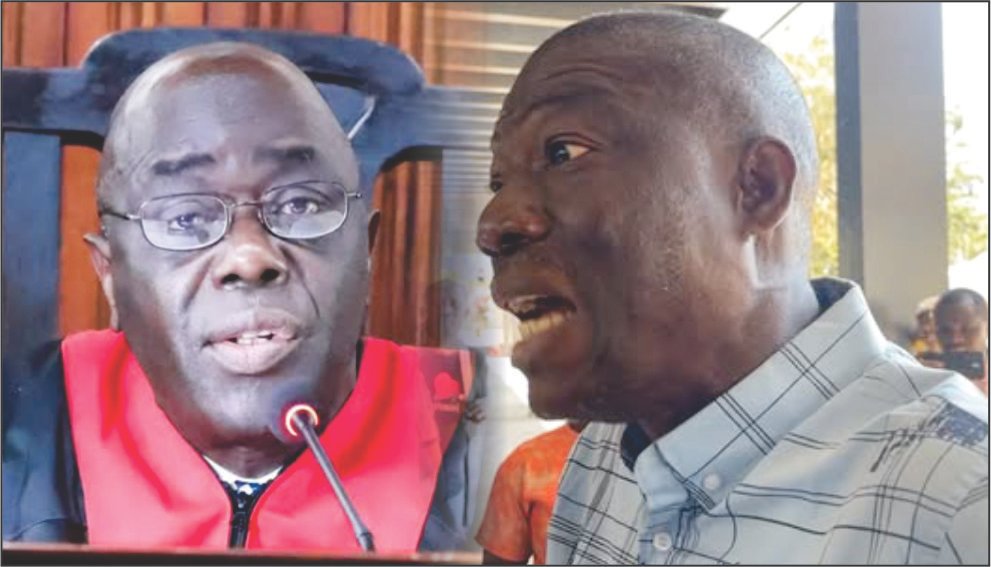
MONROVIA, Liberia — Embattled Montserrado County District #10 Representative Yekeh Y. Kolubah has called for the impeachment of Chief Justice Yamie Quiqui Gbeisay Sr., accusing the head of Liberia’s Judiciary of corruption and alleged moral misconduct.
Kolubah disclosed that he had prepared an impeachment bill against the Chief Justice and presented it to his colleagues in the Legislature, arguing that Gbeisay should be removed from office.
“I got my impeachment bill. I wrote against the Chief Justice. I placed it before my colleagues. The Chief Justice is corrupt. The Chief Justice lacks morals. So, he should be impeached,” Kolubah declared.
The lawmaker maintained that his position would not change regardless of the Chief Justice’s personal or financial achievements, insisting that the allegations he raised should be addressed through the appropriate constitutional process.
“The Chief Justice can even build an upstairs building; I still maintain that he should be impeached,” he stated.
Kolubah also referenced his political party, the National Movement to Liberate Liberia from Criminals and Crooks (NMLLCC), while calling for accountability over judicial decisions he considers wrongful.
He argued that the Judiciary has mechanisms through which certain decisions can be reviewed or withdrawn and called for penalties against individuals responsible for decisions he believes were improperly made.
“The Court has a system where they can withdraw decisions. People that took those wrongful decisions, they should be penalized, and we will do that tomorrow,” Kolubah said.
However, Kolubah’s accusations against the Chief Justice were not accompanied by specific supporting evidence in the remarks provided for this report. The allegations therefore remain unverified, and no determination of wrongdoing has been established in the information available.
Any impeachment effort against the Chief Justice would have to proceed in accordance with Liberia’s Constitution and applicable legal procedures.
The Chief Justice’s response to Kolubah’s allegations was not included in the information available at the time of publication.
The controversy comes amid renewed public attention to relations between the Legislature and the Judiciary, particularly questions surrounding judicial accountability, constitutional authority, and the processes for addressing alleged misconduct by public officials.