
By G. Watson Richards
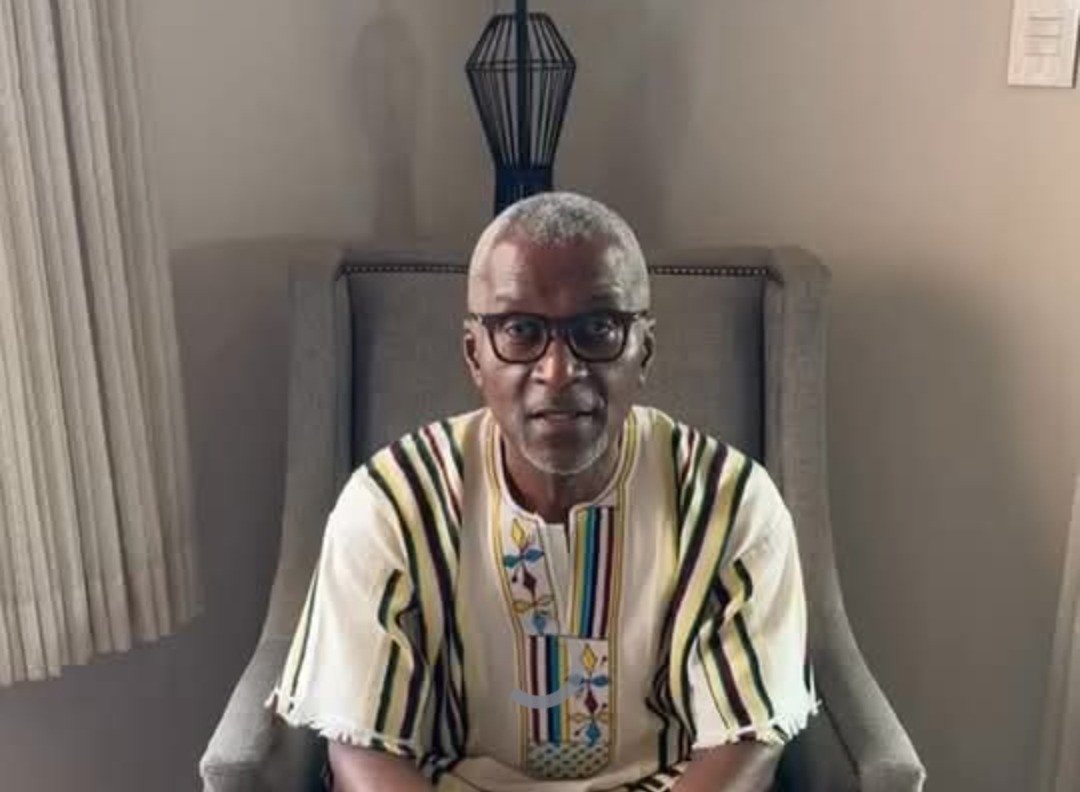
The Political Leader of opposition Alternative National Congress (ANC) Mr. Alexander B. Cummings has called for a sweeping reform of Liberia’s natural resource concession system, warning that the current model continues to deprive citizens of fair economic benefits.
Speaking in what he described as the first of a planned series of public policy podcasts, Cummings urged Liberians to rethink how the country manages and profits from its vast mineral wealth.
He argued that decades-old concession agreements, many rooted in post-war conditions, no longer serve the nation’s interests.
“We cannot keep doing the same thing over and over and expect different results,” Cummings said, echoing a quote often attributed to Albert Einstein. Are we getting fair value from our natural resources? Are the Liberian people benefiting in a way that allows us to develop our country,” he question?
Mr. Cummings pointed to ongoing public debate surrounding mining operations, including those of Bea Mountain, as a reflection of broader systemic issues.
Citing estimates from 2023, he noted that approximately 1.2 million kilograms of gold-valued at between $650 million and $700 million, were exported from Liberia.
“Did the Liberian people get a fair share of that almost $700 million that left our country?” he asked.
He stressed that the issue is not limited to any single company but extends across Liberia’s entire concession framework, including major operators such as ArcelorMittal.
According to Cummings, many of the current agreements trace back to the administration of Charles Taylor, when Liberia was emerging from civil war and offered generous terms to attract high-risk investment.
While acknowledging those historical conditions, he argued that continuing similar arrangements today is unjustifiable.
“A Broken Model”
He, amongst other things stated that the old concession model has not worked, noting that it is broken.
“The old concession model has not worked. It doesn’t work-it is broken. We will continue to undervalue our resources and our people will continue to suffer,” Cummings added.
He cited the town of Uesawa, once known for diamond production, as an example of failed resource management.
Despite years of extraction, the area reportedly lacks basic infrastructure such as quality schools, healthcare facilities, electricity, and reliable telecommunications.
“The minerals finish and our people’s lives remain the same. That cannot continue,” he said.
Proposed Alternatives
Cummings outlined two primary alternatives to the current concession system:
Production Sharing Model: Under this system, Liberia would receive a fixed percentage of extracted resources directly, rather than relying on royalties or profit-sharing mechanisms.
“We take that gold, iron ore, or diamonds, sell it on the open market, and use the proceeds to develop our country,” he explained.
National Resource Company: He also proposed establishing a state-backed enterprise owned by Liberians to manage extraction and commercialization of natural resources.
He referenced Saudi Aramco as a successful example of a nationally owned resource company generating substantial wealth for citizens.
Governance and Accountability
Cummings further called for stronger oversight and institutional reform, particularly within the Ministry of Mines and Energy.
He emphasized the need for technological monitoring systems and a comprehensive understanding of the entire resource value chain-from extraction to shareholder returns.
“From the time a shovel enters the ground to the time profits are distributed, we must understand that full value chain. That is how we negotiate fair deals,” he intimated.
He also alleged that entrenched interests benefit from maintaining the status quo.
“The people perpetuating this model benefit from it. They have contracts, they take money under the table, and in the meantime, Liberians continue to suffer,” he claimed.
A Call for Change
While clarifying that existing agreements should be honored, Cummings insisted that all future contracts must reflect a new approach designed to ensure equitable benefits for Liberians.
“This is not about tearing up current agreements. It is about changing how we do things going forward,” the ANC Political Leader added.
He concluded with a broader appeal for political and economic transformation:
“Liberia deserves better. We must challenge everything, our systems, our assumptions, and our leadership choices. It cannot be that companies win while our people remain without schools, healthcare, or electricity.”
Cummings’ remarks are expected to contribute to growing national debate over resource governance, transparency, and economic reform in Liberia.