


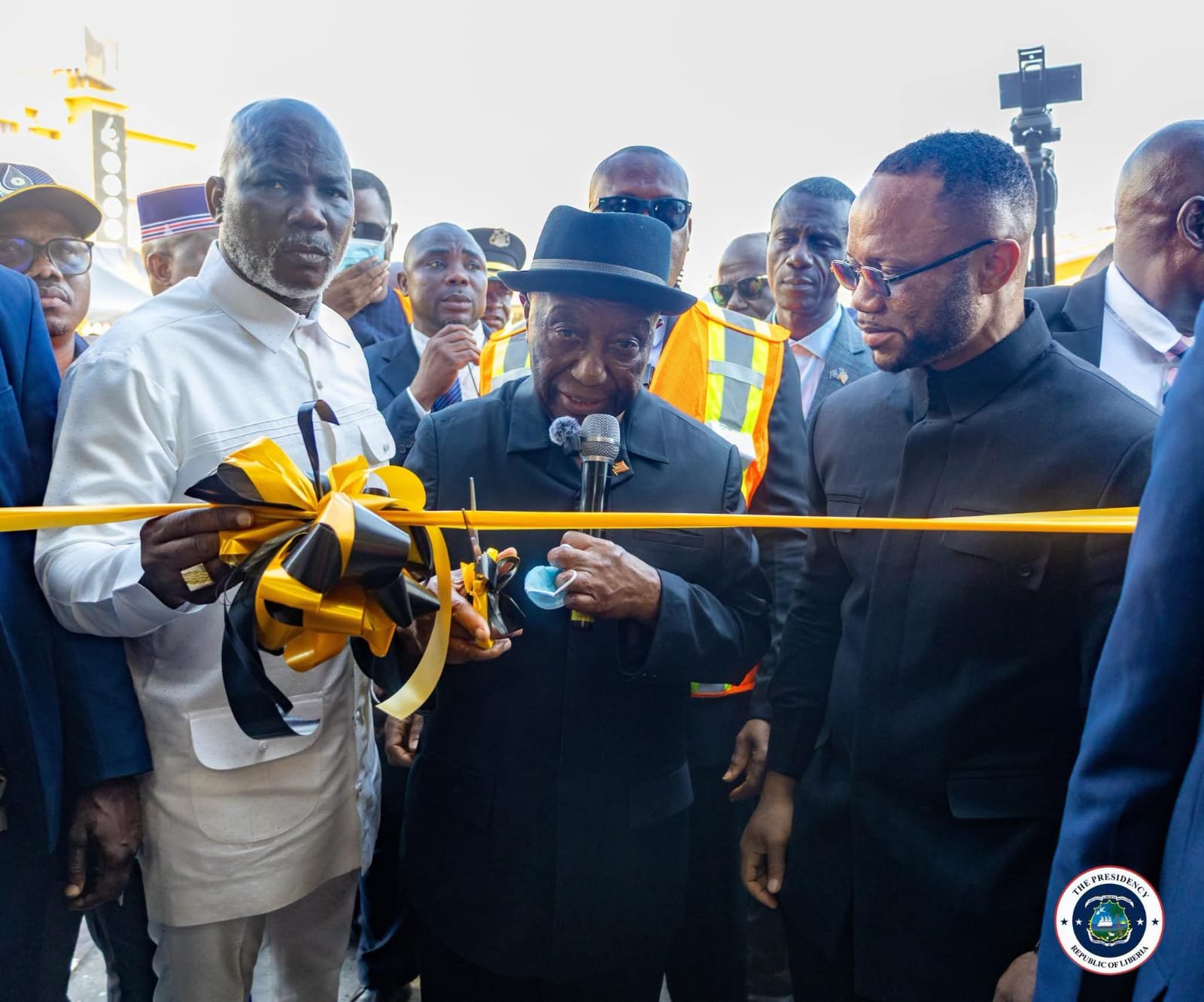
President Joseph Nyuma Boakai has dedicated a modern petroleum testing laboratory and a 12,800-metric-ton storage tank at the Liberia Petroleum Refining Company (LPRC), while breaking ground for a US$35 million project to expand and modernize the company’s petroleum storage terminal.
The ceremony, held on Monday, October 26, 2026, marks a major investment in Liberia’s petroleum infrastructure, with the government aiming to strengthen energy security, improve fuel quality control and reduce the country’s exposure to international supply disruptions.
The expansion is expected to add 50,000 metric tons of commercial petroleum storage capacity, bringing the LPRC’s total storage capacity to a higher level and improving the country’s ability to manage fuel supplies during emergencies and periods of market uncertainty.
Speaking at the ceremony, President Boakai said reliable petroleum supplies were essential to the country’s economic activities, including transportation, agriculture, mining, industrial operations and public services.
“Our transportation system, agricultural utilities, mining operations, industrial businesses, and essential public services all depend on the reliable availability of petroleum products,” the President said.
He explained that the project would include automated systems, improved infrastructure and enhanced safety facilities to strengthen the company’s operations.
According to President Boakai, the expansion will also introduce Liberia’s first petroleum marine back-loading facility, allowing petroleum products to be transferred onto vessels for coastal and regional distribution.
The project will further include coastal defense infrastructure and land reclamation intended to protect national assets.
President Boakai said the LPRC’s share of Liberia’s national petroleum storage capacity is expected to increase from approximately 25 percent at the beginning of his administration to about 50 percent when the expansion is completed.
“Our objective is to strengthen Liberia’s energy security, improve national economic resilience, and create the conditions for greater investment, productivity, and prosperity,” he said.
The President added that the investment was expected to create employment opportunities and equip Liberians with technical skills. He also noted that the marine facility could position Liberia to participate more actively in petroleum storage and distribution across the West African region.
However, he stressed that the projects must produce tangible benefits for the population, including economic growth, job creation, reliable fuel supplies and improved living conditions.
President Boakai urged the LPRC Board and management to properly maintain the newly dedicated facilities and ensure that the expansion is completed with financial discipline, technical competence, environmental responsibility and operational safety.
“The success of these investments must ultimately be measured by their contribution to economic growth, employment opportunities, national energy security, and improved livelihoods for our Liberian people,” he said.
He also called for accountability in the management of public institutions, emphasizing that investments in national infrastructure must deliver practical results for citizens.
The President commended LPRC Board Chairman Aaron Weah, members of the board, Managing Director Amos B. T. Tweh and employees of the company for their contributions to the project.
He also urged LUTEC Engineering, the company implementing the expansion, to maintain professional standards and ensure quality work and timely completion.
“We may be a terrible country, but we demand the highest standard of our people,” President Boakai said, while thanking the Legislature and other stakeholders for supporting national development initiatives.
The LPRC expansion comes amid the government’s stated efforts to strengthen the country’s energy infrastructure and improve its ability to withstand external supply shocks.
Once completed, the project is expected to increase petroleum storage capacity, improve operational efficiency and create opportunities for Liberia to expand its role in the regional petroleum market.