


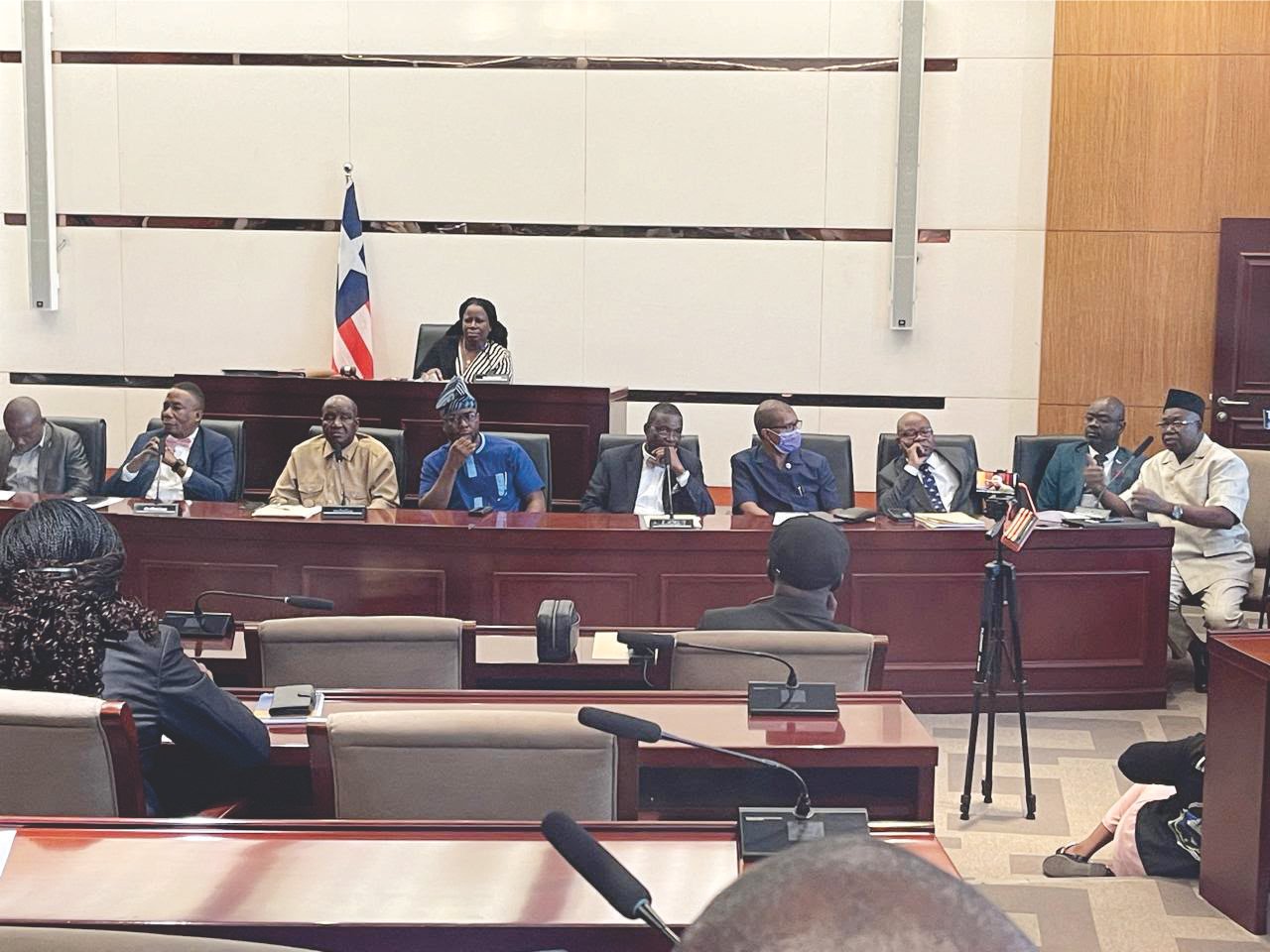
Presidents of rural universities across Liberia are demanding salary standardization and additional allowances, citing reported disparities in compensation between university administrators that they say threaten fairness, staff welfare, and the development of higher education outside Monrovia.
The university leaders are urging the Liberian Senate to intervene urgently and work with the government to establish a transparent national salary and benefits framework covering academic staff and university administrators.
Speaking on behalf of the group, Professor Dr. Isaac P. Podah, President of Lofa County University in Voinjama, said universities should not be disadvantaged because of their geographical locations.
According to the group’s submission, presidents of rural universities receive approximately US$5,000 monthly, compared with US$7,000 for the president of Tubman University and US$15,000 for the president of the University of Liberia.
The reported figures represent a US$10,000 monthly difference between the compensation of the University of Liberia president and that of rural university presidents.
The university leaders argue that the disparities raise serious questions about the consistency of compensation across Liberia’s higher education sector, particularly as rural institutions struggle to attract and retain qualified professionals.
They warned that unequal salary structures could weaken staff morale, undermine institutional stability, and further disadvantage universities already operating under geographical and financial constraints.
Acknowledging that immediate salary parity with the University of Liberia may be financially difficult, the presidents proposed adopting Tubman University’s salary structure as an interim benchmark for harmonizing compensation across rural universities.
However, they stressed that the proposal must be supported by a funded implementation plan, a clear timetable, and periodic reviews to ensure measurable progress toward equitable compensation.
The group maintained that salary reform should be accompanied by adequate institutional funding rather than treated as an isolated adjustment to administrators’ earnings.
Beyond salary harmonization, the university presidents are calling for distance allowances for Lofa County University, Grand Gedeh University, and Sinoe University, citing the additional costs and operational difficulties associated with their locations far from the national capital.
They argued that such allowances would help address the challenges of operating universities in geographically disadvantaged areas and improve their ability to attract and retain qualified academic personnel.
The presidents emphasized, however, that distance allowances must complement not replace salary standardization and adequate funding for rural institutions.
The university leaders further argued that unequal investment in rural higher education could undermine Liberia’s decentralization and inclusive development objectives.
They maintained that stronger universities outside Monrovia would expand access to higher education, build professional capacity within the counties, and contribute to local economic and social development.
The collective appeal is supported by university leaders representing several counties, including Dr. Alfredson Taikerweyah of Bong County; Dr. Zobong Norman of Western Region University in Bomi County; Dr. Jesse Noah Mongrue of Nimba County; Dr. Eric Z. M. Gbotoe of Grand Gedeh County; and Dr. Joseph T. Isaac of Margibi County.
Also associated with the group are Rev. Dr. Samuel B. Reeves Jr., Interim President and CEO of Grand Bassa County University, and Dr. Solomon K. Jarpah Sr. of Sinoe County.
In their appeal, the presidents called on the Senate to work with the government to establish a fair, sustainable, and transparent compensation system that considers institutional responsibilities, professional qualifications, and prevailing economic realities.
“No university should be disadvantaged because of its geographical location,” the university leaders maintained.