
By Verity News Editorial Board
Multiple news outlets have reported and alleged that Presiding Judge Ousman F. Feika suspended Atty. Gbawou Kowou from practicing law for one (1) year.
Whether that information is true or not, it is important to understand with whom the power to disbar and/or revoke a lawyer’s license lies?
Can a criminal court, a circuit court, a debt court, a probate court, a tax court, a revenue court, a commercial court, a labor court, a traffic court, a juvenile court, or a magisterial court in Liberia disbar, delicense, and/or suspend a lawyer from practicing?
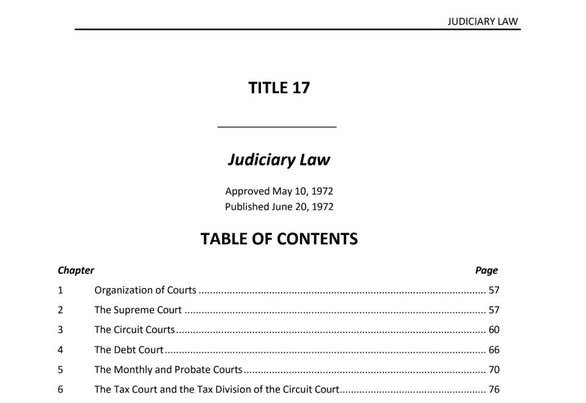
The answer can be legally found and factually established in the New Judiciary Law of June 20, 1972. What specific provision in this law grants such a power, and to whom?
Chapter 17 (Attorneys): Section 17.7.1: Supreme Court to conduct disciplinary proceedings.
“The Supreme Court shall have the power and control over all attorneys and counsellors-at-law and all persons practicing law, and is hereby authorized to censure, suspend from practice or remove from office any attorney or counsellor-at-law admitted to practice who is guilty of professional misconduct, malpractice, fraud, deceit, crime, or misdemeanor or any conduct prejudicial to the administration of justice and is further authorized to revoke such admission for any misrepresentation or suppression of any information in connection with his application for admission to practice…”
Based on the plain text and meaning of Section 17.7.1 of the 1972 Judiciary Law of Liberia, no other court can delicense or disbar a lawyer except the Supreme Court of Liberia. So, it means that Criminal Court “C” acted in error if they truly suspended Atty. Kowou for one year as allegedly reported. If such a decision was not taken, then that’s fine.
The power to censure, suspend, and remove lies ONLY with the Court of Last Resort, the Supreme Court. Let’s get that straight, because procedural clarity and the principle of fairness matter.