


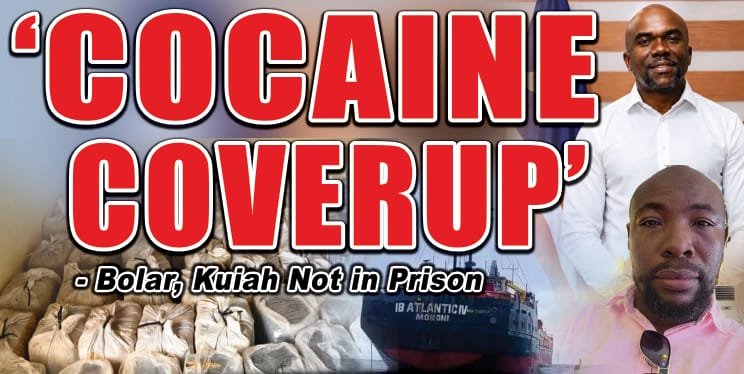
Amid increasing public outcry against selective justice, dismissed Police Commissioner (Unit 106) Johnny Bolar Dean and dismissed RIA Deputy Managing Director for Operations Mark Egon Kuiah, who are leading suspects in the US$336 million drug bust, have not been sent to prison since June 9, 2026.
Dean and Kuiah remain at liberty despite being at the center of serious allegations arising from Liberia’s largest reported drug investigation. Their continued freedom has raised questions about whether the law is being applied equally to all those implicated in the case.
Dean, a former senior police officer, has reportedly admitted receiving US$10,000 from individuals linked to the alleged drug operation. The payment, according to accounts surrounding the investigation, was allegedly made in exchange for “special treatment.”
Kuiah, a former senior official of the Roberts International Airport, has also been named as a person of interest in the investigation into the alleged US$336 million drug shipment.
President Joseph Nyumah Boakai dismissed both men on July 31, 2026, following concerns and evidence that emerged during the investigation. But their removal from government has not answered the bigger question: why have they not been prosecuted or detained if investigators believe there is sufficient evidence linking them to the alleged drug operation?
The question has become even more pressing as other individuals connected to the wider cocaine investigation have been arrested, charged or subjected to court proceedings.
Kuiah’s alleged role in the movement of the vessel IB Atlantic IV Maroni has also drawn attention. On July 13, 2026, he reportedly wrote a letter seeking authorization for the Comoros-flagged vessel to berth or operate within Liberia’s territorial waters and exclusive economic zone.
The vessel later became the subject of heightened public interest amid reports linking it to suspicions of drug trafficking. The circumstances surrounding the request, including why Kuiah sought authorization and what authorities knew about the vessel at the time, remain key questions for investigators.
For many Liberians, the issue is no longer simply about the alleged cocaine shipment. It is about whether influential people suspected of involvement are being treated differently from ordinary citizens who face immediate arrest and prosecution when accused of serious crimes.
The government has so far not provided a detailed public explanation of the legal status of Dean and Kuiah, including whether they are under active criminal investigation, whether prosecutors have reviewed evidence against them, or why they have not been taken into custody.
That silence has only deepened suspicion among critics who are calling for a transparent investigation and equal application of the law.
The allegations against Dean and Kuiah have not been proven in court, and both men are entitled to due process and the presumption of innocence unless and until a competent court determines otherwise.
But as Liberia continues to grapple with the fallout from the massive drug investigation, pressure is mounting on the government to explain why two former senior officials implicated in the case remain free while others face the full weight of the criminal justice system.