


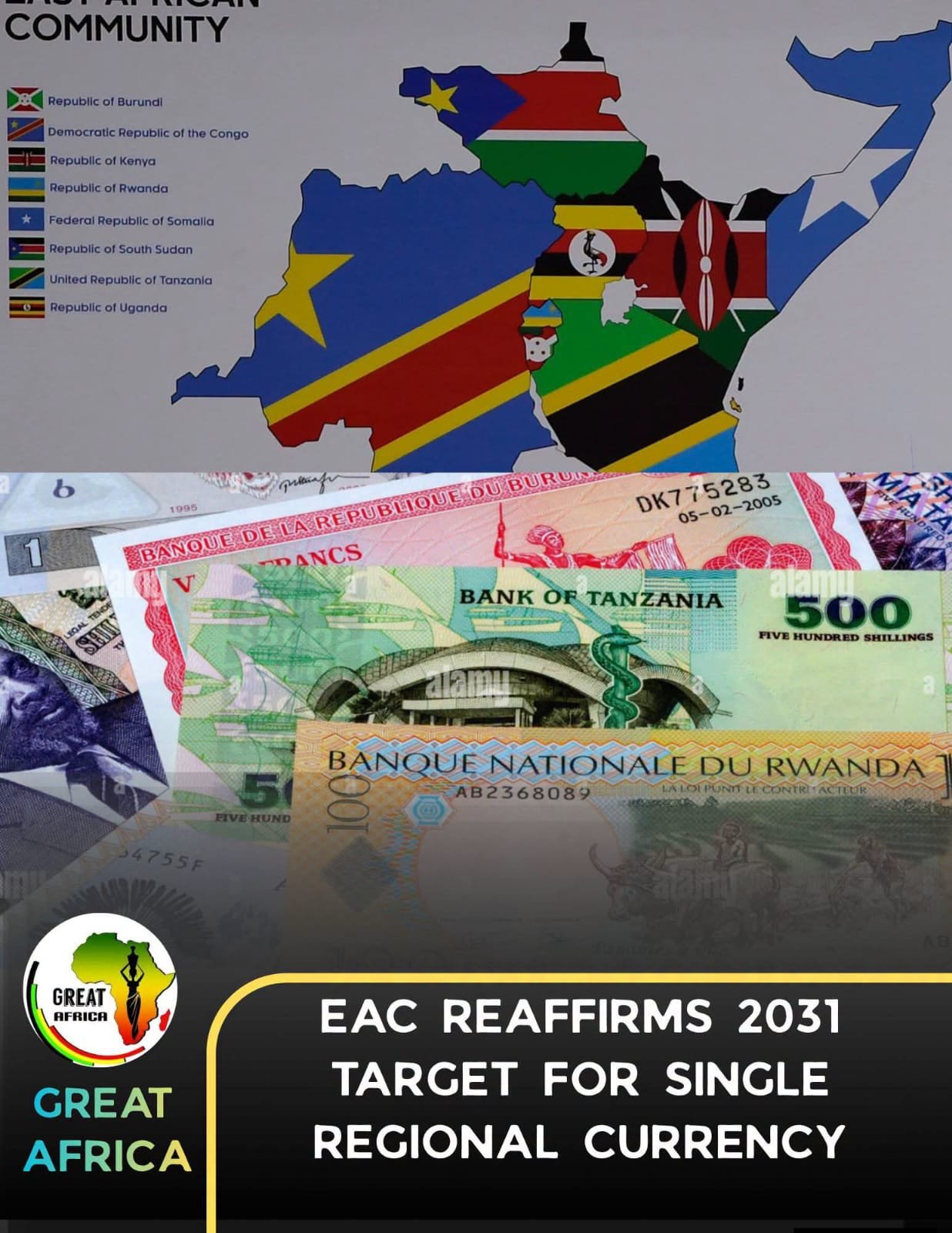
The East African Community (EAC) has reaffirmed its commitment to introducing a single regional currency by 2031, extending the original 2024 target after delays linked to the COVID-19 pandemic and economic disruptions across the region.
The decision reflects the bloc’s continued ambition to deepen economic integration among its eight member states despite setbacks that slowed preparations for the monetary union. Officials say the revised timeline will allow countries more time to meet the necessary economic conditions before adopting a common currency.
The proposed single currency is expected to remove exchange rate barriers between member states, making it easier for businesses and individuals to conduct transactions across borders. Supporters believe it will reduce the cost of trade, encourage investment, and improve the movement of goods and services throughout the region.
The currency is also expected to simplify travel within East Africa by eliminating the need to exchange national currencies when moving between member countries. Economists say this could benefit traders, tourists, and businesses operating across multiple markets.
The East African Community currently comprises eight countries: Kenya, Uganda, Tanzania, Rwanda, Burundi, South Sudan, the Democratic Republic of Congo, and Somalia. Together, they represent one of Africa’s fastest-growing regional economic blocs.
Despite the renewed commitment, the EAC has emphasized that the common currency will only be introduced after all participating countries satisfy agreed economic convergence requirements. These benchmarks are designed to ensure that the monetary union is built on stable and sustainable economic foundations.
Among the key conditions are maintaining low and stable inflation, keeping public debt within agreed limits, reducing fiscal deficits, and achieving broader macroeconomic stability. Member states are expected to continue implementing reforms aimed at meeting these targets before the currency is launched.
“The successful introduction of a single currency depends on member states meeting the agreed convergence criteria,” the EAC has maintained, stressing that economic stability remains a prerequisite for the monetary union.
Regional analysts say a common currency could strengthen the EAC’s position in Africa by creating a larger and more integrated market. They argue that it would enhance investor confidence, improve financial cooperation, and support the long-term objectives of the African Continental Free Trade Area (AfCFTA).
If the 2031 target is achieved, the launch of a single East African currency would mark a major milestone in the region’s integration agenda and stand as one of the most significant economic reforms undertaken on the African continent in recent decades.