
By Ben T.C. Brooks
Persistent heavy rainfall has left the Kiteabo–Glarro administrative road in River Gee County virtually impassable, triggering a sharp increase in transportation fares, disrupting economic activities, and limiting access to healthcare.
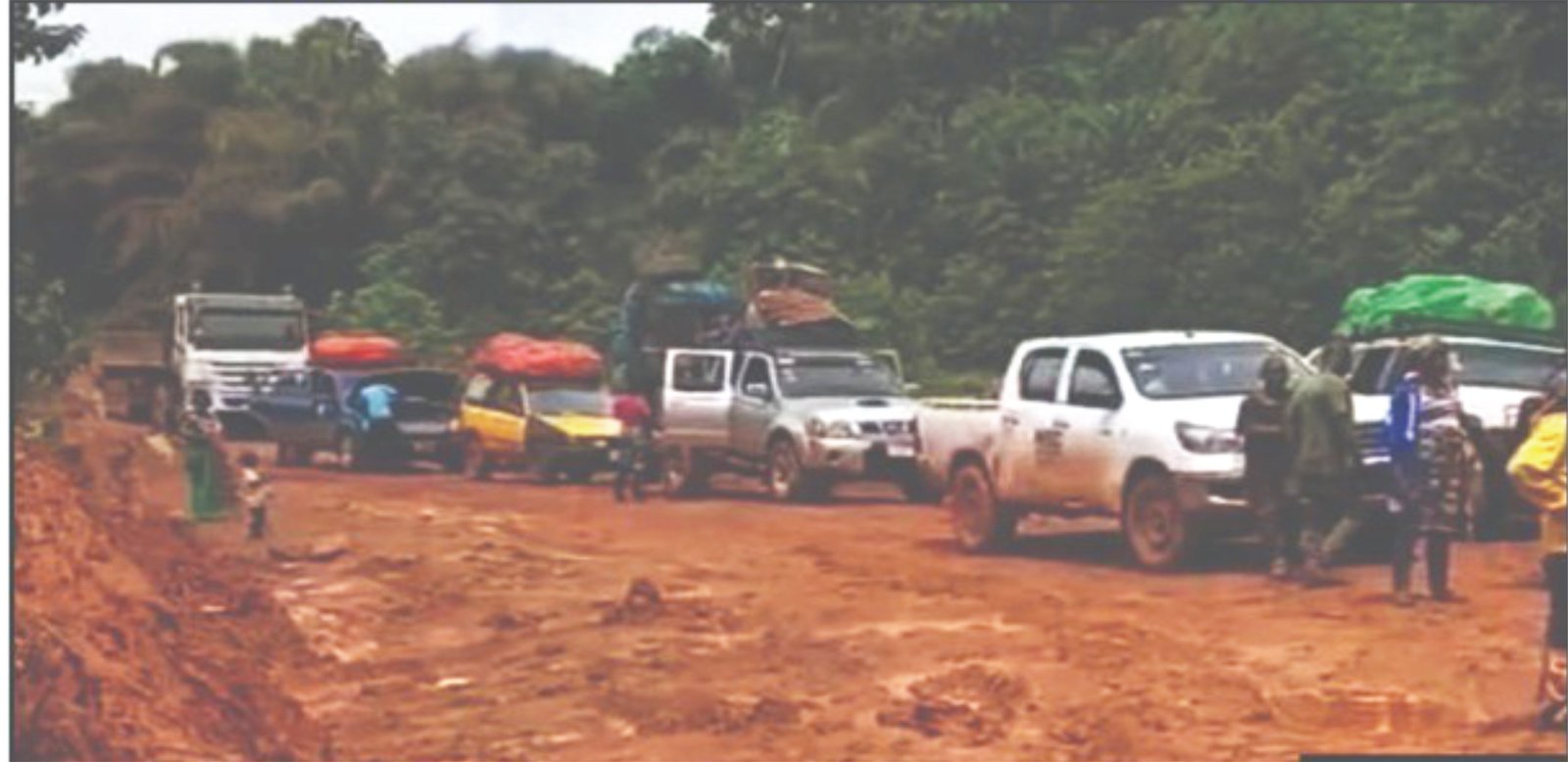
Days of relentless rainfall have washed away sections of the road, creating deep gullies, flooded crossings, and thick stretches of mud that have made travel nearly impossible.
Commercial motorcycles, the primary means of transportation for most rural communities, are now struggling to navigate the route, while larger vehicles have completely stopped using the road.
At the time of this report, the Kayteabo–Glarro road is inaccessible to motor vehicles.
The deteriorating condition of the road has disrupted the movement of people, agricultural produce, and essential commodities between Glarro, Kayteabo, and neighboring communities.
Businesses have slowed, commuters have been stranded, and farmers are finding it increasingly difficult to transport their produce to local markets.
Residents are calling on the Government of Liberia, through the Ministry of Public Works, River Gee County authorities, and development partners to urgently rehabilitate the road before conditions worsen further during the peak of the rainy season.
Local businesswoman Esther Smith described the devastating impact the damaged road and rising transportation costs have had on her livelihood.
“We have been suffering because of the road. Transportation from Youbor or Freetown to River Gbeh, which used to cost L$1,500, has now increased to L$3,000. From River Gbeh to Fish-Town, the county capital, as we previously paid L$2,000 is now paying L$3,500. Motorcycle riders are charging more because the road is in terrible condition.”
Smith explained that she transports goods from Côte d’Ivoire to communities across Kayteabo and Glarro, but the worsening road conditions are threatening her business.
“I cannot travel regularly because transportation is too expensive. Sometimes I give goods on credit, but now I keep asking myself how I will even get them to my customers.”
Commercial motorcycle rider George Collins, who operates along the Fish-Town–Glarro route, also highlighted the growing difficulties facing transport operators.
“We are suffering too. The road is full of mud and water, and it is damaging our motorcycles. We spend more money on repairs. Sometimes when we charge passengers the actual cost, they beg us to reduce the fare because they know us. Again the cost of gasoline is still higher as one gallon is sold to us here for L$1, 500. That is why transportation prices have increased, so we can still earn something after maintaining our bikes.”
The transportation crisis extends far beyond the Kayteabo–Glarro corridor. It is now affecting access to healthcare for hundreds of residents.
Although both Glarro Freetown and Kayteabo River Gbeh have functioning health facilities, residents are finding it extremely difficult to access essential medical services because of the prolonged closure and deplorable condition of the roads connecting the communities.
During a visit to the affected areas, our reporter observed that residents of Kayteabo Tawarken are now forced to cross the River Gbeh through Kayteabo Nyanawiliken before continuing their journey to River Gee in search of medical treatment.
The main road linking Tawarken to River Gbeh has remained inaccessible for nearly two years.
According to elderly resident Kaytan Myers, the situation has become so severe that only hunters are able to use the old Tawarken–River Gbeh route because every bridge along the road has collapsed.
“Only hunters can still access the main Tawarken–River Gbeh road because it has been closed for the past two years after all the bridges were damaged,” Myers explained.
Health workers at clinics in both Glarro Freetown and River Gbeh confirmed that the number of patients seeking medical care has dropped significantly in recent months.
They attributed the decline to the persistent heavy rainfall and the worsening condition of the road network, which has made travel to health facilities increasingly difficult and costly.
Similar road conditions are also affecting communities in Nyenbo, Tienpo, Kelipo, Webo, and several other parts of River Gee County, leaving many rural residents isolated.
Beyond River Gee, the deteriorating road network is disrupting the broader southeastern transportation corridor connecting lower Nimba, Tappita – Zwedru in Grand Gedeh, River Gee, Gbeapo Kanweaken, neighboring Grand Kru and Sinoe counties.
The poor condition of these roads continues to hinder regional trade, restrict the movement of goods and people, and increase transportation costs throughout southeastern Liberia in recent days
As heavy rains continue across the region, videos and photographs circulating widely on facebook show vehicles and motorcycles trapped in deep mud while commuters struggle to reach their destinations.
Although the Government of Liberia has repeatedly announced plans to improve road infrastructure, particularly in the southeastern region, many citizens say they are still waiting for those promises to become reality.
With the rainy season intensifying, residents are renewing urgent appeals for immediate intervention to rehabilitate the damaged roads, restore reliable transportation, improve access to healthcare, reduce soaring transportation costs, revive economic activities, and reconnect isolated communities across River Gee County