


Liberia is moving to establish a National Data Centre to monitor earth tremors and other environmental hazards, following discussions with the Comprehensive Nuclear-Test-Ban Treaty Organization (CTBTO).
The Centre will be hosted and coordinated by the Environmental Protection Agency (EPA) and is expected to help experts investigate earth tremors, identify their possible causes and provide the public with reliable information.
The initiative follows two earth tremors reported in Lofa County in 2024.
An EPA team travelled to the affected areas to investigate but found that Liberia lacked the equipment and systems needed to properly record the incidents and determine their causes.
The EPA subsequently recommended the establishment of a national monitoring system.
In September 2024, EPA Executive Director Dr. Emmanuel K. Urey Yarkpawolo attended the 68th General Conference of the International Atomic Energy Agency (IAEA) in Vienna, Austria, where he began discussions with the CTBTO following a recommendation from Liberia’s Ambassador to Germany and the IAEA, Her Excellency Youngor Sevelee Telewodah.
The discussions continued in September 2025 during the 69th IAEA General Conference, attended by Dr. Urey Yarkpawolo, Agriculture Minister Dr. J. Alexander Nuetah and Ambassador Telewodah.
The EPA also appointed a national contact person through the Ministry of Foreign Affairs to coordinate communication with the CTBTO.
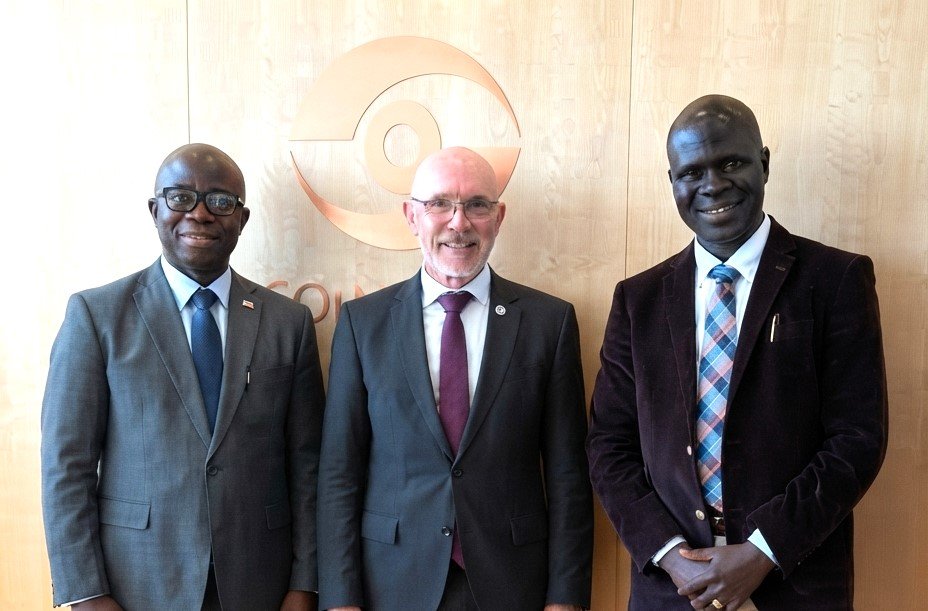
On September 14, 2026, Liberia and the CTB held a high-level meeting to conclude discussions and begin preparations for the Centre.
The Liberian delegation included Dr. Nuetah, Dr. Urey Yarkpawolo, Deputy Foreign Minister for International Cooperation and Economic Integration Dr. Ibrahim Nyei, Ambassador Telewodah, officials of the Ministry of Health and other government representatives.
The EPA has already commissioned a modern environmental laboratory in Monrovia that can accommodate the proposed Centre.
The CTBis expected to work with Liberia to provide the equipment, computer systems and training required to make the facility operational.
The CT operates a global monitoring network that detects nuclear test explosions by monitoring seismic activity, unusual sounds in the atmosphere and oceans, and radioactive materials in the air. The information can also help countries investigate earthquakes, earth tremors, mining explosions and other hazards.
Once operational, the National Data Centre will give trained Liberian experts access to information collected through the network.
The data will help experts determine where earth tremors occur, assess their strength and investigate whether they result from natural activity or explosions linked to mining and quarrying.
For communities, the Centre is expected to improve access to reliable information when tremors occur, helping residents understand what happened and reducing reliance on rumours.
The information could also assist the National Disaster Management Agency and other government institutions in preparing for and responding to emergencies.
Authorities may use the findings when planning roads, bridges, schools and other public facilities, particularly in areas where geological risks need to be considered.
The monitoring system could also help mining authorities distinguish natural ground movements from explosions caused by mining and quarrying activities.
Liberia’s coastal communities could benefit from improved monitoring and preparedness for possible tsunami threats.
The Centre is also expected to support environmental protection, agriculture and public health through information on the atmosphere, oceans and radioactive materials. Such information could help authorities assess potential threats to air, water, soil, farms, food supplies and coastal communities.
The initiative will include specialized training for Liberian scientists, university students, geologists, health workers and disaster-management professionals.
The EPA will coordinate the Centre’s operations in collaboration with the Ministries of Foreign Affairs, Agriculture, Health, and Mines and Energy, the Liberia Geological Survey, the National Disaster Management Agency, universities and other relevant institutions.
With discussions concluded, the next steps include technical assessments, equipment installation and personnel training before the Centre becomes operational.
The establishment of the facility is expected to strengthen Liberia’s ability to monitor earth tremors, investigate environmental hazards and provide communities and government institutions with information needed to respond to potential risks.