


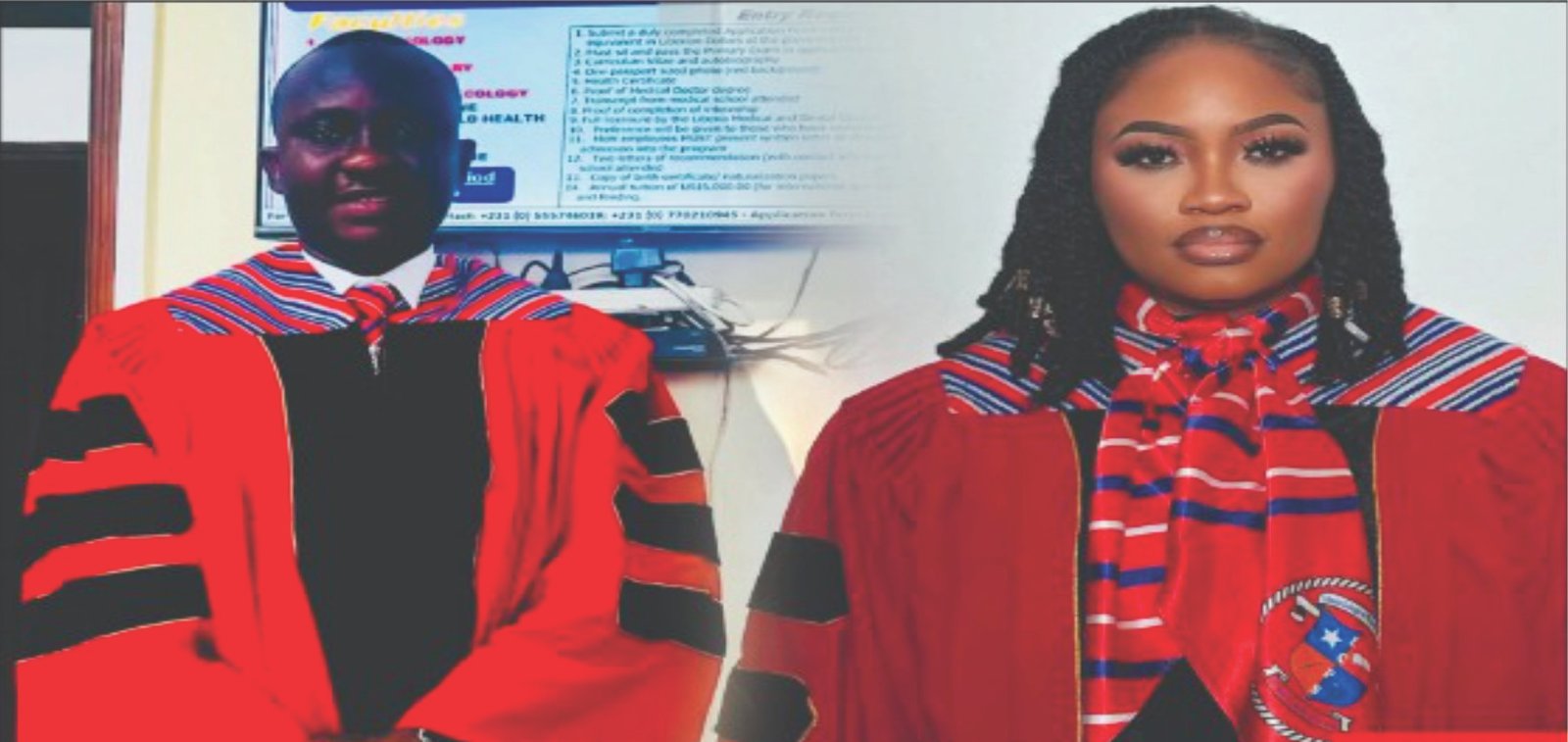
Liberia has trained 166 medical specialists since 2012 through the Liberia College of Physicians and Surgeons (LCPS), but the institution says keeping those professionals in the country remains a major challenge.
The meeting, held under the theme “Resilient, Equitable, and Sustainable Health Systems for Liberia 2030,” brought together health professionals to discuss the challenges facing the country’s healthcare system.
The college’s president, Dr. John Mulbah, made the disclosure on Friday, September 18, 2026, at the EJS Ministerial Complex during the institution’s 10th Annual General Scientific Meeting and Convocation in Monrovia, where he called for greater investment in specialist training and better support to keep qualified doctors serving in Liberia.
Dr. Mulbah said the college has expanded from four faculties to 11, giving more Liberian doctors the opportunity to pursue specialist training at home instead of going abroad.
“From only fifteen specialists and zero Liberian training, let me repeat this, of the initial fifteen specialists, none of them were trained in Liberia. They were all trained outside this country. Zero, we have now trained from 2012 to 166 specialists,” he said.
He also reported that the college has awarded 64 fellowships through different pathways.
Dr. Mulbah said the growth reflects years of work by the college’s faculty, supervisors, examiners, residents, administrators and partners.
He, however, described the anniversary as a time to recognize their contributions and consider what more needs to be done to improve medical education in Liberia.
“This occasion is therefore not simply a ceremony, it is a celebration of commitment, sacrifice, resilience, partnership and hope for the future of medicine in Liberia,” he said.
The college president thanked the Government of Liberia, particularly the Ministries of Health and Finance, for their support.
He disclosed that the government was in the process of completing payment for the purchase of the property currently occupied by the college.
However, he said the institution continues to face financial and infrastructure challenges, including limited learning resources, research funding, faculty compensation and difficulties providing supervision for residents in distant training locations.
He said retaining trained specialists is another concern, stressing that Liberia needs to encourage doctors who complete their training to remain and serve the country.
“We need to retain these trained specialists. We need to encourage them to remain in Liberia,” Dr. Mulbah said.
He also called for stronger cooperation among government agencies, teaching hospitals, universities, development partners, the private sector and Liberian medical professionals abroad.
Dr. Mulbah said the college plans to improve its curriculum, expand training in areas where specialists are needed, invest in faculty development, strengthen research and make greater use of digital learning.
He also appealed to Liberian specialists living abroad to help develop the country’s health sector through teaching, research, mentorship and clinical service.
“The future of our specialist medical education in Liberia cannot rest on the shoulders of the college alone. It is a national responsibility for all women in Liberia,” he said.
Delivering the keynote address, Prof. Angnon Koffi Balogou urged Liberia to strengthen its health services to ensure reliable care during crises and in normal times.
He highlighted the need for better governance, trained health workers, stronger primary healthcare, improved patient safety, and sustainable financing.
Prof. Balogou stressed that infrastructure, financing, medical training and effective governance must work together to improve services for patients.
“My central message is direct. Liberia 2030 will not be achieved through infrastructure alone, nor through financing alone, nor through training alone. Each is necessary, but none is sufficient when it operates in isolation. Liberia 2030 requires one coherent system,” he said.
Prof. Balogou intimated that the country must strengthen its health workforce, improve the quality of care and ensure that people in rural communities can access essential services.
He noted that the quality of healthcare should not depend on where a person lives, their income, age or other circumstances.
“A health system is not equitable simply because service exists. It becomes equitable when distance, poverty, indirect costs, gender, age, disability, rural residence, emergency status, and social vulnerability no longer determine the quality of care a person receives,” he said.
He urged health authorities to pay attention to the needs of rural women seeking maternity care, children requiring medical services and patients who need regular treatment for chronic diseases.
“The design principle is clear. Plan for the last mile first,” he added.
Prof. Balogou stressed the need for reliable funding, transparent procurement, proper maintenance of health facilities and better support for medical workers.
“A system is not sustainable when every improvement depends on exceptional efforts,” he said, adding that lasting progress requires institutions that can continue delivering services beyond the life of individual projects.
He highlighted five key priorities for health sector development for moving Liberia’s 2030 health agenda forward.
They include strengthening primary healthcare and district health services; training and retaining qualified health workers; improving quality assurance and patient safety; using reliable data to guide decisions; and managing health financing and resources in a sustainable manner.
He said communities, clinics, health centers and district hospitals are often the first places where people seek medical attention, making them central to the country’s healthcare system.
“The strength of the health system is tested as the first point of contact,” he said.
He also urged health institutions to use research and data to identify gaps in service delivery and determine which interventions are producing results.
“Data are not collected for reports alone. They are collected to guide decisions,” he said.
Graduates Urged to Put Their Training to Work
Dr. Mulbah congratulated the graduating residents and urged them to see their qualifications as a responsibility to serve the people of Liberia.
“Your qualification is not the end of your journey. It is the beginning of a greater responsibility,” he said.
He encouraged the new specialists to serve not only as skilled doctors but also as ethical leaders, teachers, researchers and advocates for better healthcare.