


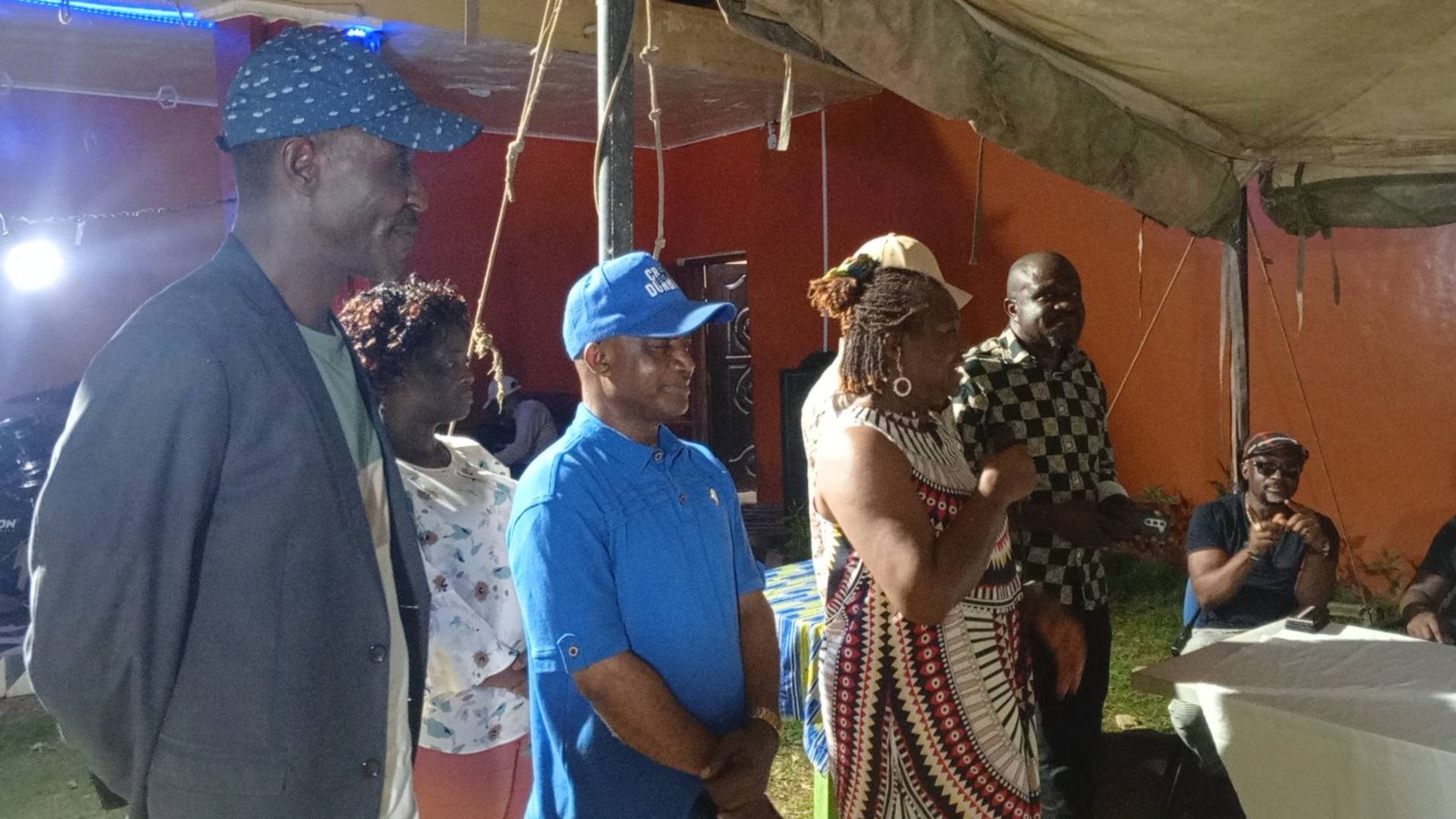
GBARNGA, Bong County — Liberia’s Minister of Public Works Roland Giddings, has disclosed plans by the government to continue paving streets across Gbarnga as part of a broader national infrastructure drive aimed at transforming county capitals and improving connectivity throughout the country.
Speaking at a nighttime program organized by the Bong County Administration under the leadership of Superintendent Loleyah Hawa Norris in Gbarnga, Minister Giddings said the government remains committed to eliminating dusty roads in the city through continuous annual budgetary allocations for road pavement projects.
“We have a program that every year we continue to put money in the budget to pave the city streets,” Giddings said. “So instead of Gbarnga having a lot of dusty roads, we will continue to pave the city streets until we have no dusty roads in Gbarnga City and other communities.”
The Public Works Minister emphasized that before the paving projects can advance, authorities must first clear road corridors and alleys obstructed by structures illegally built within public right-of-way areas.
According to him, the Ministry will soon begin assessments in Gbarnga, with technical teams expected to return within one or two weeks to commence enforcement activities.
Giddings warned that no individual, regardless of status or political affiliation, would be exempted from the demolition exercise if their structures obstruct public roadways.
“If your house, your store, or your fence is in the alley, we will break it down,” he declared. “There will be no exception.”
The Minister revealed that similar exercises have already been carried out in Monrovia with the full backing of the President Joseph Boakai, adding that the administration is focused more on long-term national development than political considerations.
“We are not thinking about the next election,” Giddings stated. “The President says we are thinking about the next generation.”
He said the government’s objective is to modernize Liberian cities and ensure that county capitals become accessible, organized, and comparable to cities in other countries.
In addition to the Gbarnga street pavement initiative, the Minister also announced plans for a major regional road connectivity project known as the “Liberia Economic Legacy Corridor,” which he said has already received approval from the World Bank for financing.
The proposed corridor is expected to connect Bong, Nimba, and Grand Bassa Counties through Kokoya, significantly reducing travel time between the regions and improving economic activities.
“You can leave from Bong and quickly go to Grand Bassa through Kokoya,” he explained. “That will happen.”
Giddings noted that the Boakai administration considers investments in roads, energy, and economic infrastructure essential to boosting agriculture, mining, industrialization, and other sectors of the Liberian economy.
For her part, Superintendent Norris praised the Minister for visiting Bong County and directly engaging residents on development plans affecting the county.
She described the visit as an example other government ministries should follow under Liberia’s decentralization agenda.
“We are so honored to have you here,” Norris said. “We want all other ministries to take up that time to come and tell our people what they stand for.”
The Superintendent urged traditional leaders, religious leaders, and citizens to cooperate with the government’s development agenda, especially efforts aimed at opening city streets and improving urban infrastructure in Gbarnga.
She emphasized that residents must work together to support development initiatives that will improve the appearance and accessibility of the centrally located city.
The event brought together local officials, traditional leaders, and residents who welcomed the Minister and his delegation to Bong County.