


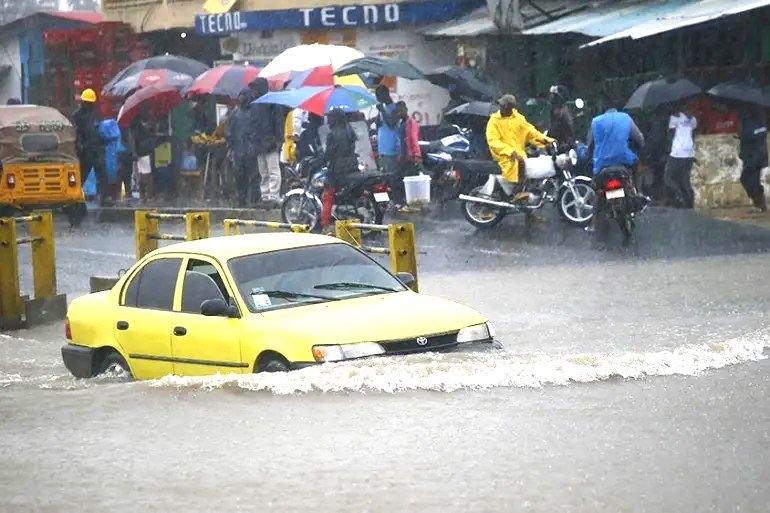
More than 5,000 residents across 10 communities in Monrovia are currently displaced, with an estimated 64,000 people affected nationwide, according to the International Federation of Red Cross (IFRC).
Liberia is dealing with widespread flooding following days of heavy rainfall that have affected seven counties, with Montserrado County, including the capital Monrovia, among the hardest-hit areas.
The IFRC said flooding has been reported in Montserrado, Grand Cape Mount, Grand Bassa, Bomi, Bong, Rivercess and Nimba counties.
The organization said the latest flooding began after heavy rains on August 19, damaging homes, disrupting transportation and livelihoods, and affecting water sources.
“More than 5000 residents across 10 communities in Monrovia are currently displaced, with an estimated 64,000 people affected nationwide,” the IFRC said. It warned that affected communities are dealing with damaged homes, contaminated water sources, disrupted livelihoods and a greater risk of waterborne diseases.
Several communities in and around Monrovia are particularly vulnerable, especially those located along the St. Paul River, Stockton Creek, Du River and Mesurado River.
The IFRC said wetlands around the capital are also at risk because water drains slowly from those areas.
“The current crisis reflects that the projected risk is materializing, compounded by weak urban drainage, wetland encroachment, and unplanned settlement growth,” the report said.
The latest flooding comes after the National Disaster Management Agency warned on June 30 that Monrovia was facing an increased risk of flooding.
The IFRC said the warning was based on a Meteorological Service forecast of rainfall ranging from 218.7 to 754.2 millimeters, with humidity levels expected between 88 and 90 percent.
The combination of heavy rainfall and high humidity can leave floodwater standing for longer periods, particularly in areas with poor drainage.
No deaths had been reported when the IFRC conducted its assessment. However, the organization said the situation remained serious as rainfall continued in several affected areas.
In Montserrado, some displaced residents have moved in with relatives and other host families while floodwater remains in low-lying and wetland areas.
The flooding has also made movement difficult and disrupted the livelihoods of residents. Contaminated water is raising concerns about the spread of waterborne illnesses.
Red Cross Response
The Liberia National Red Cross Society has sent community volunteers and response teams into affected areas to assess the situation and assist residents.
The teams are helping vulnerable people, including older persons, children and people with disabilities, to move to safer locations.
The Red Cross is working with the National Disaster Management Agency and county authorities to coordinate relief efforts.
Response teams have also started providing Psychological First Aid to people affected by the flooding, particularly those who have been forced from their homes.
Additional first-aid kits have been sent to affected counties to support emergency response teams.
Before the current flooding, the Liberia National Red Cross Society, with support from the Swedish Red Cross, carried out an anticipatory action programme in Montserrado and Grand Cape Mount.
The programme trained 40 volunteers and established community-based teams in four communities. It also involved identifying vulnerable areas, assessing local resources and clearing drainage channels in flood-prone communities.
According to the IFRC, the work helped reduce the impact of flooding in some areas and allowed volunteers to respond more quickly.
Government Steps Up Response
The government has activated the National Flood Preparedness Plan and the Emergency Operations Centre to coordinate the response.
Authorities have also called on humanitarian organizations and other partners to strengthen their cooperation in assisting affected communities.
The Liberia National Police has warned residents to remain alert, follow safety instructions and avoid flooded roads and streets.
The IFRC said the Liberian government and national societies have requested international assistance as the situation develops.
With the rainy season continuing, residents in flood-prone communities remain at risk. The immediate needs include safe shelter, clean drinking water, healthcare and assistance for families who have been displaced.
The IFRC said continued monitoring and timely assistance will be important as rainfall persists across parts of Liberia.