

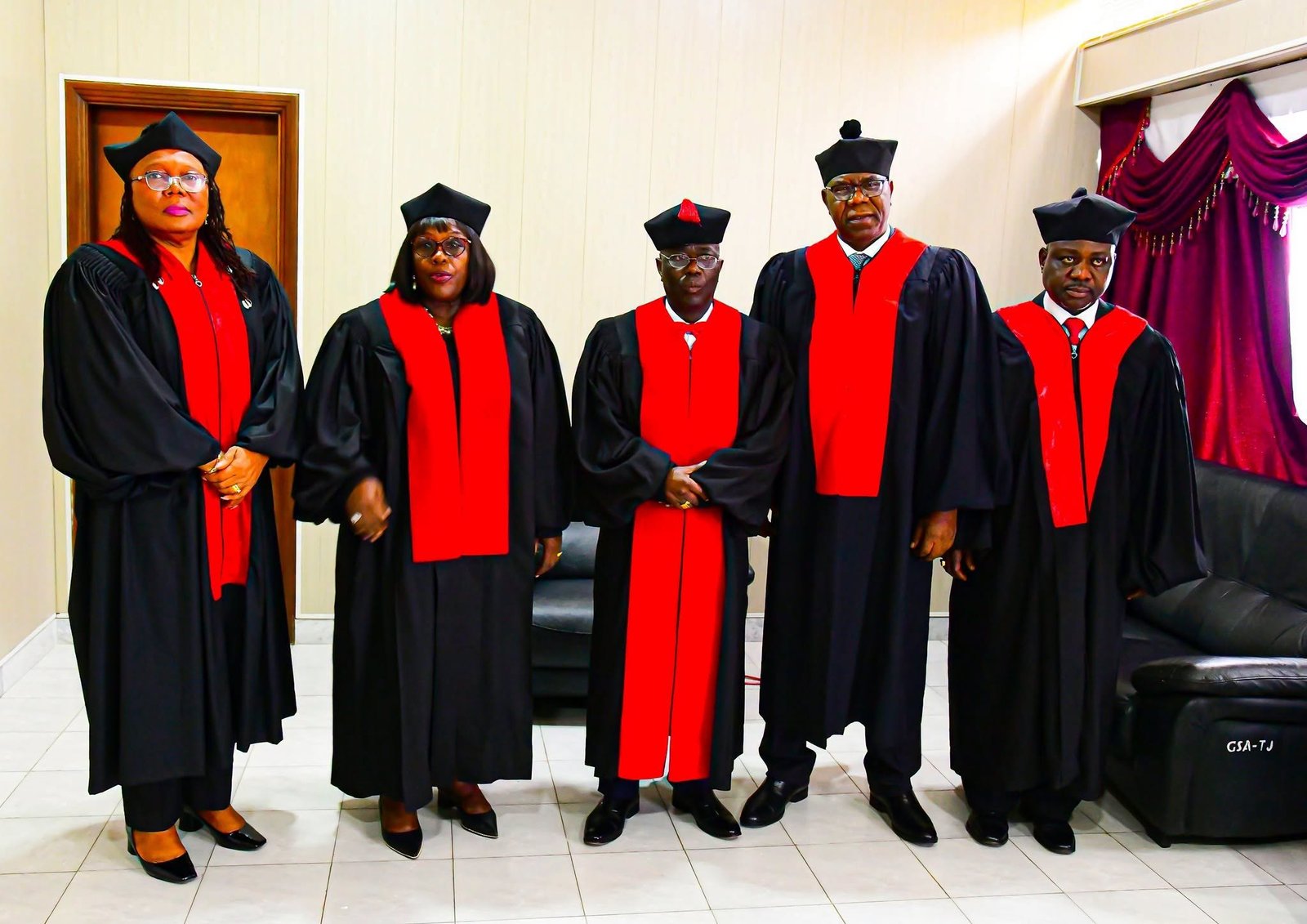
The Supreme Court of Liberia has rejected a petition for a writ of prohibition in the ongoing Capitol Building arson case, ruling that the petitioners pursued the wrong legal remedy after the trial judge disbanded the jury and ordered a new trial.
The case is linked to the December 2024 fire that damaged part of the Capitol Building in Monrovia amid political tension surrounding the leadership crisis in the House of Representatives. Several defendants were arrested and charged in connection with the blaze, which became one of the country’s most closely watched criminal cases.
In a judgment delivered on August 28, 2026, the Supreme Court drew a clear distinction between a writ of prohibition and a writ of certiorari. The Court said prohibition is used to stop a lower court or tribunal from acting where it has no jurisdiction or has exceeded its authority, while certiorari is the proper remedy to challenge an interlocutory ruling made by a court that has jurisdiction but is alleged to have acted irregularly or contrary to law.
The dispute reached the Supreme Court after the trial judge disbanded the jury and awarded a new trial. The defendants, through their legal challenge, sought a writ of prohibition against the trial court’s decision.
But the Supreme Court held that the trial judge had both personal and subject-matter jurisdiction over the case. It said that even if the decision to disband the jury and order a new trial was wrong, the proper legal remedy was a petition for certiorari and not prohibition.
“The proper remedy should have been the petition for a writ of certiorari to review and correct the ruling and not a petition for prohibition,” the Court said.
The Supreme Court therefore quashed the alternative writ, denied the peremptory writ, and ordered the Clerk of Court to send a mandate to the lower court to resume jurisdiction and give effect to the judgment.
The decision was handed down on August 28, 2026, and signed by Chief Justice Yamie Quiqui Gbeisay Sr. and the Justices of the Supreme Court.