
By Staff Reporter
A Dutch company that supplied vehicles to the Liberia National Police has disputed claims surrounding a controversial vehicle procurement deal, saying it delivered eight vehicles but received only US$439,100 in payments.
Pieter Wiemers, Managing Director of Dutch Health BV, said the company was originally expected to supply 22 vehicles for about US$1.5 million, under an initial contract valued at approximately US$6.1 million.
But Wiemers said the remaining vehicles were never delivered because his company did not receive payment or a guarantee for the outstanding amount.
“We delivered 8 vehicles to the LNP and got paid via cheques, in Liberian and USD payments and finally received US$439,100,” Wiemers said in an email dated August 27.
He said the contract was never fully implemented by the LNP and suggested that money intended for the procurement may have been used for other purchases.
“It could be that the remainder of the funds have been used elsewhere (other procurement), though it never has ended up at Dutch Health BV in the Netherlands,” he said.
Wiemers also rejected suggestions that a financing facility was used to support the transaction.
“There was NO finance facility involved,” he said.
The Dutch company’s account contradicts claims attributed to foreign police officials regarding the source of some vehicles reportedly associated with the Liberian police.
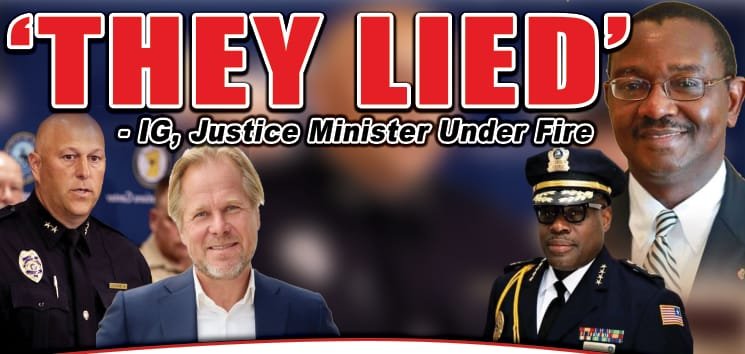
Mark Bruley, Police Chief of Brooklyn Park, Minnesota, was unequivocal in denying that he had ever supplied vehicles to former Liberian police leadership or sent any vehicle to Liberia.
“I never gave any vehicle. We never gave Chief Coleman any vehicle before. I never sent a vehicle to Liberia,” Bruley said.
“There has been no conversation of vehicles with Liberia, none, never.”
The conflicting accounts have placed renewed attention on the procurement of vehicles for the LNP and the explanations previously given by officials involved in the matter.
Wiemers confirmed that a Toyota Prado referenced in questions about the transaction was among the eight vehicles supplied by Dutch Health BV.
He said his company eventually decided to withdraw from Liberia after years of doing business in the country, citing persistent problems with payments, project implementation and accountability.
Dutch Health BV began operating in Liberia in 2019 and, according to Wiemers, supplied medical and other equipment, including COVID-19 emergency equipment, oxygen containers for hospitals, ambulances for the Ministry of Health and trucks.
“We have given up in those six years of actively operating and fired the Country Manager Frances Nagbe,” Wiemers said.
He described the operating environment as increasingly difficult for a small and medium-sized business seeking to work transparently.
“There were always issues with payments, commissioning projects, lack of accountability and it is almost impossible to operate a SME business genuinely,” he said.
Wiemers stressed that his company should not be held responsible for decisions taken by government officials.
“We cannot be involved or be held responsible for governmental behaviour or irresponsible behaviour and can only share the standard facts of normal business transactions with you,” he said.
The revelations are likely to increase pressure on the relevant Liberian authorities to explain how the vehicle procurement was structured, how much money was committed, where the remaining funds went and who authorized the transactions.
The Inspector General of Police and the Minister of Justice have yet to publicly respond to the Dutch company’s specific claims.
For now, the conflicting statements from the foreign supplier, the U.S. police chief and Liberian officials leave significant questions about the vehicle deal unanswered.
Those questions can ultimately be settled only through procurement records, payment documents, contracts and a transparent accounting of public funds.