

By G. Watson Richards
A key prosecution key witness in the ongoing economic sabotage trial at Criminal Court ‘C’ has directly linked former Finance Minister Samuel D. Tweah to the alleged unauthorized transfer of public funds tied to national security operations, intensifying scrutiny over Liberia’s public financial management system.
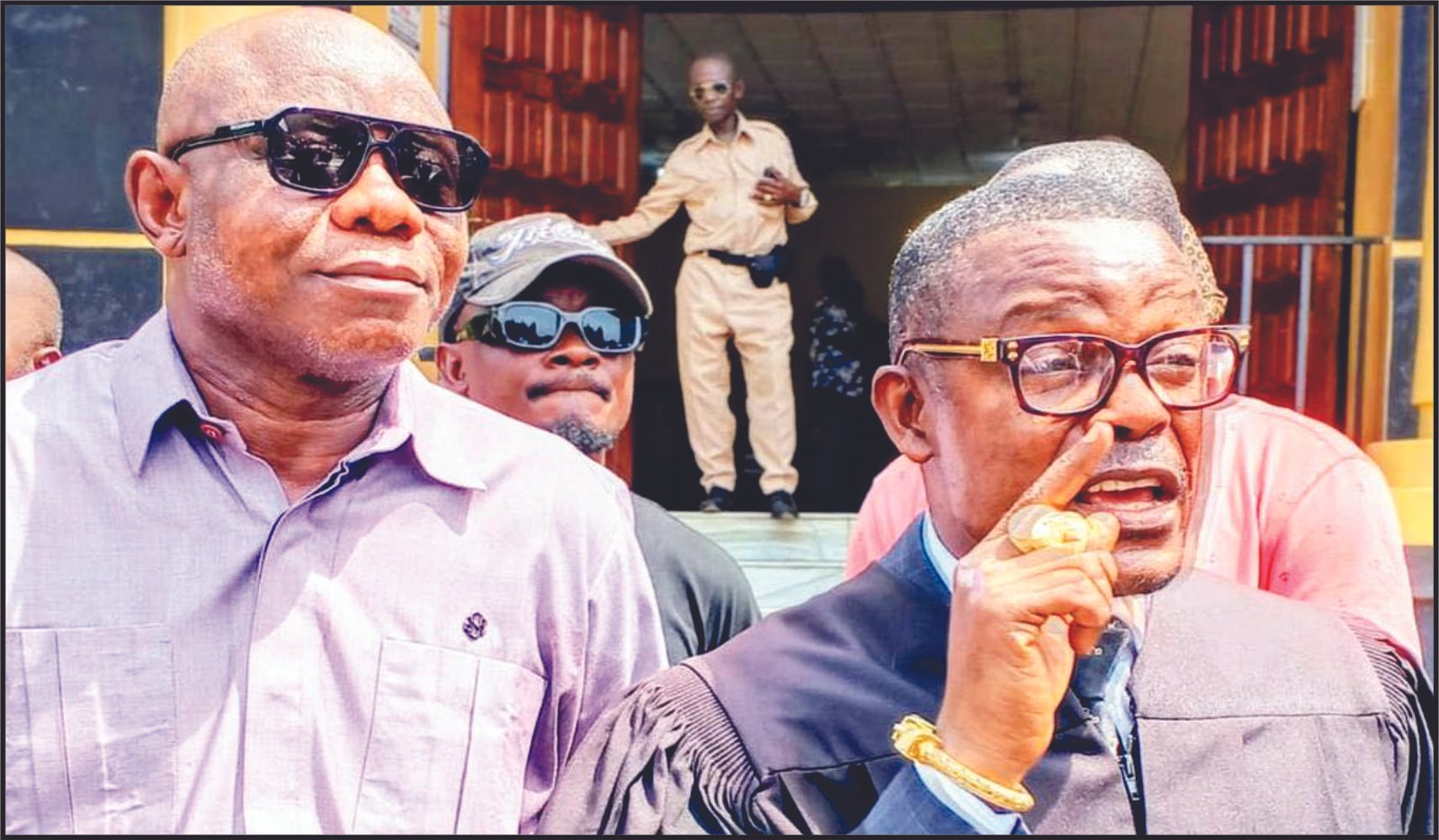
Testifying under cross-examination before presiding Judge Ousman F. Feika on Monday, Baba Mohammed Boika told the court that former finance Minister Tweah approved financial transactions that bypassed legally mandated budgetary procedures.
The case is being prosecuted by the Liberia Anti-Corruption Commission on behalf of the Republic of Liberia.
“Transfers Were “Illegal” and unauthorized,” Boika told the court on Monday, April 13, 2026, while under cross-examination by the defense counsels.
The Liberia Anti-Corruption Commission (LACC) key witness, Boika, maintained that the actions of former minister Tweah constituted a misuse of public office.
“Hon. Samuel Tweah… illegally transferred public funds through the account of the FIA under the pretext of facilitating public security operations,” Boika testified in open court, stressing that the transactions violated established financial controls.
“The said funds in question were never authorized nor requested for… meaning this amount was never requested for and approved by the legislature,” he told the court while testifying under cross-examination.
According to Boika, the transfers were executed outside the government’s formal budget process, raising serious accountability and transparency concerns.
“This amount was not authorized… Hon. Tweah never had any authorization for the transfer of the said funds to the FIA,” he added.
Defense Highlights Lack of Personal Gain Evidence
Defense lawyers challenged the prosecution’s case, focusing on what they described as a critical evidentiary gap, no proof that Tweah personally benefited from the alleged transactions.
During cross-examination, defense lead counsel Arthur Tamba Johnson questioned the credibility of the prosecution’s witness, stating that there is no proofs that show that former finance minister used said funds for his personal gain.
“You did not testify that Hon. Samuel Tweah personally signed any FIA reverse cheque and received any bag, envelope or package of cash… not so,” Cllr. Johnson questioned the witness under cross-examination?
The defense team further demanded documentary proofs of the witness testimony on the stand.
“Show us one receipt signed by Hon. Samuel Tweah acknowledging receipt of any of those funds as evidence of your investigation,” Cllr. Johnson again questioned the witness?
There was objection raised by the prosecution on said question and the court sustained including several objections from the prosecution, limiting the witness’s responses to these lines of questioning.
Clash over Deputy Minister’s Statement
An important dispute emerged over the statement of Deputy Finance Minister Tanneh G. Brunson that was presented in court as one of prosecution’s exhibits.
However, Defense lawyers argued that her statement did not explicitly characterize the transactions as illegal.
Reading from the investigative report, defense counsel stated: “Hon. Brunson… had no prior knowledge… and the said transaction did not go through the budget execution process.”
When pressed to identify where Brunson labeled the transactions “illegal,” the prosecution objected, and the court sustained the objection, preventing further examination on that issue.
Tense Exchanges in Court
The cross-examination was marked by frequent objections and judicial interventions, highlighting the contentious nature of the trial.
Defense counsel criticized the prosecution’s evidence, stating that they are yet to show the jury and the court evidence or records that any of the defendants on trial personally convert the funds meant for joint security operations.
“You are yet to show the jury evidence or records… that any of these defendants… personally convert the moneys into their interest,” Defense lead counsel Johnson asserted.
The court sustained objections to this line of questioning, ruling it argumentative.
Despite sustained pressure from the Defense counsels, prosecution’s witness remained firm under cross-examination, while confirming his all of his testimony.
“Certainly, 100% confirmed,” he said when asked to reaffirm his testimony.
Trial Adjourned for Additional Witnesses
The Defense Team rested with the prosecution’s key witness under cross-examination following over three (3) weeks of being on the stand.
Following the witness’s discharge, prosecutors requested a continuance to secure additional testimony from key officials, including representatives of the Central Bank of Liberia and the Ministry of Finance.
In its application, the prosecution told the court:
“The cross examination of its earlier witness lasted for 3 weeks… [We] had no way to estimate… that the defense would have rested… today.”
Although expressing concern about delays, the defense did not formally oppose the request but urged the court to caution the prosecution.
Judge Feika granted the application, noting that procuring witnesses is not one of the grounds for continuance.
“While it is true that the procuring of witnesses… is not a ground for continuance… this Court will reluctantly grant the said request,” Judge Feika noted.
The court ordered subpoenas for additional witnesses and adjourned proceedings until Tuesday, April 14, 2026, at 9:00 a.m.
With more witnesses expected to testify, the proceedings are set to further test Liberia’s anti-corruption framework and commitment to accountability in public office.
The trial resumes Tuesday as the prosecution continues presenting its case.