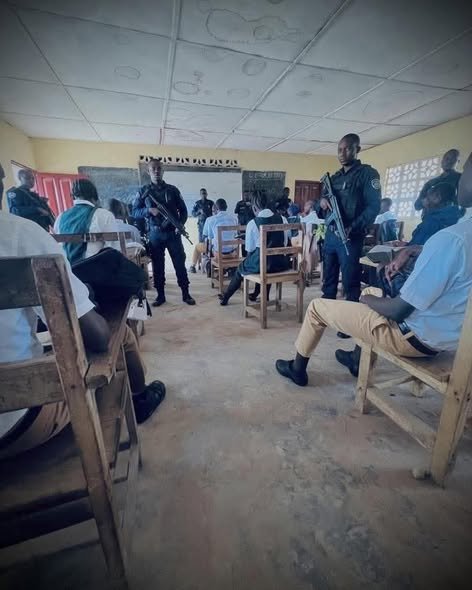


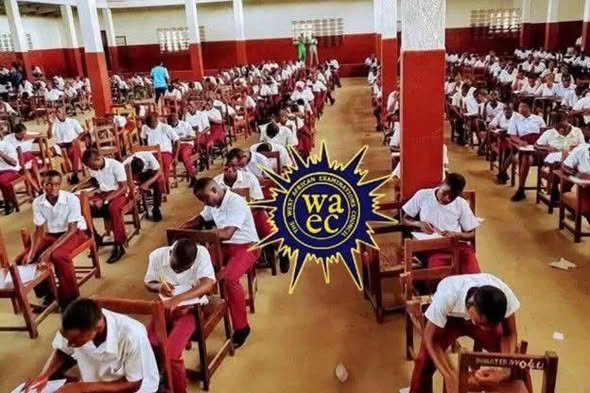
MONROVIA – The West African Examinations Council (WAEC) Liberia Office has dismissed as false a viral social media post claiming that heavily armed police officers were present inside an examination hall during ongoing examinations.
The Council clarified that the widely circulated Facebook post published on June 1, 2026 by an outlet identified as Refresh Liberia is misleading, inaccurate, and intended to undermine the credibility of both WAEC and the Liberia National Police.
According to WAEC, the post included an image allegedly showing candidates sitting for examinations under the supervision of armed security personnel. However, the Council stated that the image is not authentic and was verified using an artificial intelligence detection tool, which reportedly indicated a 93% likelihood that the image was AI-generated.
“The Secretariat of WAEC wants to clarify that the trending June 1, 2026 Facebook post by Refresh Liberia is fake and is meant to tarnish the hard-earned reputation of the Council and the Liberia National Police,” WAEC said in its response.
The institution further rejected claims that armed officers are deployed in examination centers, stressing that security arrangements during examinations are minimal and strictly controlled.
“At no time has the Liberia National Police deployed more than one police officer at any of our examination centers, least to mention them being heavily armed as indicated in the post,” the Council emphasized.
WAEC noted that the publication has the potential to mislead the public and damage confidence in the integrity of its examination processes. It therefore called on Refresh Liberia to immediately retract the post and issue a correction.
The Council warned that failure to do so could compel it to pursue legal action.
“We are therefore calling on Refresh Liberia to immediately retract the post or leave the Secretariat with no other alternative but to seek legal recourse,” WAEC stated.
As of press time, Refresh Liberia had not publicly responded to WAEC’s demand for retraction.
The controversy comes amid heightened public attention on examination integrity and the role of security personnel in safeguarding national testing processes.