


By: Ben TC Brooks
River Gee County | April 13, 2026 | For nearly ten years after construction began, key education and healthcare infrastructure projects in River Gee County remain incomplete, raising serious concerns about transparency, accountability, and project management in local development efforts.
The construction of a school annex at Wahploh Memorial Institute in Kelipo, Kanweaken, north of River Gee valued at US$64,000 was launched in 2016 under the supervision of the The Community Forestry Development Committee- CFDC for Forest Management Contract Area “F”.
The Community Forestry Development Committee – CFDC for Forest Management Contract Area “F” is located southeastern counties of Grand Gedeh and River Gee, representing local communities within the region in negotiations with commercial logging companies been in operations since 2010 within the region.
For River Gee County, they are operating in five communities to include, the Kelipo Chiefdom, Potupo Administrative district, Deabo Chiefdom, Glarro administrative district and Kiteabo Chiefdom respectively.
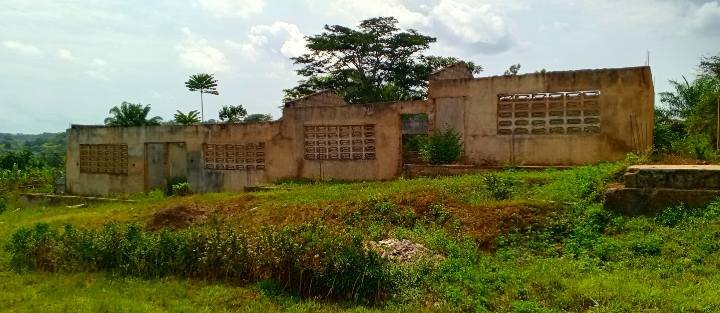
The Wahploh Memorial Institute school annex project still remain under construction aimed to reduce overcrowding and improve learning conditions by adding three classrooms, two restrooms, and a student auditorium.
However, progress halted abruptly after the contracted firm allegedly mismanaged funds and abandoned the site.
CFDC/FMC Area “F” Chairman, of River Gee County, George P. Dehsuah, disclosed that the contract was awarded to LIDA Liberia Limited, headed by its Executive Director Marshall David Yeanue.
“The contractor received 50% of the funds but failed to continue the work. He later disappeared,” Dehsuah said.
“Although he was arrested in 2021 and committed to resuming the project, but he has not returned since.”
Approximately US$30,000 was reportedly spent before construction stopped, at the Wahploh Memorial Institute school annex leaving the remaining funds without visible results on the ground.
Authorities say steps are now being taken to revive the stalled project. The CFDC/FMC leadership is preparing to re-award the contract through a revised procurement process. George P. Dehsuah told our reporter.
Once completed, the annex is expected to significantly improve the learning environment, with planned features including roofing, tiled floors, window louvers, and solar-powered lighting.
Despite these assurances, residents say students continue to learn under difficult conditions due to the prolonged delay.
The issue extends beyond the school annex, as a separate health infrastructure project, the Deabo Paaken Health Center porch in Tuobo administrative district, valued at over US$60,000, was also awarded to the same contractor and remains unfinished.
The repeated failure of projects linked to a single contractor has intensified scrutiny of CFDC/FMC oversight and contract management practices.
Court documents in our possession revealed that in response to growing complaints, the River Gee County Debt Court intervened during its October Term in 2021.
Presiding Judge Benjamin Jlah then ordered the enforcement of a performance bond to ensure completion of the affected projects.
The case, filed by George P. Dehsuah on behalf of CFDC/FMC Area “F” against Marshall David Yeanue, revealed that several projects outlined in a Memorandum of Understanding were either delayed or abandoned.
Under the court-backed agreement, LIDA Liberia Limited, supported by surety Alex L. Zenegbain, committed to completing the
Deabo Paaken Clinic from Nov 2021 – Mar 2022, the Glarro Clinic, from Dec 2021 – Apr 2022 and the Kelipo School Annex, from Jun 2022 – Oct 2022 respectively.
However, residents report little to no progress at multiple sites despite these legal commitments.
While the court’s intervention highlights the role of the judiciary in enforcing contracts, ongoing delays have raised doubts about the effectiveness of enforcement mechanisms.
Community members argue that the situation reflects broader systemic challenges in managing public infrastructure projects, particularly in rural areas where oversight is limited.
As frustration grows, residents and local leaders are calling for stronger transparency in contract awards and stricter monitoring of development projects.
Many are urging authorities to take decisive action to restore public trust and ensure that critical education and healthcare facilities are completed without further delay.