


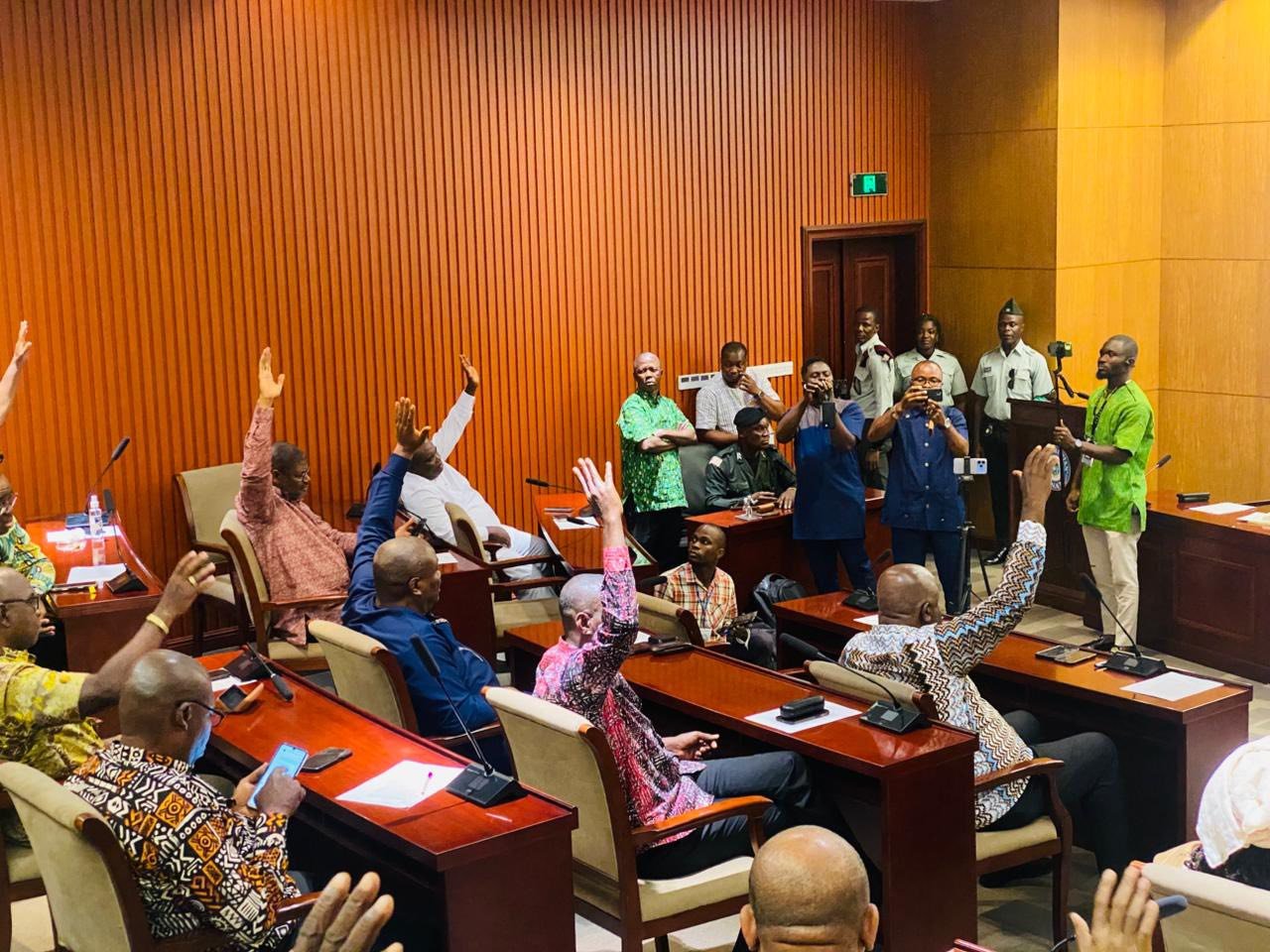
In a decisive late-night session, the National Legislature of Liberia has passed a $53 million supplementary budget for Fiscal Year 2026, with lawmakers arguing the measure is critical to stabilizing key sectors and sustaining government operations amid growing public expectations.
The budget, approved Thursday following hours of deliberation, reflects an increase from the executive branch $45 million proposal.
Legislators said the upward revision was driven by confirmed revenue inflows and additional support from international partners, particularly the World Bank.
According to the joint committees on Ways, Means, Finance and Budget, and Public Accounts and Expenditure, the supplementary package is financed through $40 million in World Bank support recorded in FY2025, $5 million in excess domestic revenue, and an additional $8 million performance-based bonus tied to improved fiscal outcomes.
The spending plan places heavy emphasis on maintaining government functionality and addressing immediate national needs. Public administration leads with $14.55 million to fund core operations, strengthen fiscal systems, meet international obligations, and clear arrears.
The security sector follows with $8.43 million, targeting institutions such as the Armed Forces of Liberia and the Liberia National Police to reinforce stability and rule of law.
Infrastructure and basic services are allocated $9.57 million for transport improvements, equipment deployment, and rehabilitation works, while the health and education sectors receive $8.32 million and $7.25 million respectively.
Smaller allocations include $1.7 million for social development and $1.3 million for local government, along with targeted funding for agriculture, energy, and transparency initiatives.
Representative P. Mike Jurry, Chair of the House Committee on Ways, Means, Finance and Budget, described the process as rigorous and necessary, pushing back against criticism often associated with supplementary budgets.
“We asked the hard questions and ensured that every line in this budget was justified,” Jurry said. “This is not about new borrowing, but about responsibly incorporating excess revenue to address urgent national priorities.”
He emphasized that the budget is rooted in improved revenue performance rather than deficit expansion, pointing to enhanced collection efforts by the Ministry of Finance and Development Planning and the Liberia Revenue Authority.
“Security, health, and education directly impact the daily lives of Liberians, and those are the areas where intervention is most critical,” he added.
While the Legislature maintains the budget is fiscally responsible, the timing of its late-night passage and the scale of the increase have already sparked public debate over transparency and spending priorities.
With concurrence from the Liberian Senate, the budget now clears the legislative hurdle, effectively closing the special session convened to address fiscal adjustments.