

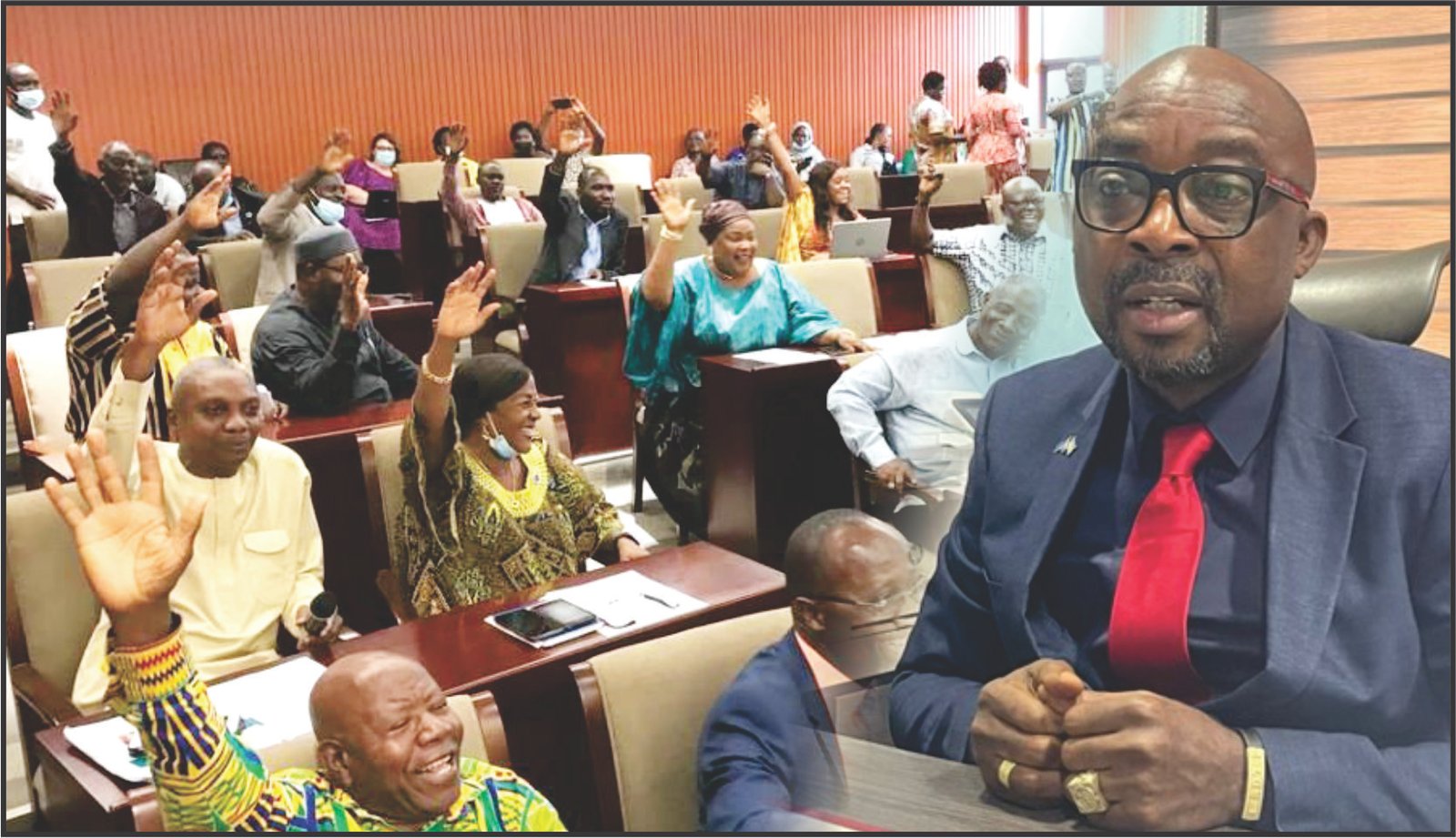
A damning new report released by NAYMOTE Partners for Democratic Development has uncovered widespread weaknesses in accountability, transparency, and citizen engagement among members of Liberia’s Legislature during the 2026 constituency break.
The report, titled “Monitoring Legislative Constituency Breaks in Liberia 2026: Assessing Lawmakers’ Engagement, Accountability, and Responsiveness to Citizens During the Constituency Break,” presents the first structured nationwide monitoring exercise of lawmakers’ constituency activities during the official legislative break.
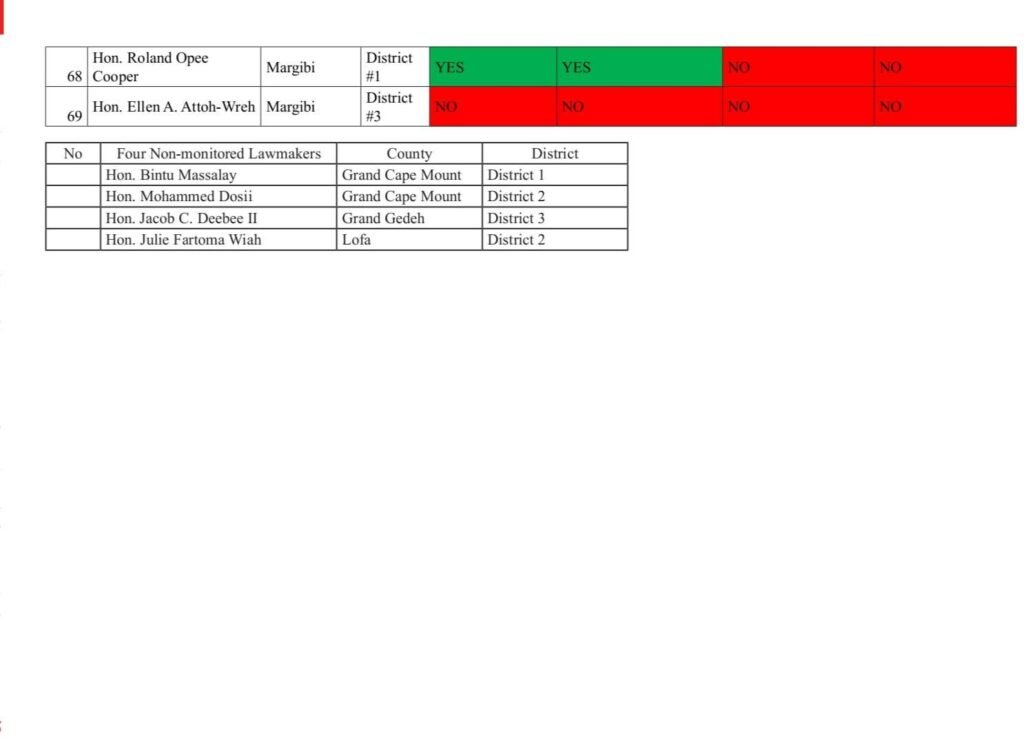
Conducted between March 19 and May 8, 2026, the assessment covered all 15 counties and monitored activities in 69 of Liberia’s 73 electoral districts, representing approximately 95 percent of the country’s elected Representatives. The monitoring exercise was carried out by 75 trained county monitors using a standardized accountability framework.
Under Article 32 of Liberia’s 1986 Constitution and the Legislative Adjournment Calendar Act, lawmakers are expected to use constituency breaks to directly engage citizens, hold consultations, assess community needs, and report on legislative activities and development initiatives within their districts.
However, the NAYMOTE report paints a troubling picture of what it describes as inconsistent and weakly institutionalized accountability practices across the country.
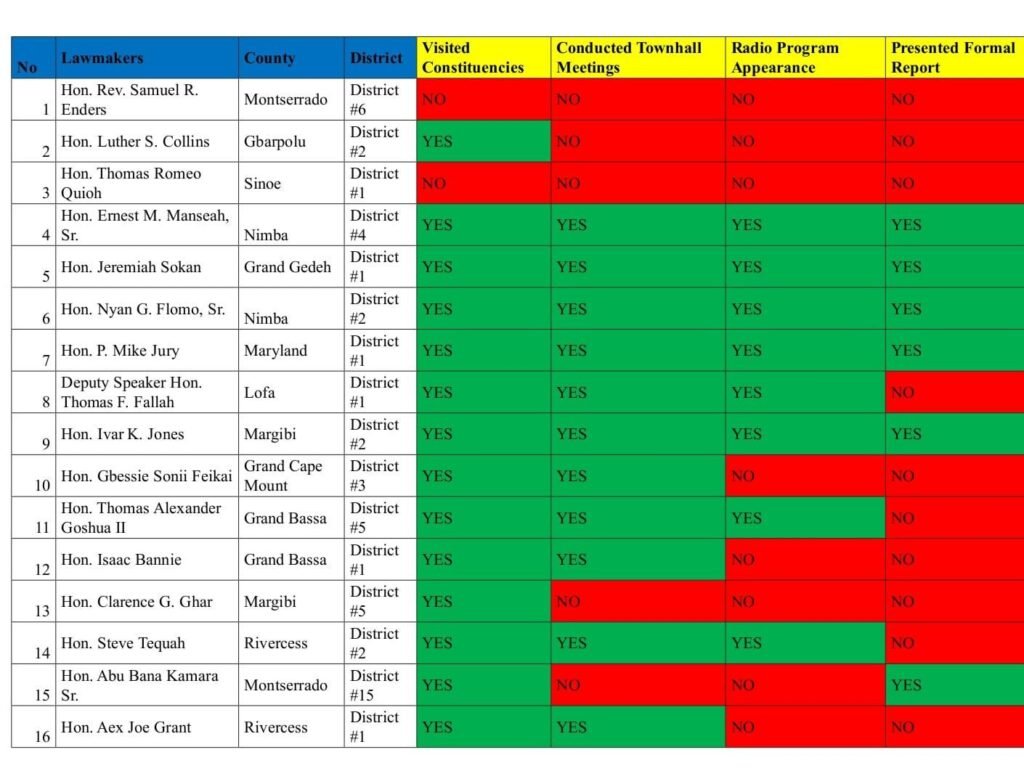
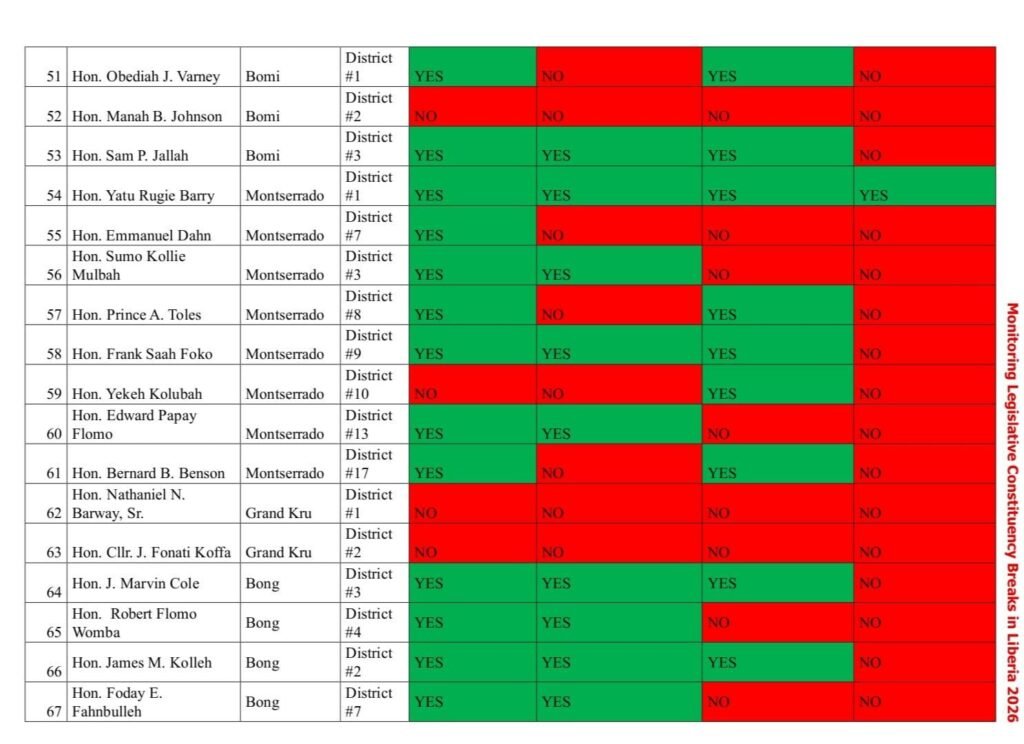
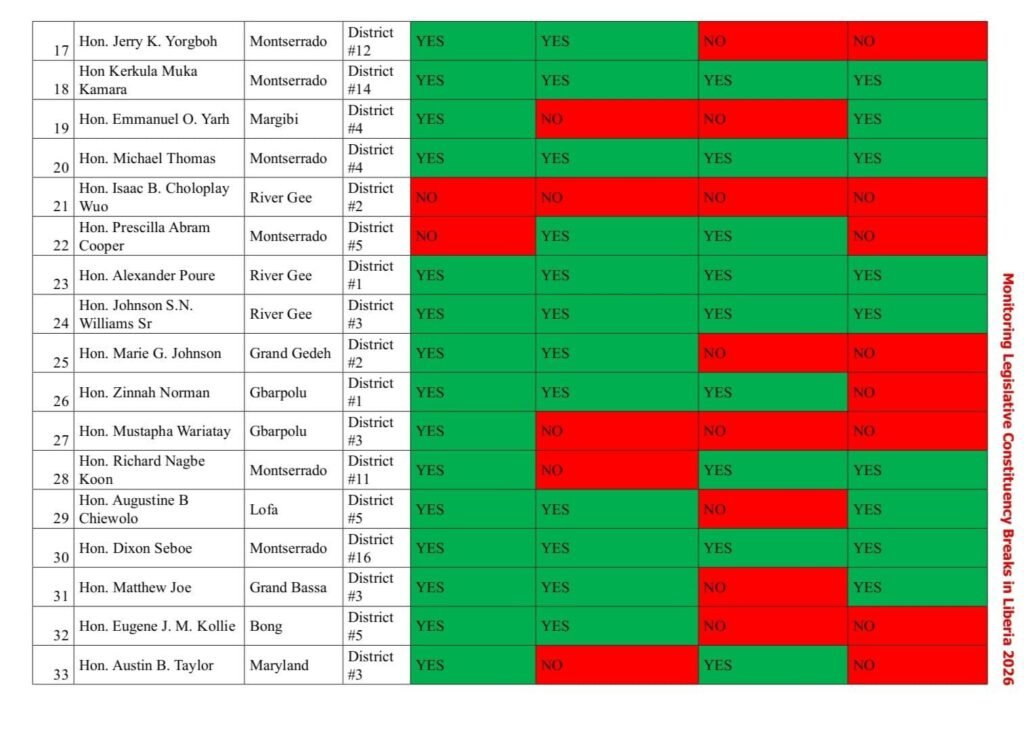
According to the findings, although 55 out of the 69 lawmakers monitored representing 80 percent physically visited their constituencies during the break period, many engagements centered more on ceremonial appearances, project dedications, donations, and political networking than on substantive accountability discussions with citizens.
The report observed that constituency breaks are increasingly being used as political visibility exercises rather than structured democratic accountability sessions designed to strengthen citizen oversight and responsive governance.
One of the report’s most alarming findings relates to formal constituency reporting — identified as the weakest area of legislative accountability nationwide.
Out of the 69 Representatives monitored:
Only 18 lawmakers, representing 26 percent, presented formal reports to constituents;
While 51 lawmakers or 74 percent provided no documented legislative or constituency accountability reports during the entire monitoring period.
NAYMOTE described the situation as a “major accountability deficit” within Liberia’s representative governance system.
The report emphasized that constituency reporting remains a core democratic obligation that enables citizens to evaluate legislative performance, track campaign commitments, understand policy decisions, and assess development efforts undertaken on their behalf.
“The absence of formal reporting mechanisms limits transparency and weakens citizen oversight of elected officials,” the report stated.
The organization further warned that accountability practices within Liberia’s Legislature remain largely informal, voluntary, and personality-driven instead of being backed by clear institutional standards and enforcement mechanisms.
The findings also revealed mixed levels of public consultation and citizen engagement.
While 44 lawmakers representing 64 percent organized town hall meetings or public consultations during the break, 25 lawmakers held no documented town hall meetings or structured community engagement sessions.
Citizens who participated in the consultations consistently raised concerns regarding poor healthcare services, deteriorating road infrastructure, weak educational systems, limited development opportunities, and insufficient empowerment programs for women and youth.
Despite the relatively high number of town hall meetings recorded, the report found serious inconsistencies in the quality and structure of those engagements, including lack of documented agendas, weak follow-up systems, and limited mechanisms for tracking promises and commitments made by lawmakers.
NAYMOTE warned that such shortcomings undermine citizen confidence in participatory governance and weaken the effectiveness of public consultations.
The report also criticized lawmakers for failing to effectively utilize radio Liberia’s most accessible medium of mass communication, especially in rural communities.
According to the assessment:
Only 32 lawmakers, or 46 percent, participated in radio programs during the constituency break;
While 37 lawmakers representing 54 percent recorded no radio engagement whatsoever.
The report described the low level of radio engagement as a missed opportunity to improve transparency, public education, and citizen participation in governance.
“Many lawmakers still rely heavily on physical appearances and informal communication channels rather than leveraging mass media for transparent governance,” the report noted.
The assessment additionally revealed significant disparities in monitoring participation across counties.
Montserrado County recorded the highest level of monitoring coverage due to its 17 electoral districts, accounting for approximately 27 percent of all monitored districts nationwide. Higher monitoring activity was also observed in Nimba County, Bong County, Grand Bassa County, and Lofa County.
The report attributed lower participation levels in some counties to geographic remoteness, weak civic monitoring structures, and logistical challenges affecting data collection.
NAYMOTE concluded that Liberia’s constituency accountability system remains uneven, weakly institutionalized, and heavily dependent on the personal initiative of individual lawmakers rather than established democratic standards.
The organization is now recommending urgent reforms, including mandatory constituency accountability reports, stronger public engagement mechanisms, expanded use of community radio platforms, enhanced civic education, and the establishment of national legislative accountability standards.
According to the report, strengthening constituency accountability remains essential to rebuilding public trust in Liberia’s democratic institutions and ensuring more transparent, responsive, and citizen-centered governance.