

A regional anti-money laundering body has raised alarm over massive financial losses across West Africa, warning that weak public procurement systems are being exploited by criminal networks to launder money, inflate contracts, and siphon public funds meant for development projects.
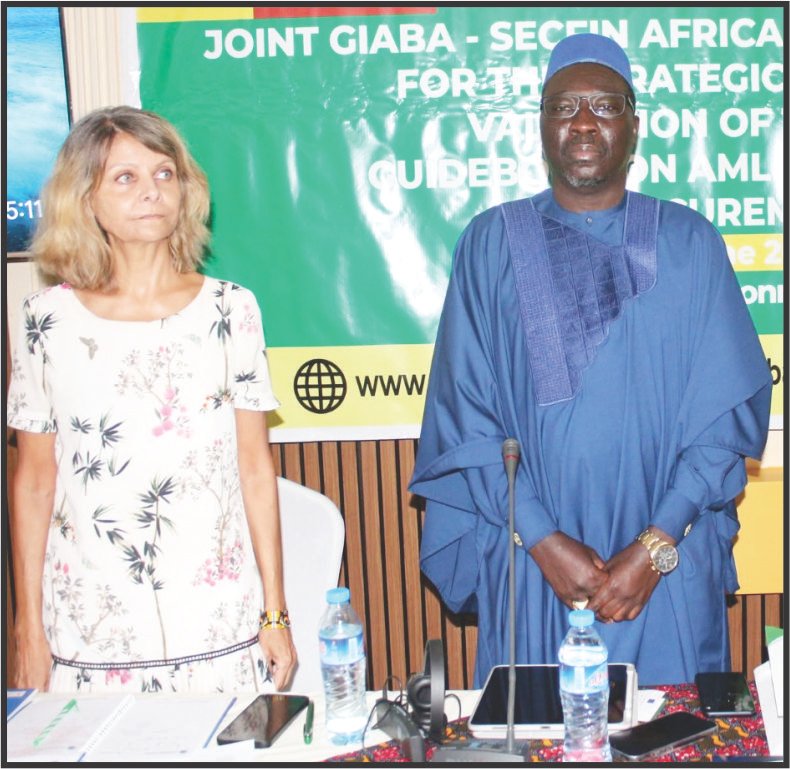
The warning was issued in Monrovia, Liberia, during a regional workshop on the review and validation of the Inter-Governmental Action Group against Money Laundering in West Africa Anti-Money Laundering and Countering the Financing of Terrorism (AML/CFT) Guidebook on Public Procurement.
Speaking at the opening session on Monday, June 8, 2026, GIABA Director General Edwin W. Harris, Jr. described public procurement as one of the most exposed channels for illicit financial flows in the region, noting that criminals consistently take advantage of weak oversight, opaque systems, and corruption gaps.
He warned that procurement processes are being deliberately manipulated through tactics such as shell companies, hidden ownership structures, rigged bidding processes, contract splitting, and inflated invoicing-all designed to disguise illegal financial activity as legitimate government spending.
Harris disclosed that West Africa loses an estimated $50 billion every year to illicit financial flows, much of it linked to procurement-related corruption; a figure he said far exceeds the region’s annual development assistance.
He stressed that while procurement accounts for about 12 percent of GDP in ECOWAS member states, the lack of transparency makes it a prime target for financial crime.
To address these risks, GIABA has introduced a regional guidebook aimed at strengthening safeguards across all stages of procurement—from planning and tendering to contract execution and payment. The framework promotes stronger due diligence, beneficial ownership disclosure, inter-agency coordination, and expanded use of digital procurement systems.
The four-day workshop is expected to produce a validated regional framework, a shared list of risk indicators, and country-specific action plans to improve enforcement, monitoring, and reporting mechanisms.
Harris urged participating countries to ensure that findings from procurement monitoring translate into real enforcement actions, including investigations, prosecutions, asset recovery, and confiscation where necessary.
He also thanked the Government of Liberia for hosting the meeting and reaffirmed GIABA’s commitment to strengthening financial crime prevention across the region.
Representing the European Union Delegation to Liberia, Dr. Anna Brzozowska of European Union Delegation to Liberia and SecFin Africa emphasized that protecting procurement integrity is essential for sustainable development and public trust.
She noted that procurement decisions directly affect citizens through infrastructure, healthcare, and public services, and warned that corruption in the system undermines confidence in government, distorts fair competition, and discourages investment
Brzozowska called for coordinated action across government institutions, including auditors, procurement bodies, financial intelligence units, and law enforcement agencies, to strengthen oversight and accountability.
Liberia’s Minister of Finance and Development Planning, Augustine K. Nguafuan, described the GIABA guidebook as a timely and practical tool that will help member states better integrate anti-money laundering safeguards into procurement systems.
He said the framework strengthens key areas such as risk assessment, vendor screening, beneficial ownership transparency, reporting mechanisms, and inter-agency cooperation.
Nguafuan urged participants to actively share national experiences during the validation process to ensure the final framework reflects practical realities across the region.
The workshop brought together representatives from public procurement authorities, supreme audit institutions, public accounts committees, and financial intelligence units across West Africa, with the goal of producing a unified regional response to procurement-related financial crime.