


By G. Watson Richards
State prosecutors have raised concerns about possible procedural violations in the handling of US$6.2 million linked to the Financial Intelligence Agency (FIA), as former Finance and Development Planning Minister Samuel D. Tweah Jr. took the stand as the defense’s first witness in the ongoing economic sabotage case at Criminal Court ‘C’ in Monrovia.
At the heart of the case is whether the funds, reportedly meant for national security operations, were legally disbursed without formal written requests from the institutions that were supposed to receive them.
Prosecutors argue that the lack of documented requests points to a breach of established public financial management rules and may indicate unauthorized spending.
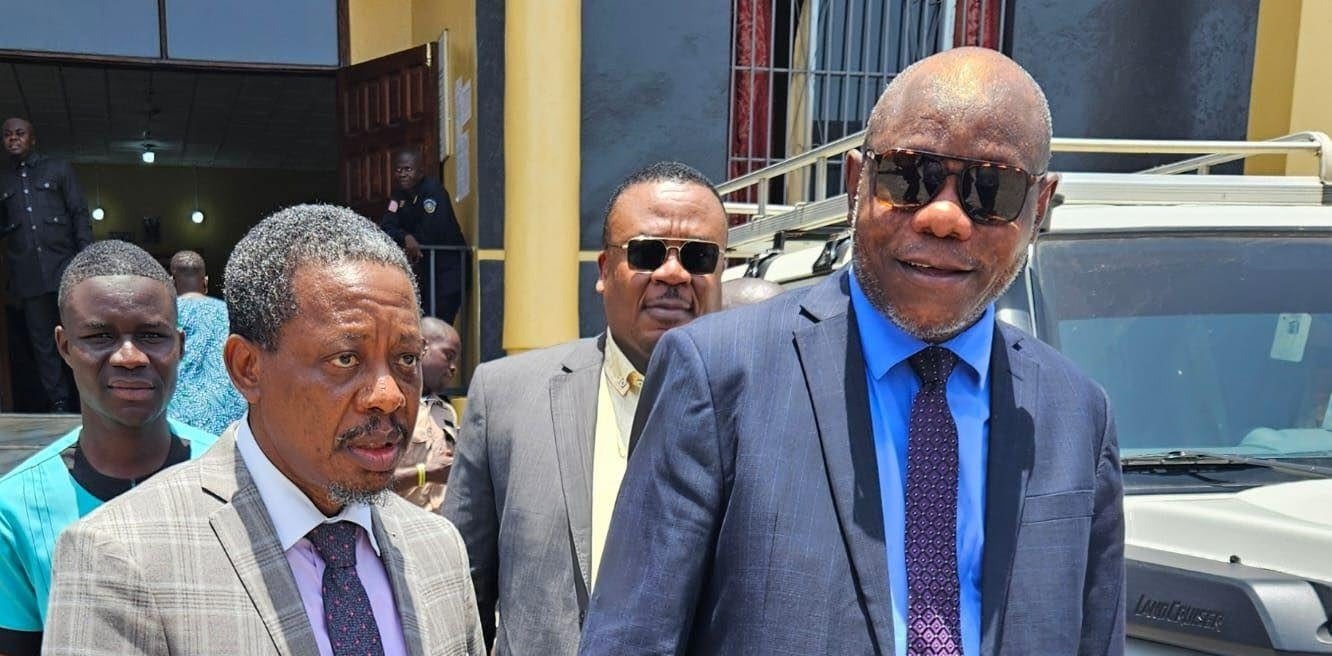
In his testimony on Monday, April 20, 2026, Tweah defended his actions, saying they were based on the authority granted to him under Liberia’s Public Financial Management Act and the approved national budget.
He explained that while government agencies usually submit funding requests, those requests are not the only basis for releasing funds.
“The minister has the discretion to decide when and how funds are released, including delaying, reducing, or even denying requests,” Tweah told the court.
Prosecutors, however, pushed back on that claim. They argued that such discretion does not remove the need for proper documentation and accountability, warning that skipping formal procedures weakens oversight and increases the risk of misuse of public funds.
The defense also argued that the spending took place under emergency conditions and had the approval of the National Security Council.
Tweah said that this level of authorization, combined with existing laws, provided sufficient legal backing for the decisions.
He further cited the National Security Reform and Intelligence Act of 2011, noting that some financial decisions tied to national security are confidential, which could explain why certain documents are not available in open court.
Despite this, prosecutors insist that even emergency spending must follow clear legal procedures.
They stressed that transparency and proper record-keeping are essential for maintaining public trust and upholding the rule of law.
Another key issue in the case is the use of a “direct debit” method to access the funds.
The defense maintains that this approach falls within the broader budget framework, even if the funds were not specifically pre-allocated.
Prosecutors, on the other hand, are questioning whether this method was used in line with legal requirements.
The court is also examining how far the Finance Minister’s authority extends in situations that may require spending beyond approved budget limits.
While the defense argues that emergency spending can be regularized after the fact, the prosecution is challenging whether the proper steps were followed in this instance.
As the trial continues, the court will have to decide whether the combination of executive approval, legal discretion, and emergency circumstances is enough to justify the lack of standard documentation.
The outcome of this case could set an important precedent for how public funds are managed and accounted for in Liberia during national emergencies.