


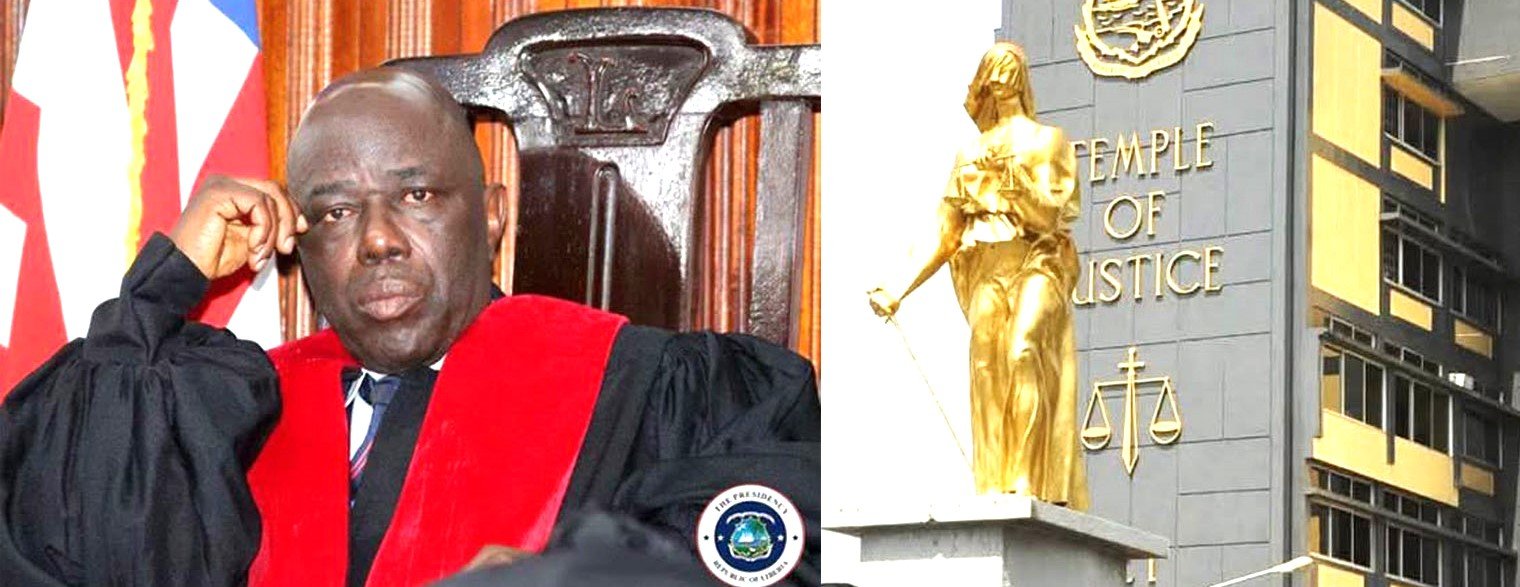
Chief Justice Yamie Quiqui Gbeisay Sr.’s call for the abolition of Liberia’s jury system has opened an important debate about how justice is delivered in the country.
The Chief Justice has raised concerns about jury tampering, including allegations that jurors have been improperly influenced in court cases. His recommendation has brought renewed attention to whether Liberia’s current system can protect the integrity of trials and ensure that verdicts are based on evidence presented in court.
But while concerns about jury tampering deserve serious attention, abolishing the system raises another question: would removing juries solve the problem, or should the country first address the weaknesses in how jurors are selected, protected and managed?
What Does the Constitution Say?
Article 20(a) of Liberia’s 1986 Constitution protects the right to trial by jury in applicable cases. It states:
“Justice shall be done without sale, denial or delay; and in all cases not arising in courts not of record, under courts-martial and upon impeachment, the parties shall have the right to trial by jury.”
This means trial by jury is not simply a procedure the Judiciary can discard on its own. It is a right recognized by the Constitution.
Article 21(h) also protects the right to a speedy, public and impartial jury trial in capital or infamous criminal cases, subject to the constitutional provisions and applicable exceptions.
If Liberia intends to remove the constitutional right to trial by jury, the country must consider the constitutional amendment process under Article 91. An ordinary law abolishing the right would raise serious constitutional questions.
The Legislature can, however, examine ways to improve jury selection, prevent interference and hold those responsible for misconduct accountable without necessarily abolishing the system.
Liberia Already Has a Jury Law
Liberia has taken steps to improve jury administration. Amendments to the Civil Procedure Law in 2013 established the Central Office of Jury Management to help organize the selection and administration of jurors.
The reforms were intended to address concerns about how jurors were selected and to make the process more organized.
The existence of the law, however, does not mean every problem has been resolved. The country needs to examine whether the Office of Jury Management has adequate funding, staff and equipment, and whether the law is being properly enforced.
If jurors are being bribed, threatened or contacted improperly, the authorities must investigate those cases and prosecute anyone found responsible.
The question is whether the current system has been given the support it needs to work, and whether those who interfere with trials are being held accountable.
How Do Other Countries Handle Jury Trials?
Liberia is not alone in allowing ordinary citizens to take part in deciding criminal cases. However, countries use different systems, and not all of them have juries like Liberia’s.
A comparative study published by Cambridge University Press in 2021 examined criminal justice systems in 195 countries. It found that about 64 percent used some form of lay participation, meaning ordinary citizens took part in deciding criminal cases.
That figure amounts to approximately 125 countries, but it should not be mistaken for the number of countries using conventional jury trials. Some countries use juries, while others combine professional judges with ordinary citizens who help decide cases.
The United States, the United Kingdom, Canada and Australia have established jury systems, although the types of cases heard by juries differ. France, Italy and Japan use other arrangements that involve citizens in judicial decision-making.
The international experience shows that countries have chosen different ways to involve citizens in the administration of justice. It does not establish that one system works best everywhere.
Why Some People Support Jury Trials
Supporters of the jury system argue that it gives ordinary citizens a role in deciding cases that can affect people’s lives and freedom.
Under this arrangement, jurors generally decide questions of fact, while the judge explains the law and oversees the proceedings. This division of responsibility can help prevent one person from controlling every part of a trial.
Jury trials can also give communities a direct role in the justice system. For many supporters, that public participation is an important safeguard, particularly when the accused faces serious criminal charges.
But juries are not beyond criticism. Jurors can be bribed, intimidated or influenced by information outside the courtroom. They may also struggle to understand complicated evidence if it is not properly explained.
These concerns must be taken seriously, especially when they threaten the right to a fair trial.
Would Abolishing Juries Solve the Problem?
Removing juries would transfer the responsibility for deciding the facts in affected cases to professional judges or another system established by law.
That change could reduce some of the risks associated with jury selection and interference. But it would not automatically end corruption or improper influence in the courts.
Judges can also face pressure, and judicial corruption remains a concern wherever accountability and oversight are weak. A judge-only system would therefore need strong safeguards of its own.
Before deciding whether to abolish jury trials, Liberia should examine the cases in which jury tampering has been alleged, determine how the interference occurred and establish whether the existing laws were properly enforced.
The government and Judiciary should also consider stronger protection for jurors, more transparent selection procedures, better training and adequate funding for the Office of Jury Management.
A public review involving judges, lawyers, lawmakers, civil society groups and ordinary citizens could help determine which reforms are needed.
The Choice Before Liberia
Chief Justice Gbeisay has raised concerns that cannot be ignored. When jurors are improperly influenced, the fairness of a trial is put at risk, and public confidence in the courts suffers.
However, the country must also consider the constitutional protection of jury trials and the role ordinary citizens play in the administration of justice.
Liberia has a choice to make, but that choice should be based on evidence about the system’s performance, the causes of jury tampering and the likely effects of replacing juries with another arrangement.
The debate should go beyond whether juries should stay or go. It should focus on how Liberia can ensure that every person who enters a courtroom receives a fair trial and that every verdict is based on the evidence and the law.
The ultimate test of any justice system is not simply who decides a case, but whether the decision is reached fairly, independently and without improper influence.