


Gbarnga, Bong County, Liberia — October 2026
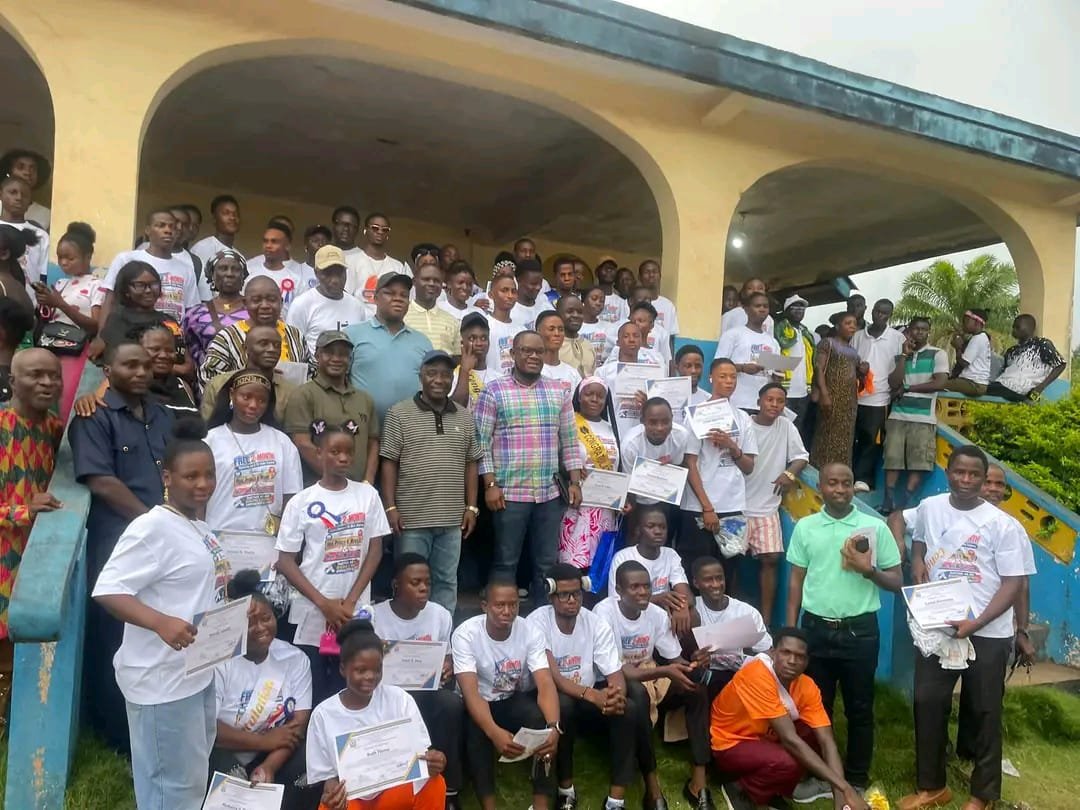
Educator and education advocate Mr. Adam Jarto Kallon, Founder of the Liberia Student-led Chemistry Symposium Initiative, has successfully concluded a two-month Free Digital Literacy & ICT Skills Training Program, with 320 young people receiving certificates after completing practical training in computer literacy and digital technology.
The program, which attracted 370 participants, was developed to address the growing digital skills gap among young people and equip them with practical technological competencies needed for education, employment, entrepreneurship, and national development.
Speaking during the Closing & Certificate Award Ceremony in Gbarnga, Mr. Kallon explained that the initiative grew out of challenges he had identified during his ninth year as a high school chemistry teacher, particularly the lack of hands-on practical science, the abstract nature of STEM education, and the limited access to basic digital literacy and Information and Communication Technology (ICT) skills among young people.
He noted that these challenges prompted him to reflect on how young Liberians could effectively compete in an increasingly digital world without the practical technological skills required to succeed.
The initiative followed the successful organization of the Student-Led Chemistry Symposium on May 16, 2026, at Bong County University (BCU). The symposium brought together six educational stakeholders, 25 high school teachers, and more than 750 students, further strengthening his commitment to advancing practical education and youth empowerment.
Recognizing that digital literacy was another critical area requiring attention, Mr. Kallon developed the Free Two-Month Digital Literacy & ICT Skills Training Program as a practical intervention to help young people acquire essential computer and technology skills.
Mr. Kallon disclosed that his initial plan was to select two students from each of the 22 high schools in Gbarnga, which would have provided training opportunities for 44 students.
However, the initiative expanded following engagements with key supporters and stakeholders who believed in the vision.
On May 26, 2026, he presented the idea to Hon. Bill McGill Jones, who encouraged him to increase the proposed number of participants to five students from each school, raising the initial target to 110.
On June 2, 2026, Hon. Prince K. Moye, Sr., agreed to co-sponsor the initiative. Their support, together with contributions from other partners, helped increase enrollment to 370 participants.
The program was officially launched on July 5, 2026, with Hon. Christopher Sankolo serving as launcher and Hon. Martha C. T. Morris as co-launcher.
Mr. Kallon expressed gratitude to the sponsors, partners, and supporters whose contributions helped transform an initial plan for 44 students into a program that enrolled 370 young people.
He emphasized that the growth of the initiative demonstrates what can be achieved when individuals and leaders invest in practical education and opportunities for young people.
According to Mr. Kallon, the training was designed to be strictly hands-on and practical, allowing participants to develop skills they could immediately apply in their academic work, professional activities, and everyday lives.
Throughout the program, participants received practical instruction in computer literacy and basic computer operations, Microsoft Word and other Microsoft Office applications, digital communication, online learning, internet research, Artificial Intelligence (AI) literacy, and digital data management.
In his closing statement, Mr. Kallon highlighted the progress made by participants, noting that many had entered the program with little or no knowledge of computer operations.
By the end of the training, graduates had demonstrated their ability to operate computers, type documents, prepare professional letters and reports, create PowerPoint presentations, communicate through email, conduct internet research, organize digital files, create online forms, collaborate through digital platforms, and use Artificial Intelligence responsibly.
He described these achievements as evidence of the importance of practical education, emphasizing that education should go beyond acquiring theoretical knowledge to developing the ability to apply that knowledge to real-life problems.
The program sought to empower participants to use technology as a tool for learning, creativity, innovation, communication, entrepreneurship, and positive change.
Providing an overview of the program’s results, Mr. Kallon announced that 370 participants enrolled, 50 were unable to complete the training due to personal circumstances, and 320 successfully completed the program and received certificates.
The graduation ceremony recognized the commitment and efforts of the successful participants, marking an important milestone in their digital learning journey.
Mr. Kallon reminded the graduates that their certificates should not be viewed as the end of their education, but rather as the beginning of continued learning and practical application.
He encouraged them to continue practicing their newly acquired skills, using technology responsibly, supporting their families and communities, pursuing higher education, creating opportunities, and contributing to Liberia’s development.
He also urged the graduates to become ambassadors of digital literacy by sharing their knowledge and encouraging other young people to embrace practical digital education.
Beyond celebrating the graduates’ achievements, Mr. Kallon used his closing statement to call for a stronger commitment to practical, problem-solving education in Liberia.
He stressed that the country needs young people who can think critically, identify challenges, develop ideas, and apply their knowledge and skills to create solutions to problems affecting their communities and the nation.
He encouraged young Liberians to move beyond an educational approach that places excessive emphasis on memorizing theories and instead embrace learning that promotes creativity, innovation, and practical problem-solving.
Mr. Kallon also appealed to young people to rise above political differences, personal interests, and individual ambitions when supporting initiatives intended to empower young people and contribute to national development.
He urged them to focus on how they could contribute to the success of worthwhile initiatives rather than allowing political affiliations or personal differences to undermine collective progress.
According to him, Liberia’s development requires citizens to place the country’s interests and the empowerment of its young people above their differences.
Mr. Kallon expressed his deepest appreciation to Hon. Bill McGill Jones and Hon. Prince K. Moye, Sr., for their financial support and confidence in the vision behind the initiative.
He emphasized that their contributions represented more than support for a two-month training program; they constituted an investment in the knowledge, skills, confidence, and future of 320 young Liberians.
He also thanked the dedicated trainers for their patience, commitment, and willingness to share their knowledge with the participants.
Special appreciation was extended to the administration of Paul A. Rader Senior High School for generously providing its campus for the training free of charge.
Mr. Kallon further acknowledged Hon. Christopher Sankolo, Hon. Martha C. T. Morris, Mr. Joshua S. Fallah, Principal of Paul A. Rader High School, as well as parents, invited guests, members of the media, other sponsors, partners, and everyone who contributed to the success of the program.
He noted that the successful completion of the initiative would not have been possible without the collective support and commitment of these individuals and institutions.
Looking ahead, Mr. Kallon revealed that beyond the original 370 participants, more than 400 additional young people have expressed interest in participating in the next cycle of the training program, with some of them present at the graduation ceremony in the hope of accessing the same opportunity.
He appealed to sponsors, educational institutions, development organizations, government agencies, private-sector partners, and other stakeholders to support the continuation and expansion of the initiative.
His vision, he explained, is to transform the short-term training program into a sustainable youth digital empowerment initiative that can operate through schools and communities, reaching more young people across Bong County and, ultimately, other parts of Liberia.
He emphasized that the need for digital skills training remains significant and that the impact of the first cycle demonstrates the value of continued investment, partnership, and commitment to youth development.
The successful completion of the program represents a significant milestone for Mr. Kallon and the Liberia Student-led Chemistry Symposium Initiative, reinforcing their commitment to practical education, innovation, technology, and youth empowerment.
Reflecting on the journey, Mr. Kallon noted that what began as a plan to train 44 students eventually grew into an initiative that enrolled 370 participants, with 320 successfully completing the program.
He called on stakeholders to build on this achievement and work together to create more opportunities for young people to acquire relevant skills for the future.
Congratulating the graduates, he encouraged them to continue learning, practicing, innovating, and using technology responsibly.
He concluded by emphasizing that Liberia’s future will be shaped by young people who are prepared to learn, think critically, work together, and take action to address the country’s challenges.
“Together, we are building a digitally empowered generation. Together, we are building a brighter future. And together, we can build the Liberia we all want to see,” Mr. Kallon said in his closing remarks.