

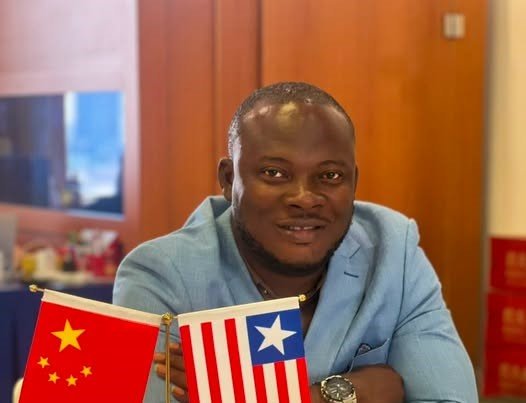
Commissioner of the Township of Oldest Congo Town, Edward H. Lahai, is calling for stronger fiscal decentralization in Liberia, arguing that local authorities must be given greater control over revenues generated within their communities to effectively address development challenges.
Commissioner Lahai made the call while on an official visit to the People’s Republic of China, where he is currently visiting Litong District in Wuzhong and the Ningxin Community.
Lahai said the National Government must empower townships and other local authorities with the authority, resources and systems needed to collect, manage and invest locally generated revenues.
According to him, meaningful decentralization cannot be achieved if local governments remain financially dependent on central authorities while revenues generated within their jurisdictions are controlled elsewhere.
The Commissioner also raised concerns over an existing revenue-sharing arrangement between the City of Monrovia and townships, particularly Congo Town.
Under the arrangement, the City of Monrovia collects municipal taxes in Congo Town and is expected to remit 45 percent of the revenues to the township.
However, Lahai alleged that the Township of Oldest Congo Town has not received even five percent of the total revenues collected on its behalf over the past two years.
He said the alleged failure to remit the funds has severely affected the township’s ability to operate its office and expand services to residents.
“The resources generated from our Township cannot continue to fail to impact the lives of our people,” Commissioner Lahai stressed.
He argued that local communities should directly benefit from the revenues generated within their jurisdictions, particularly when local authorities are expected to respond to pressing social and development needs.
Lahai pointed to several initiatives undertaken by the Township of Oldest Congo Town as evidence that local authorities can deliver tangible results when provided with adequate financial capacity.
These initiatives, he said, include career development and national examination programs for students, vocational training for women and girls, job-creation initiatives, support to schools and needy students, disaster response, drug-awareness campaigns and fire-safety education.
The Commissioner said the initiatives were supported through locally generated revenues and assistance from external partners.
He maintained that Congo Town’s experience demonstrates the potential of local government institutions to contribute meaningfully to national development when they have the resources and authority to act.
Lahai welcomed President Joseph Nyuma Boakai’s support for decentralization but challenged local government officials to become stronger advocates for the interests of their respective communities.
He stressed that decentralization should not remain confined to government policies, conferences and political discussions.
“True decentralization must go beyond policy discussions,” Lahai said, emphasizing that local authorities need the financial power, systems and capacity to make decisions and directly invest in the development of their people.
His comments come amid his official visit to China, where he is observing local governance and community development models, including his ongoing engagements in Litong District, Wuzhong, and the Ningxin Community.