
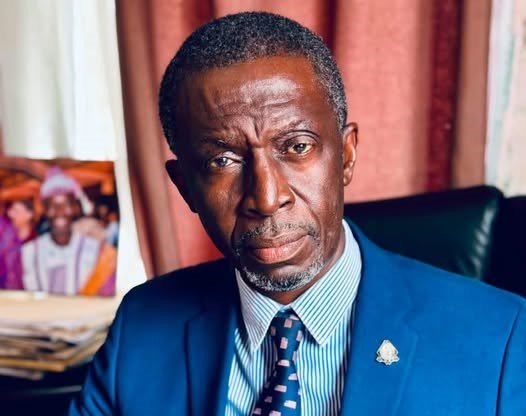
By Tiawan Saye Gongloe
Mr. President, where did the money for the construction of the approximately US$6 million Foya Presidential Center come from?
Was it appropriated by the National Legislature? Was it provided by the Mano River Union? Was it contributed by State-Owned Enterprises? Was it donated by private individuals, Liberians, foreign governments or international partners? Or, given Liberia’s current narcotics-trafficking concerns, is there any possibility that proceeds of illicit activities entered, directly or indirectly, the financing chain of the project?
The Liberian people are entitled to know. Let be clear that I am not accusing President Joseph Nyuma Boakai of financing the Foya project with drug money. There is presently no established evidence upon which such an accusation can responsibly be made. Neither am I suggesting that the project itself is illegitimate. Foya deserves development, and Liberia needs facilities that can support regional cooperation, diplomacy and peace-building.
My concern is different: the Government has not provided a sufficiently clear, documented and independently verifiable explanation of the source of the project’s financing.
That question has become more important because different explanations concerning the project’s financing have circulated publicly, including references to the Mano River Union, private contributions and, more recently, the Government’s characterization of the facility as a Government of Liberia project. When explanations concerning a multimillion-dollar public project appear incomplete or inconsistent, the appropriate response is transparency and verification. The Government should therefore provide a definitive account of the project’s financing.
The Drug-Trafficking Context
This issue cannot be separated from Liberia’s current narcotics crisis.
The recent seizure of a very large quantity of cocaine, reportedly worth hundreds of millions of dollars, demonstrates the capacity of international criminal networks to operate within Liberia or use Liberia as part of a wider trafficking and financial network. The scale of such an operation raises legitimate national-security and financial questions, including whether illicit proceeds can enter legitimate businesses, financial institutions or other economic activities. That does not establish any connection between the cocaine seizure and the Foya project. But it makes it reasonable to ask whether the source of funds for major projects has been properly verified.
President Boakai stated publicly while appearing on a radio program that he was initially unaware of the project. Now that the project has become a matter of public controversy, I believe the President has a responsibility to ensure that the source and movement of the money are independently established. The project will be associated with his presidency for generations, and therefore transparency is in his own interest. The question is not whether the President personally participated in any illicit activity. The question is whether any illicit proceeds entered the financial chain used to construct the facility. That question should be answered by competent institutions, not by political statements.
The Institutions Must Follow the Money
Four Liberian institutions have particularly important roles to play: the General Auditing Commission (GAC), the Financial Intelligence Agency (FIA), the Liberia Anti-Corruption Commission (LACC), and the Public Procurement and Concessions Commission (PPCC).
The GAC should establish the public-finance component of the project. If government funds were used, the public should know the appropriation or legal authority under which the funds were made available, the government entities involved, the amounts contributed, the contracts executed, the payments made and the recipients of those payments.
The GAC should follow the public money from government accounts to its ultimate expenditure on the project.
The FIA should examine the financial dimension beyond the national budget. If private or other non-budgetary funds were used, the FIA should determine the beneficial ownership of companies involved, identify the ultimate sources of funds, examine suspicious transactions and determine whether any proceeds connected to narcotics trafficking or other criminal activity entered the financing structure.This is particularly important because money laundering is designed to obscure the original source of illicit funds. The fact that money is ultimately spent on a legitimate construction project does not establish that its original source was legitimate.
The LACC should determine whether any public official improperly influenced the financing, procurement, contracting or implementation of the project. It should examine possible conflicts of interest, undisclosed benefits, abuse of public office and other forms of corruption.
The PPCC should establish whether the procurement and contracting processes complied with Liberia’s procurement laws. If the project is a Government of Liberia project, the public should be able to determine how contractors were selected, what contracts were awarded, the value of those contracts and whether applicable procurement procedures were followed.
Rule of law is one of the stated objectives of the Government’s ARREST Agenda. Compliance with public-finance and procurement laws is therefore not a technical matter. It is part of the rule of law.
These institutions do not need to wait for allegations on social media to become proven criminal cases. Their mandates exist precisely to examine public finances, corruption, procurement irregularities and suspicious financial transactions.
The ARREST Agenda and RESCUE Mission
This matter also concerns the credibility of the ARREST Agenda and the RESCUE Mission of the Unity Party Government.A government that promises to rescue Liberia from corruption, secrecy and impunity must demonstrate those principles in its own conduct.
If the Foya project was legitimately financed, the Government should have no difficulty providing the relevant documentation.If the money came from the national budget, disclose the appropriation and financial records.If State-Owned Enterprises contributed, disclose the decisions and transactions authorizing those contributions. If the Mano River Union or other regional or international partners contributed, publish the relevant agreements.If private individuals or businesses contributed, identify the donors and explain the legal basis and conditions of their contributions. If members of the Unity Party or other Liberians voluntarily contributed to the project, that information should also be disclosed.And if the Government cannot yet establish the complete source of the funds, it should say so and commission an independent investigation.An independent audit or investigation would not weaken President Boakai. It would strengthen public confidence in his administration.
Transparency Is the Best Response
The Foya project may ultimately prove to have been completely legitimate and properly financed. If every dollar can be traced to lawful and documented sources, then the controversy can be resolved through evidence rather than political argument.
That is why I believe the Government should voluntarily open the financial records of the project to appropriate independent institutions.
Let the GAC audit the public finances.
Let the FIA trace the financial flows.
Let the LACC investigate possible corruption and conflicts of interest.
Let the PPCC examine compliance with procurement requirements.
And let the findings be made available to the Liberian public, subject to legitimate legal and investigative limitations.
Liberia has suffered for decades from weak accountability and secrecy in the management of public resources. The Boakai Administration should not allow an avoidable controversy over a multimillion-dollar project to undermine public confidence in its commitment to transparency.
Mr. President, this is not a demand for political theater. It is a demand for accountability.
The Government should answer a straightforward question: Who financed the Foya Presidential Center, how much was provided, through what financial channels, under what legal authority, and to whom was the money paid? And because Liberia is simultaneously confronting a serious narcotics-trafficking threat, the financial investigation should establish whether any illicit proceeds entered the project’s financing chain.
If the answer is no, let the evidence establish that. If the money came from legitimate public, private, regional or international sources, disclose the records. If there are irregularities, let the appropriate institutions investigate and take action.The issue is therefore larger than a building in Foya. It concerns the Government’s commitment to transparency, public financial accountability, procurement law, the rule of law, combatting narcotic drugs and the stated objectives of the ARREST Agenda and RESCUE Mission.
Mr. President, open the books. Follow the money. Let the independent institutions do their work. And let the Liberian people know the truth about the financing of the Foya Presidential Center. Otherwise, the people will be right to conclude that the project is being financed by drug money. It will be a stigma on our dear country that drug money was used to finance a public project. This not the legacy that any president wants. Therefore, Mr. President the investigation of the source of the money for the Foya project is a matter of urgency.