
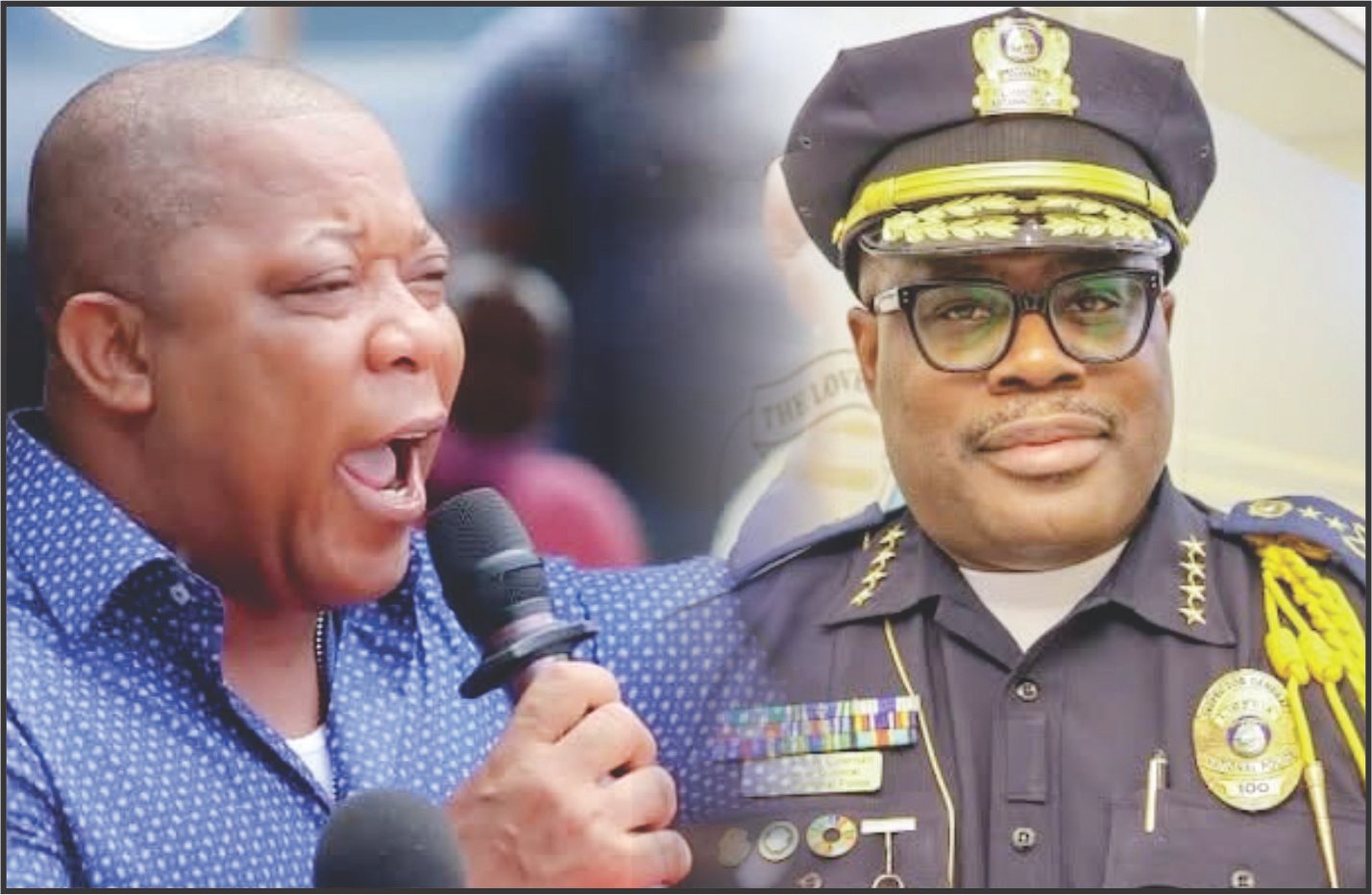
The Chairman of a local Civil Society group (STAND), Mr. Mulbah K. Morlu has called for the immediate suspension of Police IG Gregory Coleman as public outcry for accountability and transparency in the US$19.2 million drug bust heightens.
In a statement issued Thursday, June 18, under the title “The Hunt for the Big Fish – Part I,” Morlu argued that suspending the Police Inspector General would help ensure public confidence in ongoing investigations surrounding one of the largest drug seizures in Liberia’s history.
The seizure of cocaine valued at about US$19 million, a case that has sparked widespread public concern and demands for accountability.
Morlu criticized what he described as a lack of transparency in the handling of the investigation and questioned whether institutions charged with uncovering the truth could effectively investigate themselves.
“As public pressure grows for answers in Liberia’s US$19 million cocaine scandal, responsibility appears to be shifting from one institution to another,” Morlu stated.
He further argued that the scale of the operation suggested the possible involvement of individuals within key state security institutions, including customs, immigration, seaport security, and law enforcement agencies.
According to Morlu, President Joseph Boakai’s recent decision to refer the matter to a broader national security process has raised concerns among some citizens about the independence of the investigation.
The STAND chairman also raised questions about the role of Liberia Drug Enforcement Agency (LDEA) Officer-in-Charge Fitzgerald T.M. Biago, noting that Biago continues to hold the rank of Deputy Commissioner of Police while serving at the anti-drug agency.
Morlu referenced public allegations suggesting that Inspector General Coleman may have influenced Biago’s appointment to the LDEA leadership position, arguing that such claims create an appearance of conflict of interest that could undermine public trust in the investigation.
“Raising questions about Director Coleman is not a declaration of guilt,” Morlu emphasized. “Allegations are not evidence, and suspicion is not proof. However, the credibility of any major investigation depends not only on actual impartiality but also on public confidence in that impartiality.”
He maintained that suspending Coleman should not be viewed as punishment but rather as an administrative measure aimed at protecting the integrity of the investigation.
Morlu further called on the Government of Liberia to seek international assistance from experienced foreign law enforcement agencies, including those from the United States, to support efforts to uncover the full extent of the alleged transnational drug trafficking network.
“The public is not demanding predetermined conclusions,” he said. “It is demanding a credible process, transparency, and equal application of the law.”
Morlu concluded by stating that his organization would continue to scrutinize individuals and institutions linked to the case, promising additional publications examining what he described as other “credible leads” in the investigation.
Neither the Liberia National Police nor the Liberia Drug Enforcement Agency had publicly responded to Morlu’s allegations as of press time.
The ongoing investigation remains one of the most closely watched criminal cases in Liberia, with citizens and civil society groups calling for full disclosure of those responsible for the importation and movement of the cocaine shipment.