

By G. Watson Richards
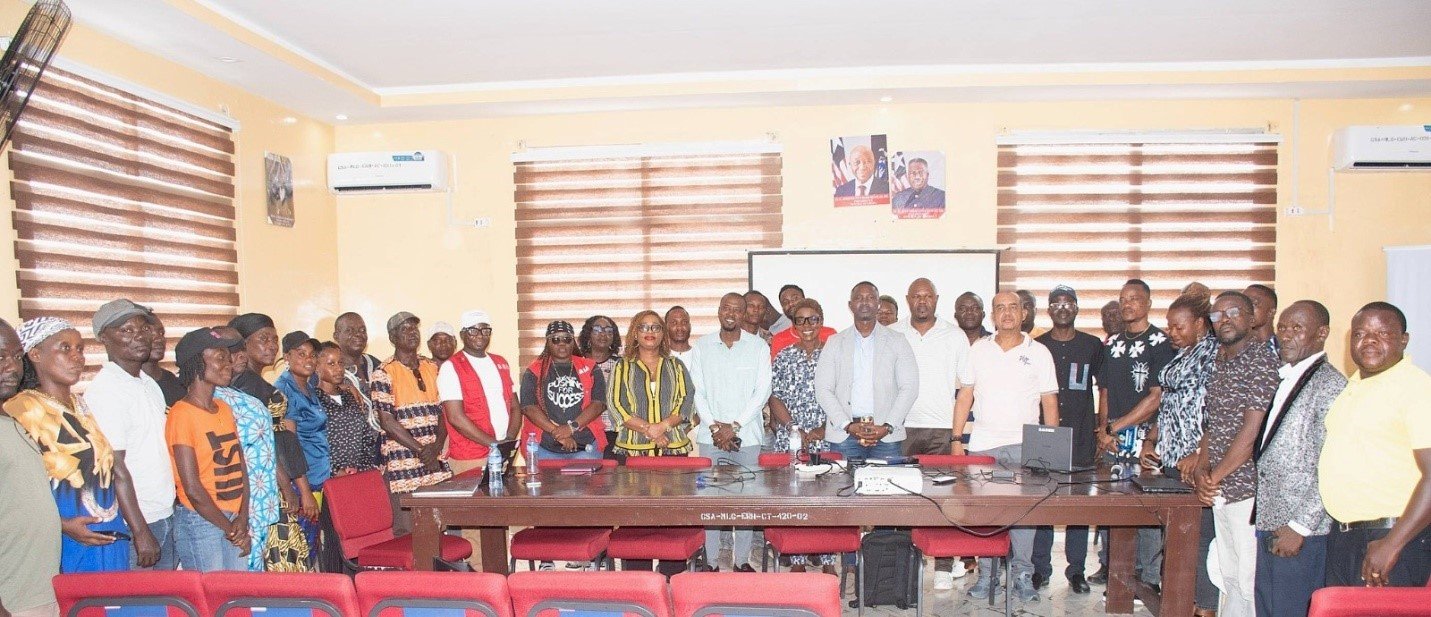
The Liberia Revenue Authority (LRA), through its Domestic Tax Department, has concluded a three-day stakeholder engagement marking the commencement of Phase Three of the Real Property Tax Expansion Project in Grand Bassa County.
Supported by the United Nations Development Programme (UNDP) with funding from the Government of Sweden, the initiative is part of ongoing efforts to strengthen property tax administration and enhance revenue generation at the county level.
This phase focuses on Electoral District #3 and includes key technical components such as digital property mapping, data validation and cleansing, system tracking, and property valuation.
The project aims to ensure that up to 50 percent of real property tax revenues collected within the county are allocated to local development initiatives, in line with the Local Government Act of 2018. The effort also promotes decentralization, transparency, and efficiency in public financial management.
Speaking during the engagement, LRA Commissioner for Domestic Tax, Margaret P. Krote, described the initiative as a transformative step toward improving tax administration in Liberia.
“This initiative is about helping citizens see the direct impact of their taxes. Development should not feel distant, it must be visible and tangible within their own communities,” she stated.
She emphasized that stakeholder engagement is essential to increasing awareness about the project, its benefits, and the role citizens play in ensuring tax compliance.
Madam Krote also praised UNDP for its continued partnership, highlighting its critical role in supporting the project’s implementation.
Grand Bassa County Superintendent Karyou Johnson welcomed the initiative and reaffirmed his administration’s commitment to transparency and the fair distribution of property tax revenues between local and central government.
He encouraged residents to actively participate, noting that improved compliance would directly contribute to better development outcomes across the county.
Also speaking, UNDP Program Coordinator for Decentralization, Eric Boykai, stressed that the engagement is vital to strengthening local governance and boosting domestic revenue mobilization.
The dialogue brought together a diverse group of stakeholders, including local authorities, business leaders, civil society organizations, youth and student representatives, transport unions, motorcyclists, and market women.
The project, which is expected to be completed in July, is being implemented by KWARECOM, a local consultancy firm specializing in property data management, digital mapping, and real property tax system development.
Overall, the Real Property Tax Expansion Project marks a significant step toward decentralizing revenue collection and ensuring that communities directly benefit from taxes generated within their jurisdictions.
In a related development, the Liberia Revenue Authority has also launched Phase Three of its Real Property Tax Expansion Project in Grand Bassa County.
The phase began with a three-day stakeholder engagement led by the LRA’s Domestic Tax Department.
The initiative is supported by UNDP with funding from the Government of Sweden.
It focuses on Electoral District #3 and includes digital mapping, data validation, system tracking, and property valuation.
The project aims to allocate up to 50 percent of property tax revenues to local development in line with the Local Government Act of 2018.
LRA Commissioner Margaret P. Krote said the initiative will help citizens see the direct impact of their taxes.
Local authorities and stakeholders have welcomed the project and called for increased public participation and compliance.
Expected to be completed in July, the project supports decentralization and aims to improve revenue collection and community development.
The Liberia Revenue Authority has intensified efforts to strengthen tax administration at the local level with the rollout of the second phase of its nationwide tax compliance training for county finance officers and sector stakeholders across six counties.
The initiative, being implemented by the LRA’s Government and Not-For-Profit Division, is part of a broader strategy to enhance domestic resource mobilization and improve compliance with Liberia’s tax laws, particularly at the county level.
The training program targets key actors involved in public financial management, including county administration officials, finance officers, accountants, procurement officers, and logisticians. It also brings together members of county health teams, education officers, and representatives of county councils.
The program is designed to equip stakeholders with the technical knowledge and practical tools required to correctly apply withholding taxes on payments for goods and services, ensure timely remittances, and safeguard government revenue in line with the Liberia Revenue Code.
The initiative also aligns with the Local Government Act, which empowers county administrations to manage development funds for priority projects approved by county councils.
Central to the training is the withholding tax regime, which requires public institutions and other designated entities to deduct taxes at source when making payments for goods, services and labor.
The sessions cover legal obligations of withholding agents, applicable withholding tax rates, sector-specific compliance guidelines, payment timelines, and approved remittance channels, including hands-on training on the use of the Liberia Integrated Tax Administration System (LITAS).
Two LRA technical teams headed by T. Edwin Taylor, Enforcement Officer, and Richmond Dailaway, Compliance Officer, are conducting simultaneous training sessions across participating counties, including Gbarpolu, Bomi, Grand Cape Mount, Grand Gedeh, River Gee, Sinoe, and Maryland, building on the success of the first phase conducted in March.
The nationwide training forms part of the LRA’s ongoing fiscal reform agenda aimed at modernizing tax administration, expanding the use of digital platforms such as LITAS, and ensuring efficient tax filing and payment systems.
Local officials in the targeted counties have welcomed the initiative, underscoring the need that strengthening the capacity of county-level stakeholders is critical to improving compliance, enhancing revenue collection, and promoting transparency in public financial management.
Through sustained stakeholder engagement and capacity-building initiatives, the Authority aims to foster a culture of compliance and strengthen Liberia’s domestic revenue base as a foundation for long-term economic growth.
The LRA remains committed to efficient tax administration, transparency, and professionalism, all geared toward contributing to Liberia’s development and prosperity.